











LRT English Newsletter – May 8, 2026.
Lithuania’s railways had a bad May Day holiday weekend.
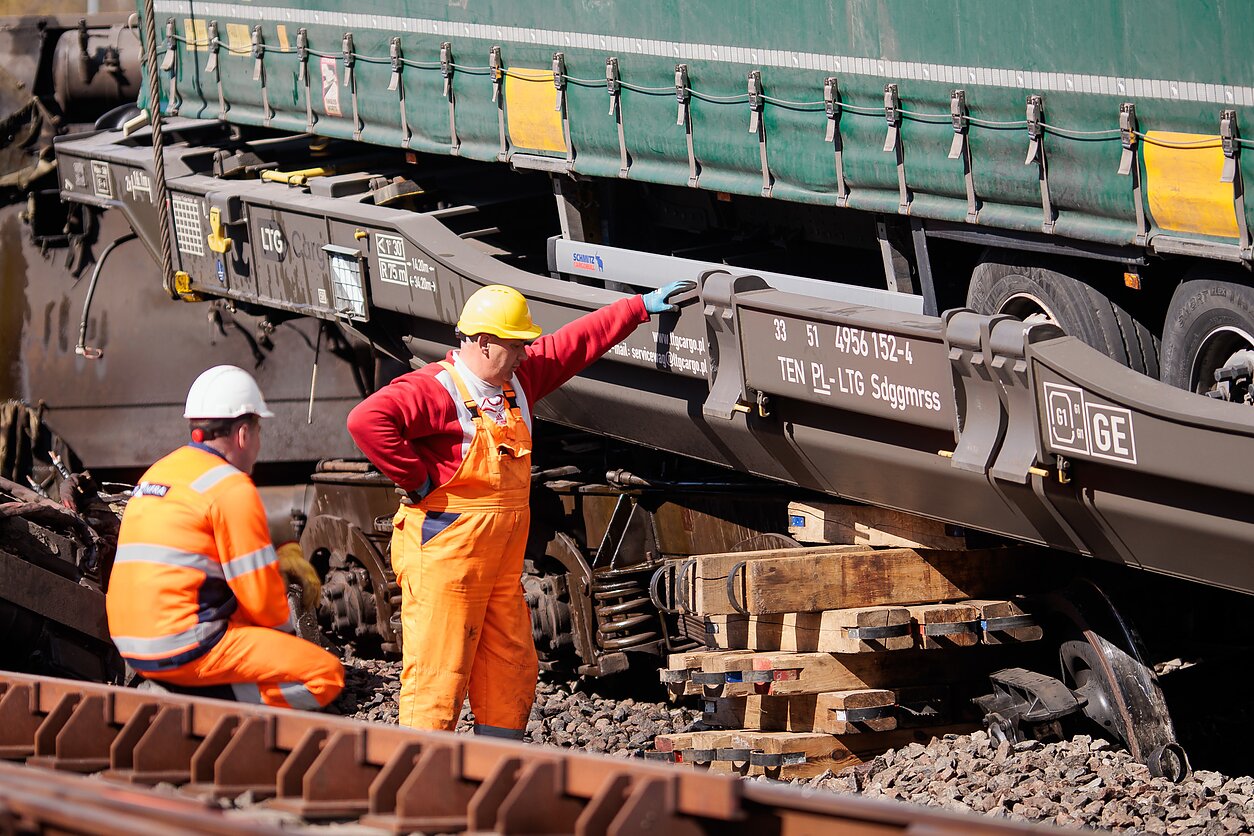
Two freight trains derailed within 48 hours of each other in central Lithuania, prompting speculations about possible sabotage, as the country has been on high alert for hybrid threats from Russia for years.
But investigators have largely moved on from that theory. The likelier explanation, according to the rail operator LTG, is more mundane – and perhaps more damning. Technical failure. Human error. And an outdated network that has been running on fumes.
The first derailment happened Friday at Gudžiūnai station, where gravel wagons came off the tracks, apparently due to overheating components. The second followed Saturday night at Jiesia station near Kaunas, where a locomotive and four wagons bound for Duisburg, Germany, were mistakenly routed onto an incompatible track at a junction where the European standard gauge intersects with the broader Russian gauge still used across much of the Baltic freight network.
LTG representatives acknowledged that the incidents might have been prevented with adequate investment. Jiesia station, for example, lacked a modern signalling system capable of automatically managing traffic and reducing the risk of human error. Installing one would cost over 100 million euros and while the funding had been requested it has not yet been granted.
That is one data point in a longer list of deferred problems. Speed restrictions have been imposed on some lines because maintenance funding ran dry. Spare parts for the automatic rolling stock control system have run out entirely. Track inspections, once more frequent, now happen only every two to three months. The head of the railway workers' union added that staff cuts have left remaining employees stretched thin, only increasing the likelihood of further incidents.
Multiple investigations are currently ongoing.
ECONOMY
Lithuania is juggling a lot of bad economic news this week – and into the middle of it has landed an unexpected question: should the country join a US-led military coalition in the Middle East?
Here's the backdrop. Poverty levels across Lithuania have risen with nearly 700,000 people living below the poverty threshold, mostly in rural areas. Food bank queues are growing, more and more money is required to sustain social support. This week, Swedbank also downgraded its growth forecast for the Lithuanian economy to 3% while revising inflation up sharply to 5.2%, the highest in the Baltic region. Rising oil prices, tax changes, and wage growth are all pushing prices up.
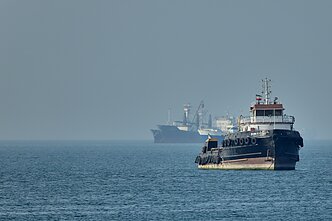
Into this picture steps the Strait of Hormuz. The ongoing conflict with Iran has rattled global energy markets, and Trump is assembling a coalition of allies to restore shipping through the strategic waterway through which a significant share of the world's oil supply passes. Lithuania received a formal US invitation to join last week, and the question is now before the State Defence Council.
Parliament speaker Juozas Olekas has come out in favour, going so far as to argue that participation in the coalition would have a positive impact on Lithuania's economy and people.
With Trump simultaneously threatening to raise tariffs on EU cars to 25%, keeping Washington onside matters. Lithuania's finance minister Kristupas Vaitiekūnas has called on the EU to pursue negotiations with Washington while preparing countermeasures.
FUTURE OF ENERGY
Lithuania is facing a defining question about its energy future. Electricity demand could triple by 2050, and the need to diversify beyond wind and solar, which can't serve as baseload sources, is pushing officials to weigh two very different bets.
The trendy option: nuclear. Though Lithuania swore against developing large-scale nuclear power, following the closure of Soviet-built Ignalina Nuclear Power Plant, it could use its historical experience for a new type of technology: small modular nuclear reactors or SMRs. It’s a new generation of nuclear plants that are cheaper to build and faster to deploy than their predecessors, with capacity typically up to 300 megawatts, versus the 1,000+ megawatts of traditional reactors.
The appeal is real. Tech giants like Google, Amazon, and Microsoft are willing to invest a nice buck to secure stable, consistent power, with Poland and Estonia already considering SMR projects.
But there's a catch. NGOs point out that no SMRs are currently operating in Western countries, and nuclear costs have risen 47% over the past fifteen years, raising serious questions about whether they can really deliver affordable electricity.
The underfoot option: geothermal. There's another path forward – one with no fuel imports, no supply chains, no radioactive waste. The energy source already exists, locked beneath western Lithuania's surface.
Lithuania's geology turns out to be remarkably well-suited for geothermal development. Surveys indicate it could deliver both cheaper electricity and a meaningful boost to energy security. However, geological assessments, deep drilling, and heavy capital investment upfront would likely make it a slower road to deployment than SMRs.
REDEFINING FAMILY
A year after the Constitutional Court ruled that restricting civil partnerships to opposite-sex couples conflicts with the Constitution, the Seimas is considering to kick that question to the Lithuanian people.
Around 50 Seimas members, drawn from both the governing coalition and the opposition, have backed a proposal to hold an advisory referendum asking citizens whether family should be defined in the Constitution as arising solely from marriage between a man and a woman.
Supporters argue the court overstepped its authority and that the people, not judges, should settle the question. Critics say the move misreads how constitutional democracy works, and that ignoring court rulings puts Lithuania's international standing at risk. The Seimas is expected to return to the proposal later this month.
PALUCKAS CASE
Seimas stripped former Prime Minister Gintautas Paluckas of his parliamentary immunity, clearing the way for prosecutors to formally charge him with illicit enrichment and abuse of office. Investigators allege that Paluckas and his wife accumulated nearly €345,000 in assets from income they cannot account for over a period spanning more than a decade.
Paluckas, who formerly led the Social democrats, has suspended his party membership but is staying in his Seimas seat. The party backed the immunity vote.
EDITOR’S PICKS:
– Efficiency at the cost of sovereignty? What are Lithuania’s thoughts on scrapping EU’s national veto?
– Rail-based public transport in Vilnius is finally a thing?
– Lithuania's 90s – a decade-long happy hour that nobody asked for.
– A decades-long dilemma continues: what to do with Vilnius Sports Palace?
– Experience Lithuania’s national pavilion in Venice Biennale.

Newsletter
Every Friday morning.