














Calls to reform decision-making in the European Union are gaining traction again, with policymakers and experts debating whether scrapping national vetoes in foreign policy could make the bloc more effective – and what that would mean for smaller member states like Lithuania.
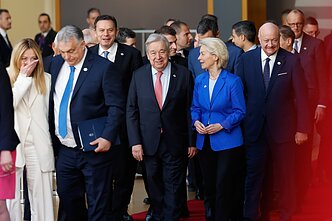
The discussion has intensified after political changes in Hungary, long seen as a frequent blocker of EU decisions. Budapest had repeatedly vetoed measures, including sanctions on Russia and a proposed 90-billion-euro EU loan to Ukraine, despite broad support among other member states.
Push for faster decisions
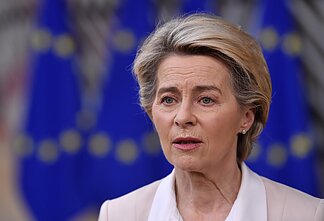
Ursula von der Leyen, head of the European Commission, said “moving to qualified majority voting in foreign policy is an important way to avoid systemic blockages, as we have seen in the past”.
“We should use the current momentum to move forward on this,” she added.

EU officials argue that existing rules were designed for a more stable geopolitical era and may no longer be suited to today’s security challenges.
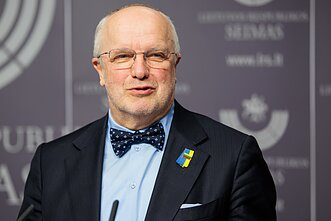
Andrius Kubilius, Lithuania’s EU commissioner in charge of defence, said the bloc must openly assess whether its treaties and decision-making mechanisms still meet current needs, particularly in foreign and security policy.
At the same time, he acknowledged that revising EU treaties would be complex and politically sensitive.
Lithuania’s shifting stance
Lithuania has traditionally opposed abandoning unanimity, viewing veto power as a key safeguard of national sovereignty, especially for smaller countries wary of being overruled by larger members.
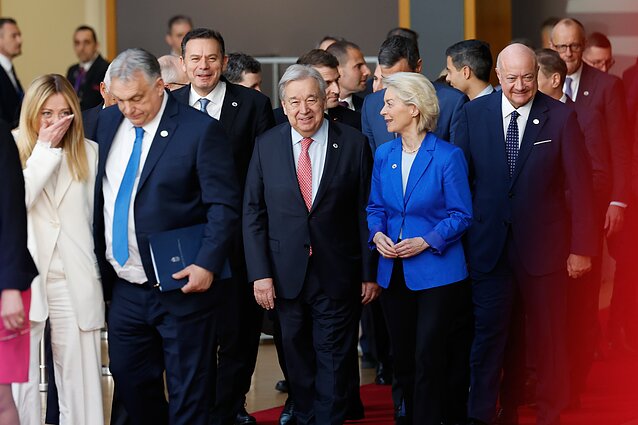
However, frustration with repeated vetoes has begun to soften that position.
President Gitanas Nausėda has warned that excessive reliance on unanimity risks paralysing decision-making, drawing a historical parallel with the 18th-century Polish-Lithuanian Commonwealth, where the “liberum veto” often blocked reforms and was a major factor in its collapse.
Foreign Minister Kęstutis Budrys has also signalled openness to expanding qualified majority voting in selected areas, saying unanimity has at times hindered rather than protected Lithuania’s core interests.
“We should consider abandoning unanimity in certain issues,” he said, stressing that such changes would not apply universally.

Potential gains and risks
A study commissioned by Lithuania’s Foreign Ministry suggests that broader use of qualified majority voting could benefit countries with proactive EU agendas, including Lithuania’s push for stronger Eastern Partnership policies.
Supporters argue it would accelerate EU foreign policy decisions and strengthen the bloc’s global role.
But experts caution that abandoning veto power could weaken smaller states’ ability to defend vital interests.
Valentinas Beržiūnas of Vilnius University said Lithuania could lose an important lever, particularly if EU positions diverge from those of the United States, a key security partner.
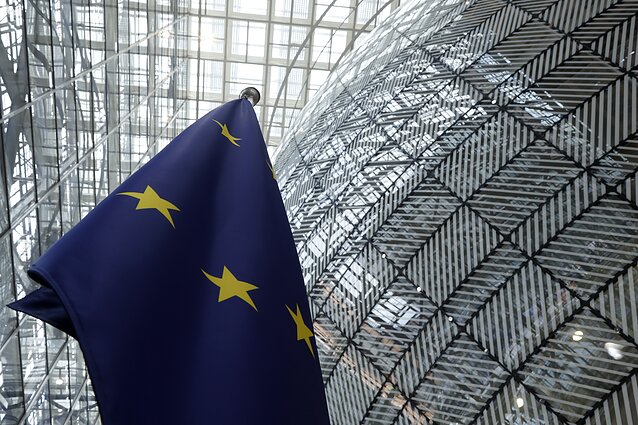
“If Lithuania disagreed with a decision affecting its security, it would no longer be able to block it,” he said.
At the same time, he noted that Lithuania’s positions often align with the EU majority, meaning the veto is rarely used in practice.
Sceptics also question whether removing vetoes would automatically lead to faster or more effective decision-making.
“Who can prove that decisions would actually be made more quickly?” Beržiūnas said, highlighting uncertainty over the real-world impact of such reforms.
While momentum for change is building in Brussels, any shift away from unanimity would require careful negotiation – and, potentially, treaty changes.

Newsletter
Every Friday morning.