










After decades of debating metros, trams and even cable cars, Lithuania’s capital is moving closer to introducing a new form of public transport, with officials targeting implementation by 2040.
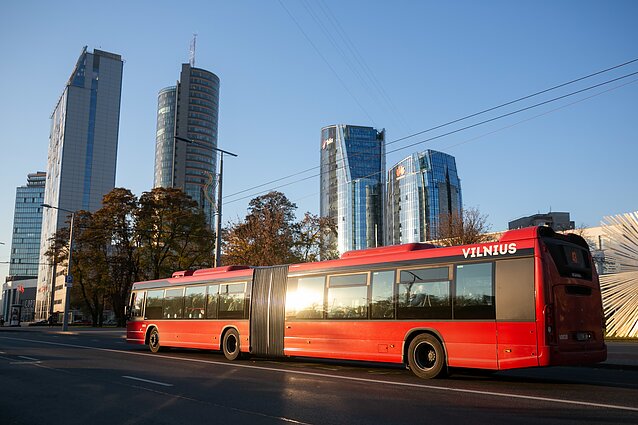
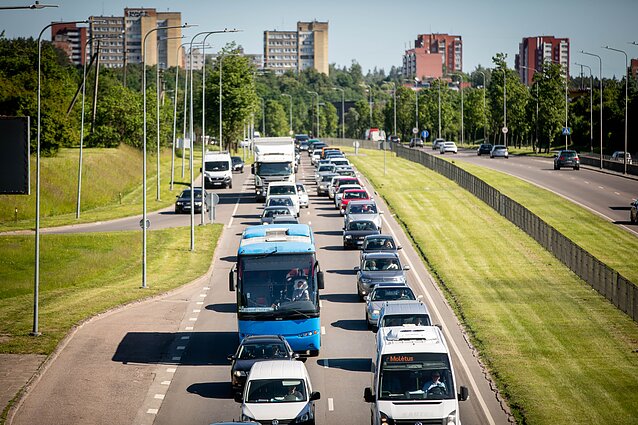
City planners say the current bus and trolleybus network is approaching its physical limits, prompting a long-term strategy focused on higher-capacity, rail-based transit.
Network expansion before structural shift
By 2030, Vilnius plans to expand its existing public transport network by 30%, increasing both routes and service frequency. Under current plans, seven new routes would be added, 44 routes made more frequent and 46 adjusted.

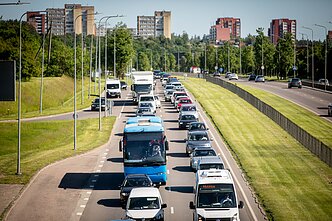
However, the municipal transport authority JUDU says further improvements will become increasingly difficult due to congestion, intersection capacity and infrastructure constraints.
Passenger flows in the city have already reached levels that justify introducing a new mode of transport, according to the agency.
Rail-based solution under consideration
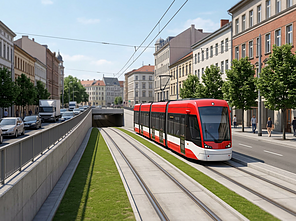
While officials have not decided whether the system will take the form of a metro, tram or another option, the city is focusing on rail-based solutions that operate largely independently of road traffic.
A market consultation with industry participants has been completed, and authorities are now reviewing feedback ahead of launching an international tender for feasibility studies.
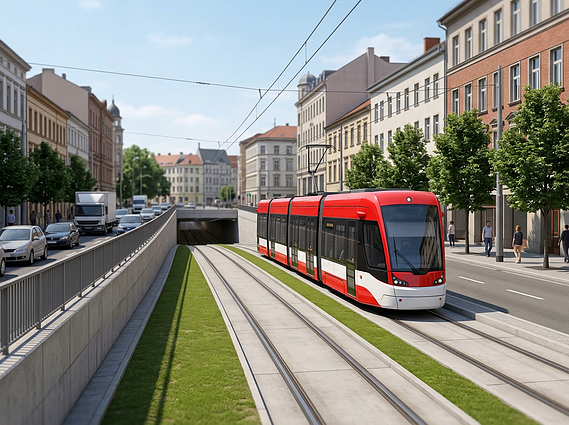
“We understand there is a desire for clarity on whether Vilnius will have a metro or tram,” JUDU head Loreta Levulytė-Staškevičienė said. “But first we need a comprehensive analysis so the decision is data-driven.”
Key criteria include minimising interaction with road traffic, ensuring economic viability and serving densely populated areas.
Four potential lines identified
Preliminary plans outline four possible corridors:
- From Santariškės through the city centre to the airport and Eišiškės highway
- Linking the railway station with Perkūnkiemis via central districts
- Connecting Pilaitė to Saulėtekis
- A route from Kalnėnai through the station and Laisvės Avenue to Santariškės
These routes may change as planning progresses but reflect the city’s ambition to connect major residential and transport hubs.
Lessons from abroad
Vilnius is studying systems in cities such as Tampere, Edinburgh and Porto, where light rail networks combine elements of trams and metros.
Such systems are increasingly common in cities of similar size and economic profile to Vilnius.
Experts urge balanced approach
Transport experts say neither trams nor metros offer a perfect solution on their own.
Gediminas Vaičiūnas of Vilnius Tech noted that trams can significantly increase passenger capacity but may struggle in dense city centres and mixed traffic. Metros, while faster and independent of road congestion, are far more expensive to build – often five to 10 times the cost of tram systems.
A hybrid or “light rail” approach could provide a compromise, combining dedicated tracks with flexible routing.

Major construction challenges ahead
Any new system would involve years of disruption. Parts of the city could become construction zones for a decade or more, with impacts on traffic, parking and public life.
Engineers would also face challenges related to underground utilities, uneven terrain and heritage protections, particularly in the historic city centre.
Integration and funding still unclear
Officials stress that a future rail system would not replace buses and trolleybuses but complement them, requiring careful integration to ensure smooth transfers and network resilience.
Funding remains an open question. City representatives say financial considerations will only be addressed after technical, economic and social feasibility studies are completed.

Newsletter
Every Friday morning.