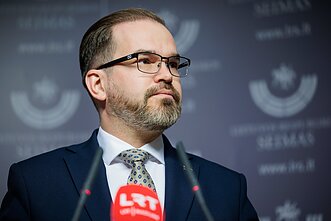












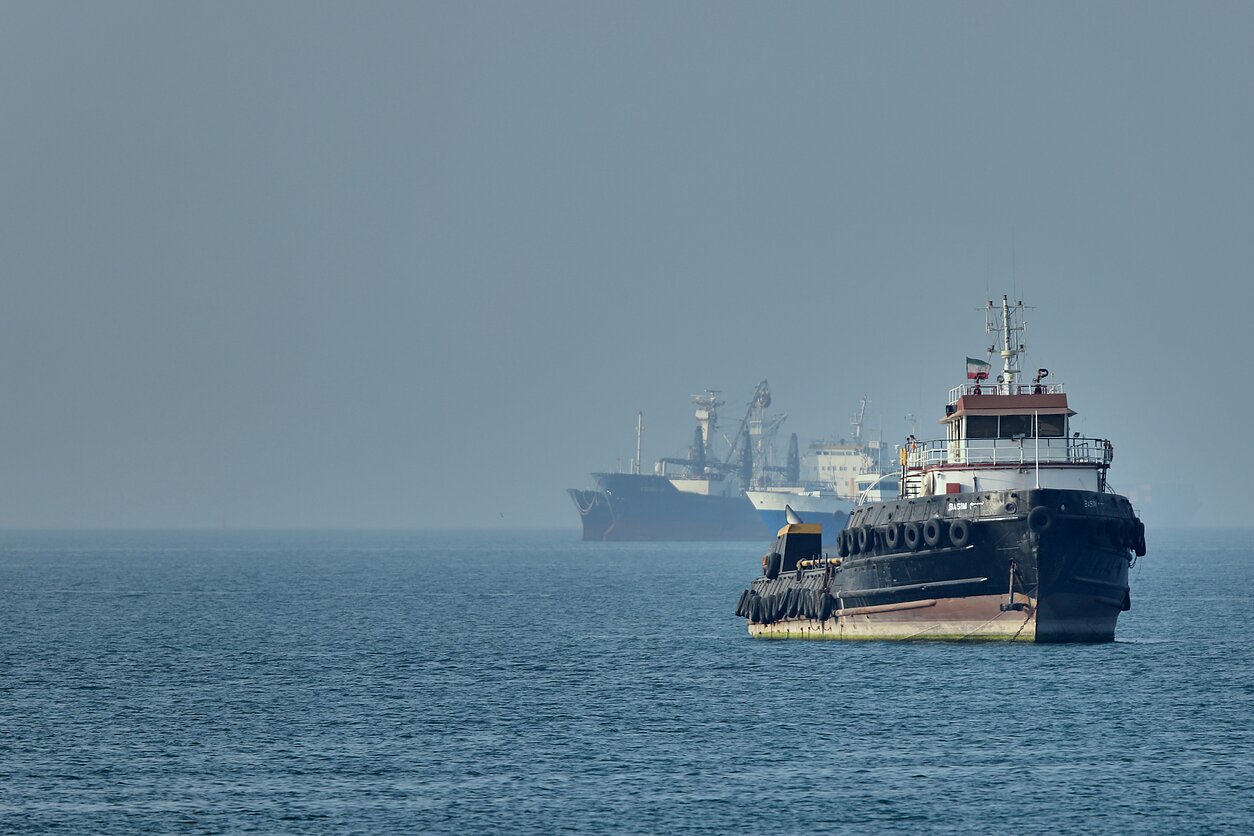
Lithuania will not participate in combat operations but could join a peacekeeping mission aimed at restoring maritime security in the Strait of Hormuz, Defence Minister Robertas Kaunas said Thursday.
According to Kaunas, Lithuania could contribute demining capabilities to the mission.
“Lithuania is not joining a war, Lithuania is not sending troops to war,” the minister told the radio Žinių Radijas.
“We would like to send troops and will request a mandate for peacekeeping. This is demining, not mining,” he added.
Kaunas described peacekeeping operations as routine international missions and said Lithuania, as a NATO ally, seeks to contribute to global stability.
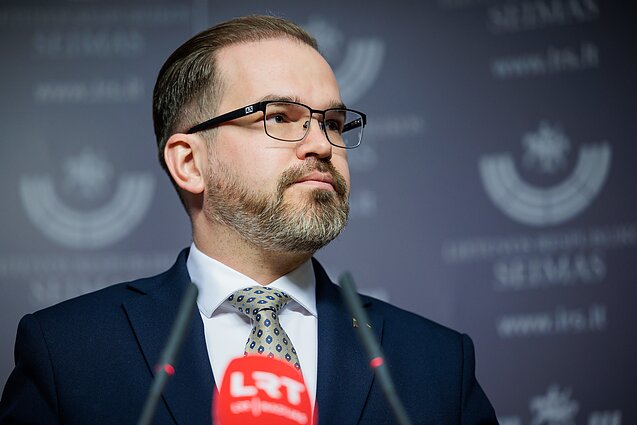
“Peacekeeping missions are normal, standard missions, and this is certainly not the first or last time that Lithuania, as an ally and a civilised state, seeks to contribute to maintaining peace worldwide,” he said.
President Gitanas Nausėda previously said the State Defence Council would soon convene to discuss Lithuania’s possible contribution. Kaunas said the meeting is expected later this month.
Any deployment of Lithuanian troops would require approval from the Seimas.
“Lithuania, as a NATO ally and a reliable partner, will contribute to restoring safe shipping, whether through demining or other capabilities,” Kaunas said. “We will know the exact format in the near future.”
The minister said the main reasons for considering participation are concerns over human and energy security.
“We see that due to the war in Iran, oil prices have jumped to unprecedented levels, creating energy insecurity,” Kaunas said.
“Economists have begun talking about looming crises, oil and fuel shortages, and other hardships. As the civilised world, we simply cannot allow this,” he added.
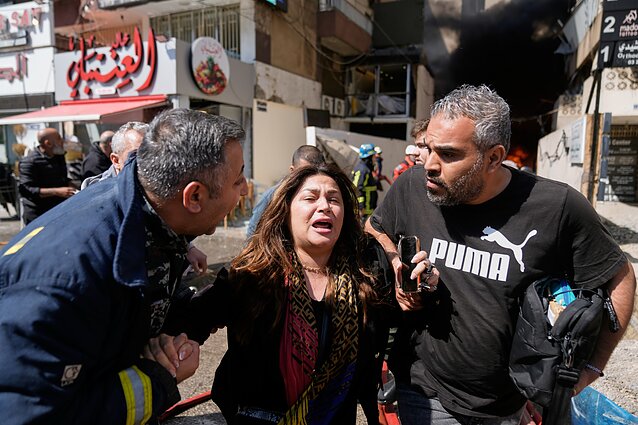
Kaunas also pointed to Iran’s support for Russia in the war against Ukraine through the production of Shahed drones, as well as what he described as the threat posed by Iran’s nuclear ambitions.
“The entire complex of threats forces probably all NATO allies to rethink and assess the current situation and contribute to the restoration of peace – not the escalation of war, but specifically the restoration of peace and the normalisation of relations,” he said.
“We see that negotiations are taking place, and we hope they will lead to a breakthrough and a final agreement,” he added.
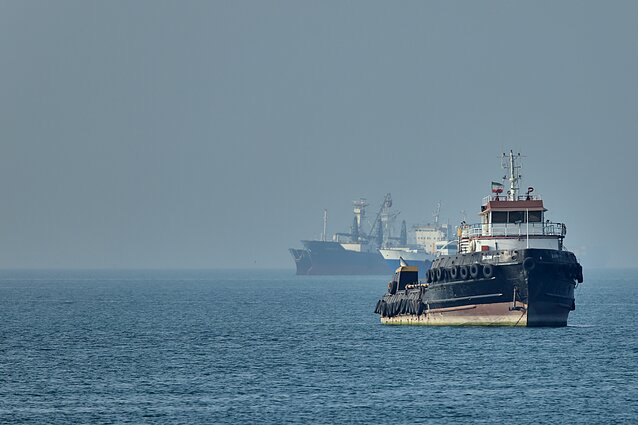
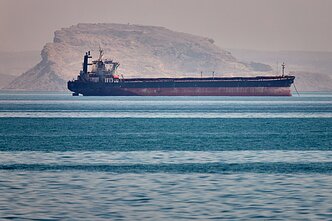
Iran closed the Strait of Hormuz, a crucial thoroughfare for oil shipping, in response to attacks by the United States and Israel. Lithuanian leaders have condemned Iran’s retaliatory strikes against targets in Persian Gulf states, including US military bases, but not the US-Israeli aggression.
The United States had sought to form an international coalition to reopen the Strait of Hormuz for shipping but later said it was suspending the military operation while discussing possible negotiations with Iran.

Newsletter
Every Friday morning.