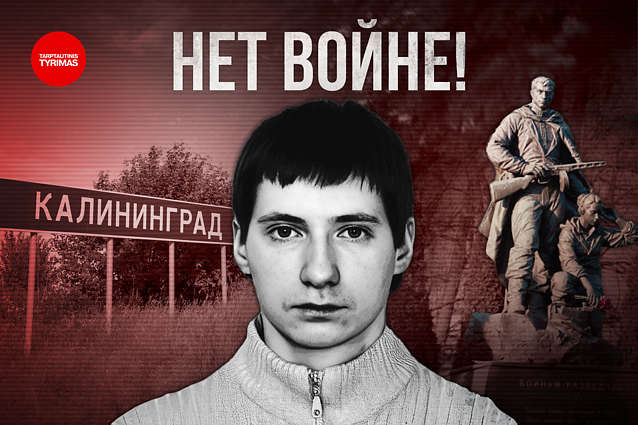
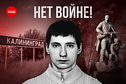





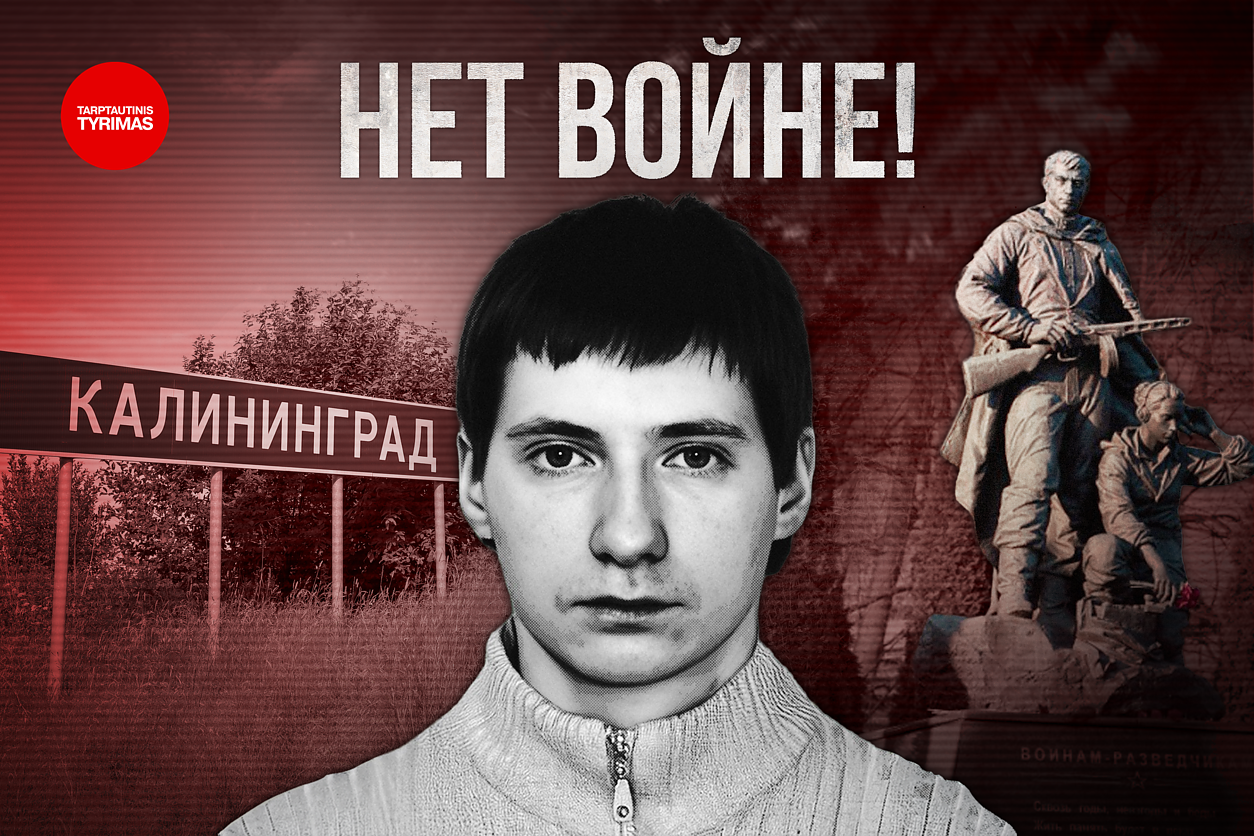
An international investigation has uncovered how Russian authorities worked to conceal a self-immolation protest against the war in Ukraine, carried out in the heart of Kaliningrad on the third anniversary of the full-scale invasion.
Six months before the anniversary, Alexander Okunev – a 36-year-old software developer described by a former acquaintance as gifted and well-read – quietly left his job.
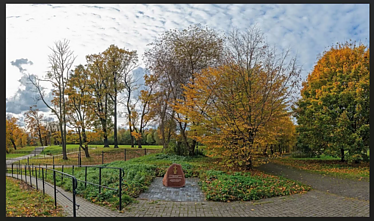
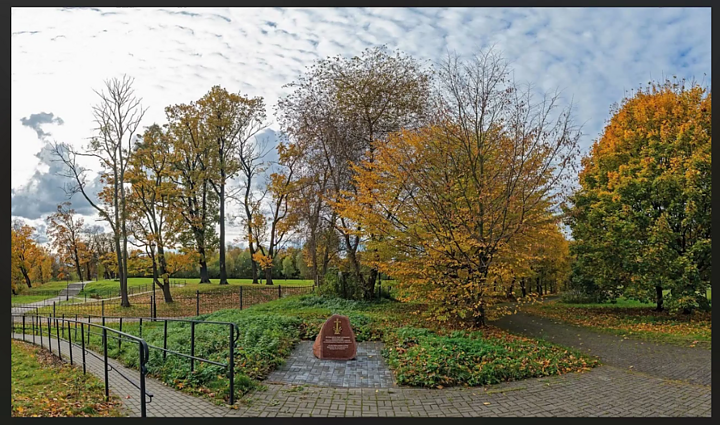
In the early hours of February 24, 2025, at around five in the morning, he walked to Victory Park in the heart of Kaliningrad and set himself on fire.
This was not an ordinary suicide. Beside a memorial stone inscribed to Red Army soldiers who died "liberating Europe from Nazism", Okunev had written in the snow – apparently using spray paint – the words Net Voine: No to War.
Despite the park being covered by city security cameras, it was a passing member of the public who first discovered the charred body and the inscription, at around half past six. Local authorities responded swiftly. By nine o'clock that morning, less than four hours later, there was nothing left for pedestrians to see.
For more than a year, almost nothing about the incident reached the public. No reports could be found anywhere – Not in Kremlin-aligned state media, not in Russia's independent opposition outlets, and not on social media.
Okunev had anticipated exactly this. In a farewell letter found by those close to him, he wrote that he was certain his act would not be reported, and that any trace of his protest against the war in Ukraine would be removed almost immediately. He was right – but only for so long.
The names of those close to Okunev who spoke to journalists have been withheld to protect their safety.;.
How the story came to light
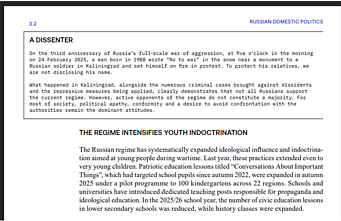
The case surfaced earlier this year in an unexpected place: Estonia's annual national security threat assessment, published by the country's intelligence service.
The report noted, in a section on internal dissent within Russia, that a man born in 1988 had set himself on fire in Kaliningrad on the anniversary of the invasion. To protect his relatives, Estonian officials withheld his identity.
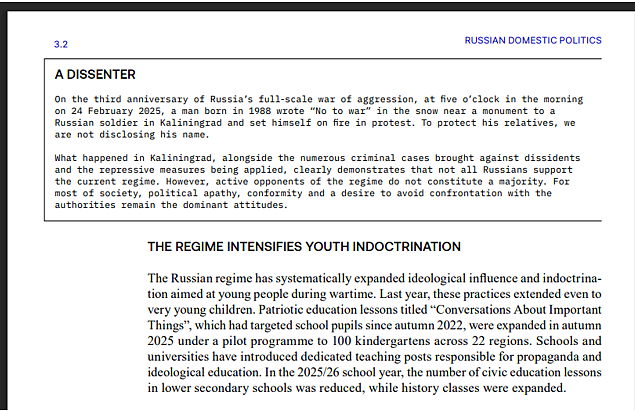
That detail – his birth year – proved to be the thread that unravelled the cover-up.
A joint investigation by journalists from Estonia's Delfi, Lithuania's public broadcaster LRT, and the independent Russian outlet iStories established that only two men born in 1988 died in Kaliningrad on that date. One of them was Alexander Okunev.
His identity as the man who had set himself alight is also confirmed in an internal document from Russia's Investigative Committee, obtained by the reporters, which records that Okunev self-immolated in Victory Park and that investigators were called to the scene.
Lithuania's State Security Department has also confirmed the Estonian intelligence findings.
The cover-up
Sources familiar with the events say Kaliningrad's city administration head, Yelena Dyatlova, and the director of Kaliningrad's cultural heritage centre, Yevgeny Maslov, moved quickly to contain the situation. The immediate priorities were to remove the body from Victory Park and clear the inscription from the snow before passers-by noticed anything, or local journalists began asking questions.
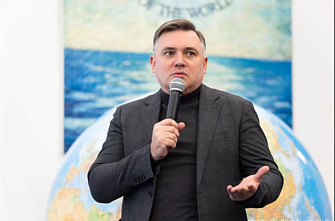
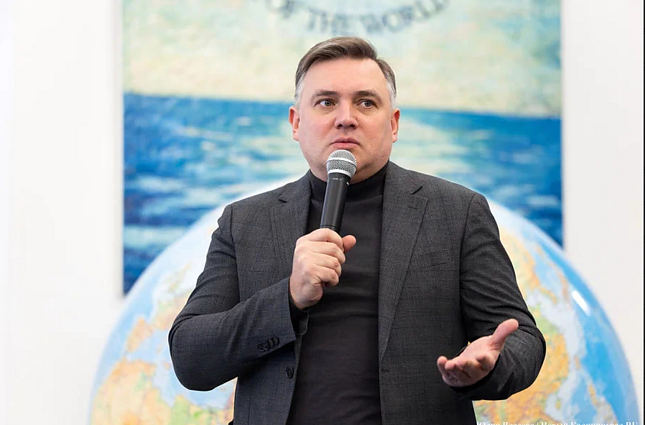
Regional culture and tourism minister Andrei Yermak was reportedly particularly anxious about the symbolism involved. Victory Park is not only home to a memorial to Soviet soldiers; it also displays Soviet-era statues removed from Estonia, Bulgaria and other European countries and brought to Kaliningrad. The timing and location of Okunev's protest, sources said, left those who responded in no doubt that this was a political act, not simply a suicide.
When journalists reached Yermak by telephone, he repeatedly insisted they had come to the wrong person.
"I will say again – I do not know the details of this incident, as you call it," he said. "Whether it was an anti-war act or not, what actually happened there – I cannot comment on any of it until the investigation is concluded and its findings made public. Only then would it be possible to say anything. I don't know what truly happened. I am not an investigative body, and I was not there."
Who was Alexander Okunev?
Those who knew Okunev describe a quiet, self-contained man. A former colleague remembered him as highly capable and well-read, but reserved – someone who rarely responded to greetings in the office and did not attend workplace social events. He enjoyed origami and films. He had a small circle of close friends and lived alone.
He had left his job around six months before his death. Those closest to him say they had no warning of what he was planning; even in the days before, nothing seemed out of the ordinary.
His farewell letter, read by those nearest to him after his death, explained his position clearly. He could not accept the war in Ukraine and saw no way to live in a world shaped by it. He chose self-immolation not as a gesture of despair, but as a deliberate political statement – one he made knowing it would almost certainly be suppressed.
"This was his personal choice," said someone close to Okunev, who learned of his motivations only after reading his farewell letter. "He wrote that there was another way. He could not accept what was happening, and this was how he chose to express that. He believed there should be peace – everywhere. But he understood that was a utopia. He no longer wanted to live in this world, and so he made his decision."

Historic parallels
The Estonian intelligence assessment notes that Okunev's self-immolation, taken together with the large number of criminal prosecutions brought against other dissidents in 2025, demonstrates that support for the current regime inside Russia is far from universal. Yet those willing to act openly remain a small minority.
Which raises a question: why does the regime respond so ferociously even to isolated individuals like Okunev? He was not part of any opposition movement. He had no public platform, no following, no history of organising protests. And yet every detail of how and why he died has been kept from public view.
"This man is a hero," said Gintautas Mažeikis, professor of philosophy at Lithuania's Vytautas Magnus University. He was not surprised that the authorities had gone to such lengths to ensure the story disappeared.
"Acts like this are vanishingly rare in Russia. And when they do happen, they are buried – so that no one ever finds out. There are other kinds of desperate deaths too. Men are taking their own lives at the front, not only in civilian life. That is suppressed as well. It all points to just how nightmarish this regime is – how completely it crushes people. You cannot even protest. There is nothing you can do."
Professor Mažeikis argues that this kind of sweeping repression has been a feature of Russian life for five years now. "It happens that someone steps into the street holding a small piece of paper that says 'No to War'," he said. "That person is arrested within minutes. And just like that, it vanishes – no one ever finds out."
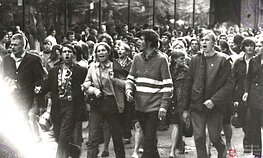
Nerijus Maliukevičius, a disinformation researcher at Vilnius University, draws a direct parallel with Romas Kalanta, a young Lithuanian who set himself on fire in Kaunas in 1972 in protest against Soviet occupation. Soviet authorities tried to bury that story too – literally, arranging a secret burial before the planned funeral – but the act sparked street protests across the city and Kalanta became an enduring symbol of resistance.
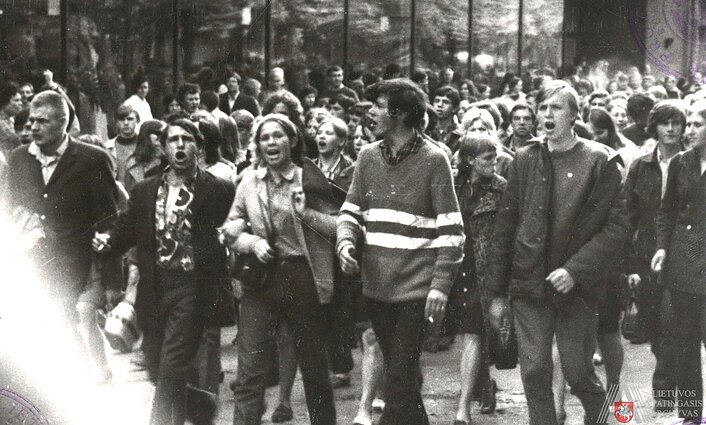
"A single act rarely ignites mass resistance on its own," Maliukevičius said, "but someone who sacrifices their life for a cause can become a moral symbol – a figure around which diffuse public anxiety begins to crystallise. That is precisely what these regimes fear. The effort to erase the location, silence the story and discredit the victim is a classic authoritarian reflex."
Russian analysts are more cautious about the prospects for wider impact. Sociologist and political scientist Margarita Zavadskaya estimates that roughly a quarter of the Russian population holds anti-war views of some kind, but notes that organised expression of those views has been all but extinguished.
"Civil society in Russia has one goal at the moment," she said. "Simply to survive."
Ivan Luzin, a former political activist from the Kaliningrad region who left Russia in 2022, offered a bleaker assessment. People in Russia, he said, are already surrounded by images of burning and death – soldiers in tanks, civilians buried under bombed buildings, bodies on both sides of the front line.
"It's broadcast live. We see it every day. For that reason, I don't think an act like this will lead to any significant protest. When everything is this tightly controlled, I don't believe any protest inside Russia can achieve anything."
This investigation was carried out jointly by Holger Roonemaa (Delfi Estonia), the LRT Investigations Unit (Lithuania), and Maria Zholobova and Filip Gorenstein of the independent Russian outlet iStories. The Manticore platform also contributed.
Requests for comment sent to the Kaliningrad city administration and the investigating authority received no response.