
















LRT English Newsletter – August 4, 2023
How worried should we be about Wagner mercenaries – some 4,000 of them, according to the latest count – amassing in Belarus? Threats are subject to the law of diminishing returns and so when the Polish prime minister uttered last Saturday that a hundred of them are moving to the so-called Suwalki Gap – an Achilles heel of NATO territory – with an intent to attack Poland, even the less-than-dovish Lithuanian politicians opined the statement might have had more to do with elections in Poland than moves in Belarus.
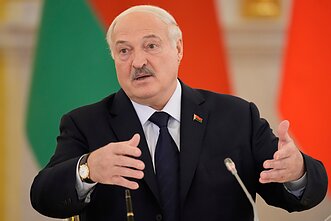
Alexander Lukashenko was quick to reject the suggestion of an imminent attack – days before two military helicopters violated Polish airspace, intentionally or not. And at least one observer, a retired Polish colonel, called the PM’s warning “absurd”.
Still, Warsaw has ramped up border security, while Vilnius has remained discrete about its response, which is likely to be lower-key even as one activist suggested Lithuania should close and mine the territory along its border with Belarus.
SOVEREIGNS AND THEIR CHILDREN
Another story that gripped the Lithuanian public this week revolved around parents who kidnapped their three children and tried to get them out of the country. How is that possible? Apparently, the couple would not let their kids go to school – presumably following prescriptions from an extremist anti-government and conspiracist movement that they’re a part of – and had their parental rights restricted. The children were put in a foster home, from where the parents took them in mid-July and were hiding until this week. They were discovered this week while trying to cross to Belarus using forged documents.
While authorities and child welfare agencies are still considering what to make of it, the story has ignited online discussions about the limits of parental rights, freedom of convictions and the state’s right – and duty – to interfere in family life.
THE GREAT SWIM-BACK
Lithuania’s ‘gold fish’ swimmer Rūta Meilutytė broke a world record and brought home a gold medal from the FINA World Aquatics Championships in Fukuoka, Japan.
Recall that Meilutytė first made a splash a decade ago, bringing gold from the 2021 London Olympics. There followed several years of a breathtaking swimming career and a world record. Towards the end of the decade, however, Meilutytė started showing signs of a burnout and decided to take a break from competing in 2019. But now she is back and kicking. Go, Rūta!
LOOSE LIPS SINK MINISTERSHIPS?
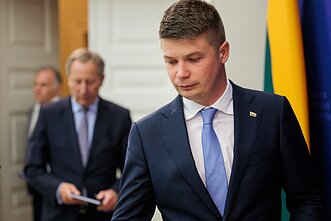
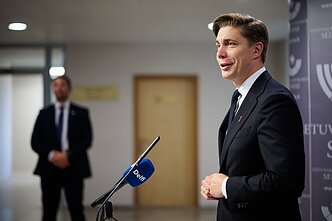
Defence Minister Arvydas Anušauskas is, according to polls, the most popular member of the current cabinet. It may have something to do with his uninhibited communication on social media. However, he may have gone too far last week when, after a closed defence meeting, blurted out on Facebook Lithuania’s plans to buy German tanks. Other participants in the meeting – like the president – suggested that this was not something to share publicly. The minister may be in trouble, though he himself insists he did not disclose any classified information.
FOREIGNERS IN LITHUANIA
A country of emigration for years, Lithuania is now becoming a destination for an increasing number of foreigners. The number of foreign citizens residing in Lithuania increased by more than 6,000 in the first half of the year, according to the Migration Department, with Ukrainians and Belarusians making up the biggest communities.
Meanwhile, even those Lithuanians who have left the country in the last couple of decades are increasingly eyeing opportunities to return, a recent survey suggests.
BUYING RUSSIAN
Despite strong pressure for Lithuanian businesses to sever all ties with Russia, around 140 of them continue to operate in the country that Lithuania is mentally – if not legally – at war with. According to a report by the business daily Verslo Žinios, they drew revenues to the tune of 370 million euros from their Russian operations, even as some claim they no longer conduct any active business there.
The best-known case is that of Kaunas Mayor Visvaldas Matijošaitis whose company – Vičiūnai Group, one of the biggest food producers in the country – retains assets in Russia despite pledges to sell them off as soon as possible.
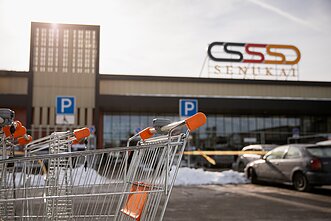
Some politicians have even suggested that supermarkets should label goods by companies like Matijošaitis’ Vičiūnai Group so that shoppers know about their links to Russia. According to one recent survey, shoppers themselves are divided on the issue, while supermarkets say they cannot put labelling in the absence of any government-approved blacklist for fear of opening themselves to litigation.
EDITORS’ PICKS
– Yields are great for Lithuanian beekeepers this summer, but they are still facing a crisis. Prices have plummeted – partly thanks to cheap imports from outside the EU, including Ukraine – and apiaries are calling for government subsidies to help them stay in business.
– While Lithuania has yet to legislate on same-sex partnership, several couples are seeking to win recognition through courts. So far, with little luck. One same-sex couple, having gotten married abroad, sued the Civil Registry Office to have it register their marriage. Alas, unsuccessfully – the court said it was up to the parliament to legislate same-sex marriage, not the judges.
– A story about how Red Army veterans, mobilised by force, became anti-Soviet partisans – a story about survival, collaboration and resistance and the tough post-war years and the difficult choices people had to make.
– As the Baltic states continue to resist Russia's historical narratives and falsifications, self-reflection would be more productive than self-righteousness, argues Violeta Davoliūtė, a professor at the Vilnius University Institute of International Relations and Political Science (TSPMI).
– More than 70,000 Ukrainian refugees have arrived in Lithuania since the full-scale Russian invasion. Around 14,000 Ukrainians lived in Lithuania even before the war broke out. Those who have been living here for years do not call themselves refugees but see a big difference in attitudes to them and their recently arrived compatriots.
Would you like to contribute to LRT English? Please send your suggestions, submissions, and pitches to english@lrt.lt
Written by Justinas Šuliokas
Edited by Benas Gerdžiūnas

Newsletter
Every Friday morning.