















As thousands of Wagner troops arrive in Belarus, neighbouring Poland and Lithuania have seemingly taken different approaches to contain what is increasingly named by officials as an emerging threat.
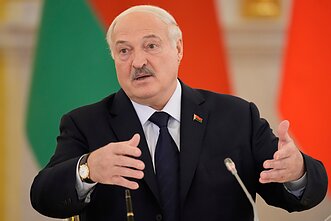
"The Wagner Group is bigger than the Lithuanian army. They came to Belarus for a purpose. And they are too expensive to help with the harvest. They will not help to harvest. Lukashenko wants to use them," Secretary of State at the Polish Interior Ministry Maciej Wąsik told Polish Radio on Monday.
The Wagner mercenary group, led by Yevgeny Prigozhin but backed and supported by the Kremlin, sent tens of thousands of troops to battle in Ukraine. Under a deal agreed with Moscow, remnants of the group have started relocating to Belarus following their short-lived rebellion in Russia.
Further reading
“This will be a more or less dangerous scenario for Poland and other neighbours. We do not know what this scenario is, so we have to watch this process very closely,” Wąsik was quoted by the ELTA news agency as saying.
Activists and monitoring groups have reported over 5,000 Wagner mercenaries reaching their base in central Belarus over the past weeks. In comparison, the Lithuanian Armed Forces have over 11,000 professional soldiers, as well as thousands of conscripts. There are also over 5,600 troops in the National Defence Volunteer Force (KASP).

On Monday, Lithuanian President Gitanas Nauseda also confirmed the Wagner group posed a serious threat, "even if the main scenarios might be different, or even if we are being led to believe that the scenarios are different and that Wagner groups might be heading for Africa or some other places".
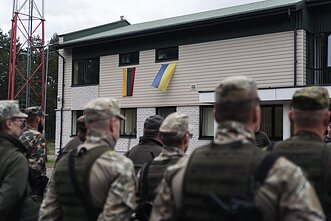
“It's too tempting not to use one's presence here, close to our border, for various provocations," Nausėda told reporters on Monday in Medininkai, close to the Belarusian border. "That's why I think the threat is serious.”
The group has previously been deployed in Africa and the Middle East to prop up various regimes, where they also secured mining and other lucrative deals.
Last week, Prigozhin said Wagner will continue its activities in Africa and Belarus. Wagner would stay "active in Africa and at training centres in Belarus", he said in an audio message posted on Telegram, according to the BBC.
Wagner has now been seen allegedly training various Belarusian military and border units, according to video footage published by state media.
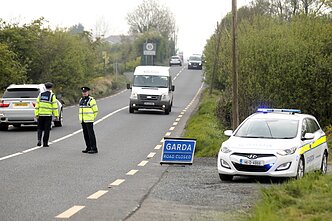
Poland recently sent additional military units to the border. Lithuania, however, said it saw no need to follow suit, as the country’s combat units, as well as some American and NATO forces, are already deployed near the border with Belarus.
Critics say Warsaw’s steps may be more linked to Poland’s upcoming election, with the government trying to appear in control of the situation.
Laurynas Kasčiūnas, chairman of the Lithuanian parliamentary Committee on National Security and Defence (NSGK), also linked the statements by Polish officials to the country's upcoming parliamentary election.
Further reading

"One more thing, don't forget, Poland gears up for an election. You can draw your own conclusions," he said.
Kasčiūnas said that the current number of Wagner mercenaries in Belarus "does not pose a conventional military threat".
"It’s an additional risk factor, it will depend on further scenarios, how they will be armed and on their mandate to act," he said on Monday, adding that the scenarios of a hybrid threat "are being discussed and have been prepared for".
Aurimas Navys, a former special forces officer in the Lithuanian military, said the country should prepare for more than just the Wagner troops.
"We should not talk about the mercenaries and not about Prigozhin, but about Russia in general and what Russia can do,” he told LRT TV last week. “There are around seven to nine thousand Russian regular forces in Belarus, as well as some special forces.”
Further reading

“We do not know how many special service agents, how many provocateurs there are, how many Belarusians might join, so these figures – a hundred, a thousand, maybe 10,000 – are worrying,” he added.
Previously, Lithuanian and Polish officials have said that their countries would be ready to close the border with Belarus in case of serious border incidents.
"If the situation deteriorates, a regional solution would be needed, and we are ready for that,” Lithuanian Interior Vice Minister Arnoldas Abramavičius said on Monday.
“But there's no need to talk about it today," he added.
However, Jonas Ohman, head of the prominent Blue/Yellow NGO that channels aid to Ukraine’s military and civil society, said the country should close and mine the border.
“We should do like Ukraine - close and mine the border,” Ohmanas told LRT RADIO last week. “We are on the threshold of war.”

At times, he has been an outspoken critic of Lithuania’s defence policies, based on what he has seen while working in Ukraine and its Donbas region since 2014.
“I'm deeply annoyed by the 'we will see, we will consider' approach," he said, adding that “the government is silent”.
Polish Prime Minister Mateusz Morawiecki said last week that more than 100 mercenaries approached the Suwalki corridor, a stretch of land between Poland and Lithuania flanked by Belarus and Russia’s Baltic exclave of Kaliningrad.
NATO and Baltic officials worry the area might be vulnerable in case of a Russian or Belarusian attack.
Edited by Benas Gerdžiūnas
Further reading

Newsletter
Every Friday morning.