














German automotive supplier Hella Lithuania said it plans to expand its operations in Lithuania even as another German industry player exits the market and manufacturers face growing labour shortages.
The comments follow an announcement by Aumovio (formerly Continental) that it intends to withdraw from the Kaunas Free Economic Zone.
Hella Lithuania, which produces automotive electronics such as radar systems at its Kaunas facility, said it remains committed to the country.
“Radar is very important – it is the vehicle’s connection with its surroundings,” said Maxim Zakletskiy, the company’s managing director. “It receives signals about what is happening around the car and helps drivers operate safely.”
Zakletskiy said the company has plans for continued growth, though at a slower pace than previously expected.
“We have a serious plan to grow, even if not as intensively as we had planned a few years ago,” he said. “Despite global challenges – from Covid-19 to the semiconductor crisis and geopolitical tensions – we feel comfortable in Lithuania. We want to stay and are looking ahead at least five to six years.”
However, he said recruiting and retaining workers remains a key challenge.
Data from the Employment Service shows that about one-fifth of job vacancies in Kaunas and the surrounding region are in manufacturing, with demand particularly high for machine operators, technicians and unskilled labour such as packers. Nearly 40% of openings are for skilled workers and craftsmen.

“The jobs are becoming more automated, and companies are modernising, so the need for qualified workers is increasing,” said Guoda Dociūtė, a department head at the Employment Service.
Zakletskiy said the company is looking for workers with both technical skills and adaptability.
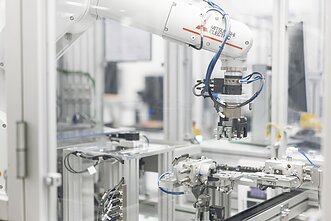
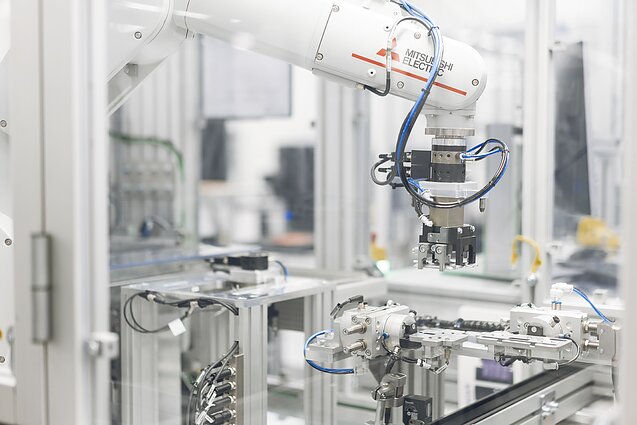
“Our factory is not a garage, it is modern and automated,” he said. “We use a lot of artificial intelligence, which raises the requirements for employees. They need to understand computers and keep up with the latest developments.”
Surveys by the Employment Service show that about half of manufacturing companies are dissatisfied with the qualifications of job seekers. Recruitment specialists say some candidates are reluctant to take industrial jobs due to shift work or perceptions that such roles are less prestigious.
Jurgis Kovas, head of staffing firm Biuro, said industrial jobs may ultimately prove more resilient than office roles in the face of technological change.
“The artificial intelligence revolution poses the greatest risk to office jobs,” he said. “Manufacturing roles are changing and require higher skills, but they have greater potential to remain.”
At the same time, rising labour costs and worker shortages are putting pressure on manufacturers. According to the Employment Service, some companies are scaling back growth plans and focusing instead on maintaining current output levels while investing in employee training.
Last year, about one in six surveyed companies said they had to turn down orders due to a lack of workers, highlighting ongoing challenges in Lithuania’s manufacturing sector.

Newsletter
Every Friday morning.