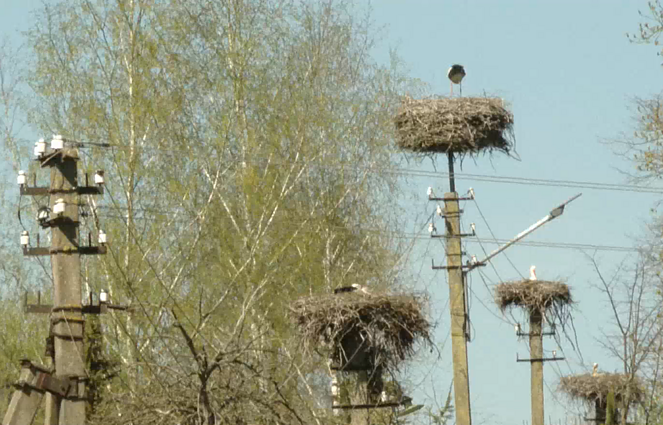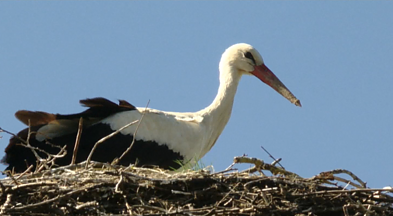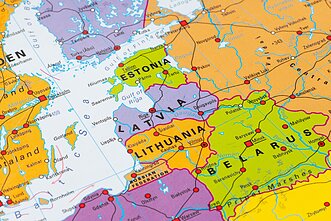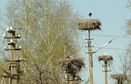














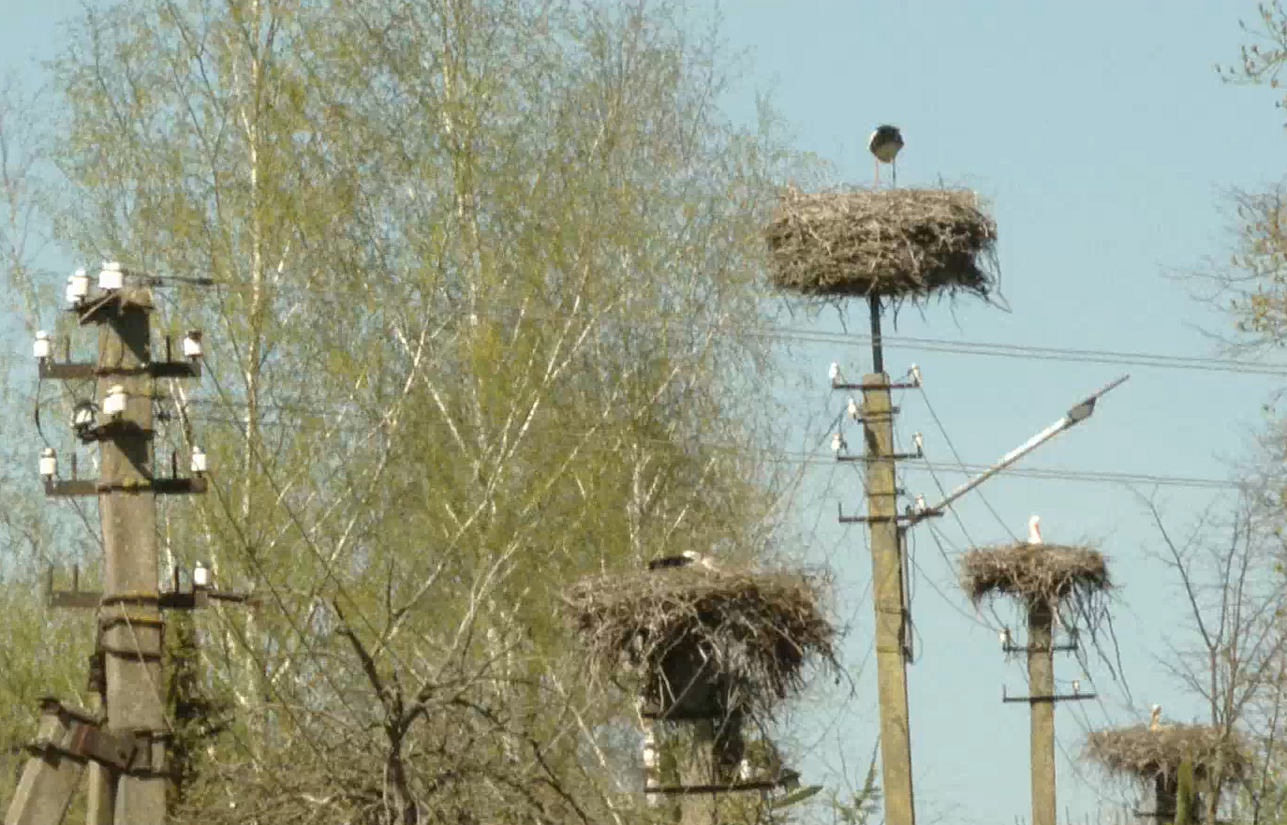
In the small village of Avižieniai in southern Lithuania, something remarkable happens every spring. Dozens of white storks return from their winter quarters in sub-Saharan Africa, settle onto specially built platforms atop electricity poles, and pick up more or less exactly where they left off the previous year.
There are now around 30 occupied nests in the village, with one pair this year choosing the top of a spruce tree. The colony has been growing steadily for four decades, and the locals have come to regard the birds as their neighbours.
"They clatter away morning and evening, when they return, when they greet each other. There are love dances, a great deal of affection – and when the chicks hatch, all that hissing and feeding begins. They are a truly Lithuanian fairy-tale bird," said Vida, a village resident.
White storks hold a special place in Lithuanian culture, long regarded as a symbol of good fortune and a harbinger of spring.
The first stork of the season arrived on March 16. By now, the females are sitting on eggs, with the incubation period, which lasts just over a month, well under way.
Males typically arrive first, spend a week tidying the nest, and wait for their partners to land. Though the pairs winter separately in Africa, they reunite on return, and tend to remain loyal both to each other and to their nesting site.
"If storks breed successfully, they will try to return to the same spot the following year. It matters a great deal that feeding conditions are good and that the nest structure is sound. Storks are intelligent birds – they are perfectly capable of assessing how humans behave around them," said Arūnas Pranaitis, an ecologist at the Žuvintas Biosphere Reserve.
That relationship with humans appears to be a good one in Avižieniai. The birds forage in gardens, fields and compost heaps, feeding on amphibians, insects and rodents.
"They divide up the feeding areas very carefully. You can spot one out walking at three in the morning, making its rounds from a neighbouring nest through the garden – each bird has its territory and guards it strictly," said Julija, a resident of Avižieniai.
The birds also take their domestic duties seriously. Residents say the storks spend much of the summer reinforcing their nests with branches, hay and even clods of turf – determined, it seems, to ensure nothing falls apart in their absence. When the female is incubating, the male keeps a close watch, ready to take over at a moment's notice.
Most pairs raise two or three chicks. Villagers say they have never seen a chick thrown from a nest – a behaviour sometimes associated with storks in difficult breeding conditions.
For many residents, watching the storks has become a quiet ritual. Vida describes it as a kind of meditation. Violeta posts photographs on Facebook, jesting that the village should be renamed after storks.
And yet Avižieniai isn't even the largest stork colony in the country – that title goes to the village of Bitėnai in Rambynas Regional Park, western Lithuania, where the birds nest in pine trees.

Newsletter
Every Friday morning.