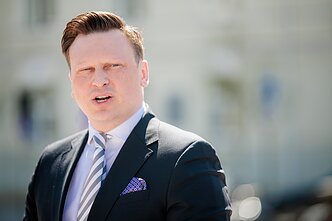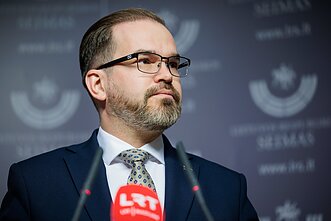












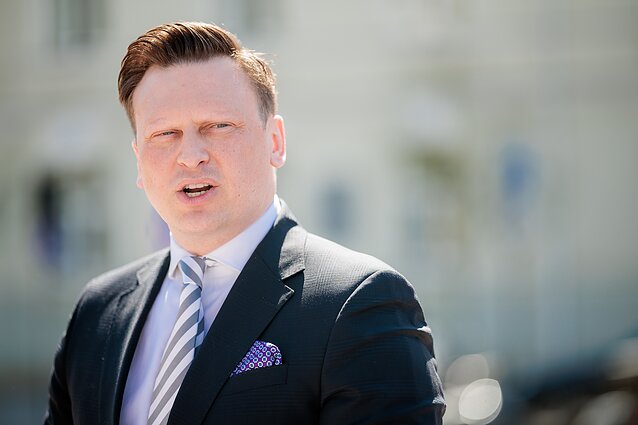
Vilnius Mayor Valdas Benkunskas said Monday that neither the government’s nor the municipality’s financial commitments to the long-delayed national stadium project will increase, rejecting suggestions that the Education, Science and Sports Ministry is seeking to reduce its contribution.
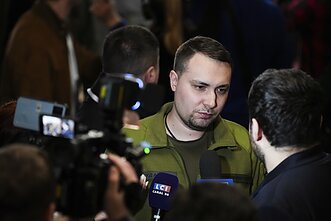
“That is not true,” Benkunskas told reporters when asked whether negotiations were underway to cut state funding.
“We need to review the concession agreement primarily from a technical perspective because some minor technical changes have been made,” he said. “The ministry also has certain operational requests, for example regarding the sports museum and events that the state plans to purchase.”
Benkunskas insisted that the total public financial commitments to the project would remain unchanged despite global economic uncertainty.
“We hope there will be no cataclysms. We see what is happening in the world, we see the situation with the Iran war, but in any case our contract clearly states that the indexation already approved is final,” he said.
“The entire complex, worth more than 150 million euros, will be completed for that price,” the mayor added.
He said construction is proceeding according to schedule and that the project’s completion dates should remain unchanged.
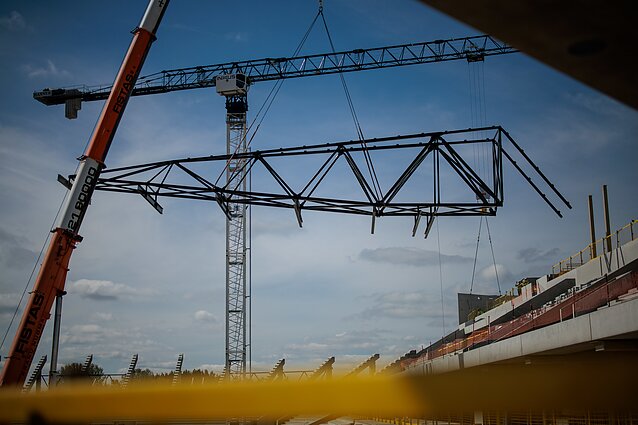
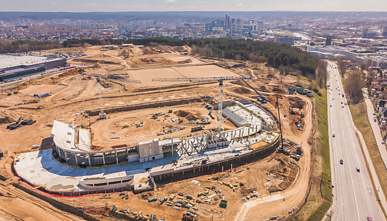
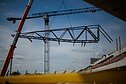
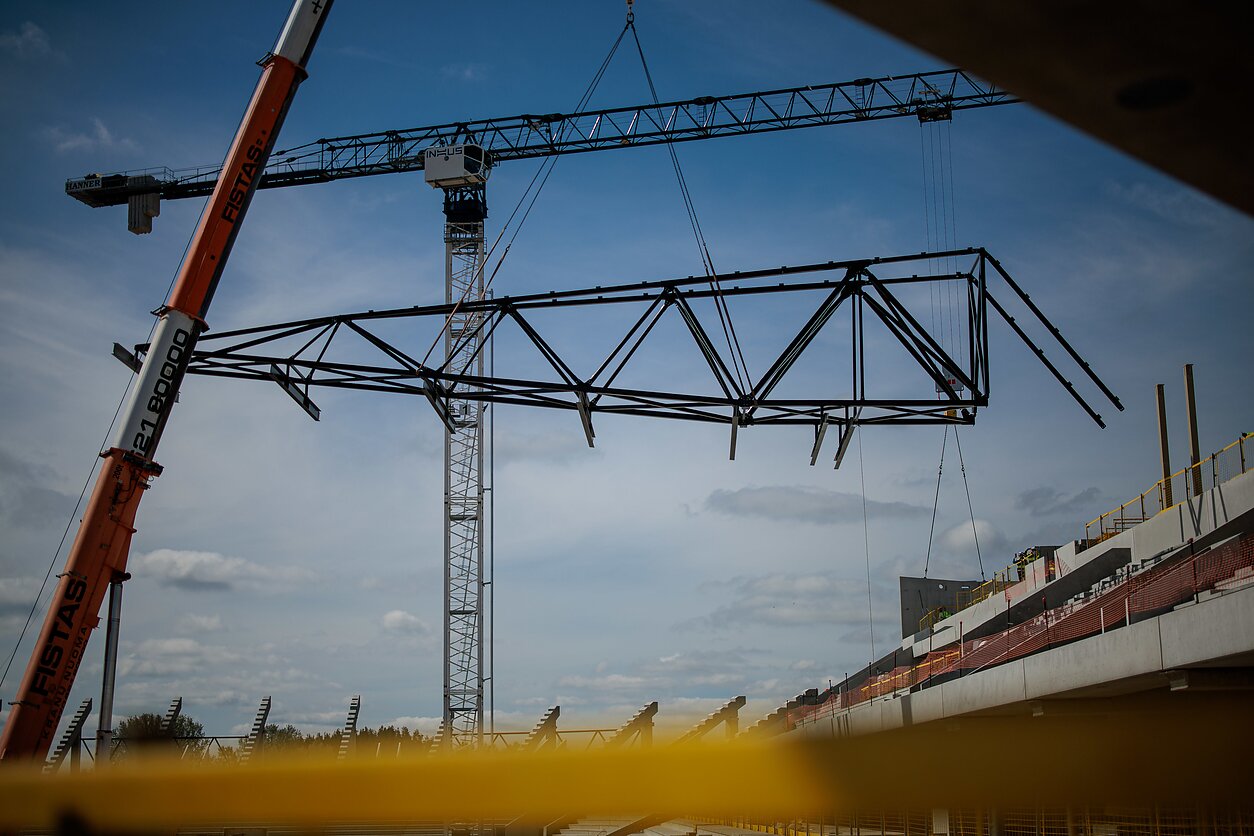
“The stadium is nearing completion of its reinforced concrete structures, and roof installation has already begun,” Benkunskas said. “Other facilities are also under construction. Foundations are currently being poured for the arena, while the cultural centre will be built during the final stage.”
“I can say the project is under control, being managed properly, and everything is progressing quite smoothly,” he added.
Arvydas Avulis, head of real estate developer Hanner, the project’s concessionaire, also said the project would not become more expensive for the state.
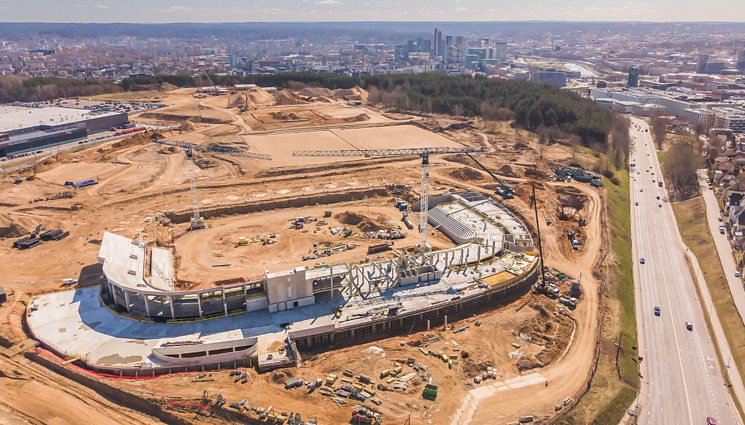
“It will not cost more. Guaranteed,” Avulis said at the construction site. “Anything that becomes more expensive is our risk, and we are responsible for it. If we signed the contract, we will complete it.”
Avulis said expanding the arena’s capacity from 5,000 to 7,000 seats would require an additional 5 million euros, but the company hopes to attract sponsors to cover the cost.
“We believe we will raise this money from sponsors,” he said, referring to BC Rytas Vilnius’ recent basketball success. “I have no doubt we will secure the funding and the arena will definitely be built.”
Commenting on the ministry’s request to make the complex more versatile and adapt the athletics facility for international championships, Avulis said some proposals would be difficult to implement.
“If the warm-up stadium were built exactly as the ministry wants, it would require encroaching on a protected nature reserve,” he said. “I doubt such a solution could be approved because protected areas are strictly regulated.”
Deputy Education Minister Giedrius Grybauskas previously told BNS that discussions were taking place with Hanner and the Vilnius municipality regarding possible amendments to the agreement and financing conditions.
According to BNS sources, the state is seeking to reduce its commitments after Hanner unilaterally increased the stadium’s capacity from 18,000 to 19,000 seats, a move expected to improve the future operator’s profitability.
The Vilnius City Council approved amendments to the concession agreement in 2024, revising the distribution of risks. The project is now expected to cost the municipality and the state about 155.1 million euros.
Avulis has previously said construction was initially expected to be completed by the end of 2027, but delays in obtaining a municipal construction permit pushed the contractual completion deadline to February 28, 2028.

Newsletter
Every Friday morning.