










LRT English Newsletter – June 17, 2022.
Although it didn’t explode as much in the English-language social media landscape, an alleged German backtrack took centre stage in Lithuania this week. Or was it actually a u-turn?
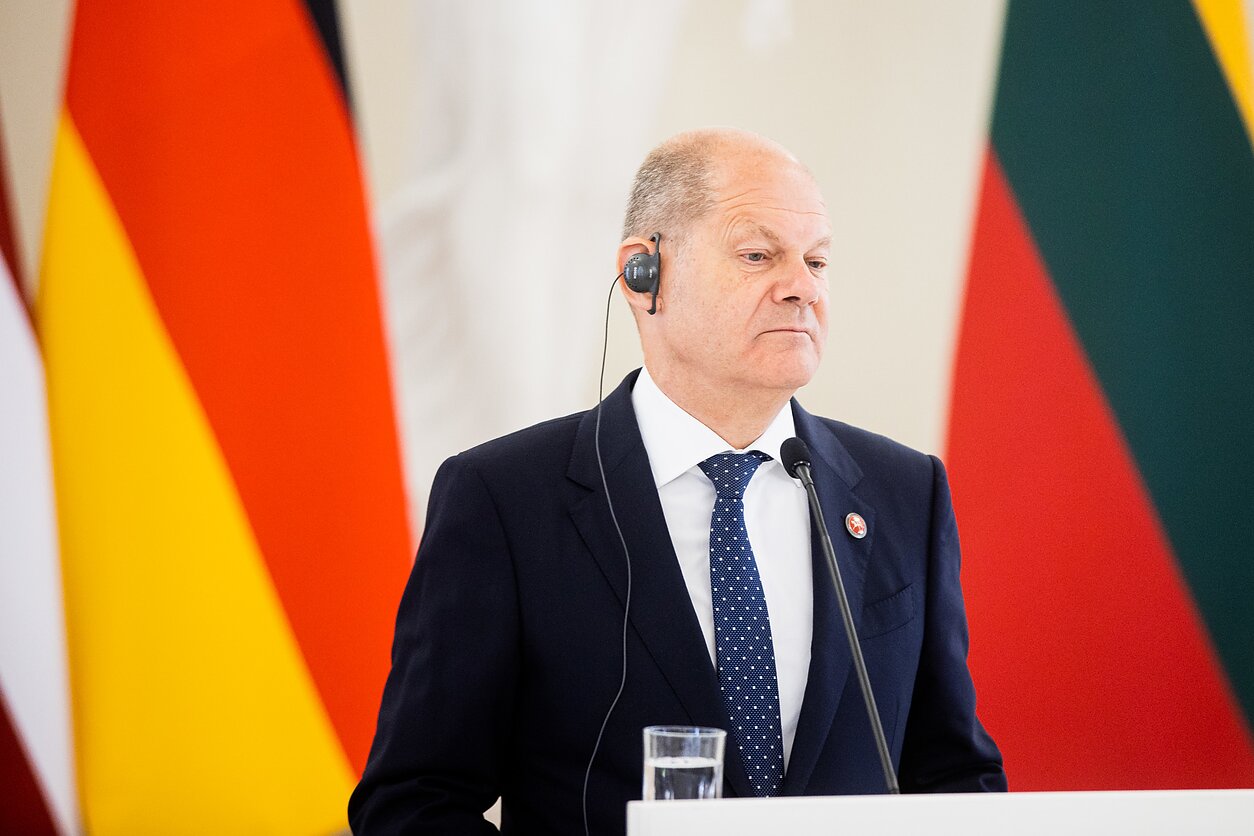
So here’s what happened – Chancellor Scholz visited Vilnius earlier this month and said a new brigade would be established. Everyone understood the brigade would be stationed in Lithuania, as he spoke about German troop presence here in the country. Lithuanian officials, as well as the media, repeated the same interpretation. However, it was either lost in translation, or the German chancellor did what some call “scholzing”. We will go with the former reading.
Basically, in the run-up to the NATO summit in Madrid, the Baltic states have been repeating their mantra of the past several years, but now with more urgency – there needs to be more NATO presence. A former Russian prime minister also said the Baltics could be next, while the anxiety over Russia’s aggression has a seemingly universal standing across the Baltic states, as previous polls have revealed.
So when the German chancellor visited the Baltic states for the first time, many were happy to hear of a “combat-ready brigade” being “created”. However, as it became known, only its headquarters with 50–60 people would be stationed here in Lithuania, with the rest of the troops rotating in for training. There simply isn’t space – if not political will – to have thousands more allied troops in the country, as was later confirmed by Lithuanian officials. More infrastructure works are needed, which could take years, they said.
The move to pre-position more hardware is also the name of the game within NATO, according to a Reuters report. Seven diplomats spoken to by the news agency revealed the alliance, including member states Great Britain and the United States, “do not favour permanent new bases in the Baltics”.
Why? Infrastructure issues, they said, as well Sweden and Finland coming on board with their armed forces (and transforming the Baltic Sea into a NATO lake) and a plethora of other crises faced around the world. But the diplomatic sources also made the oft-heard statement – “let’s not antagonise Russia”.
SEIMAS SPLITS
In more local news, the Lithuanian parliament has split. This (again) seems to have not attracted much interest among you, but we will explain it anyway. The drama focuses on the recent attempt by the opposition to unseat the agriculture minister, which was countered by the ruling bloc with some last-minute parliamentary sittings. The opposition was left outraged and left the chamber, saying they should be shown respect. The ruling parties, meanwhile, said they were obstructing the work of Seimas at a crucial time. Analysts are largely equivocal, pinning blame on both the ruling and the opposition parties for the display of clumsy politics. The president, meanwhile, has backed the opposition. Will this be resolved with early elections like in 1992? We will see, although experts say the answer is ‘no’.
NAUSĖDA SPEAKS
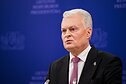
Lithuanian President Gitanas Nausėda has delivered his third State of the Nation speech. Here are some interesting (we though) outtakes (the full speech is available here):
– “Russia’s renewed full-scale war against Ukraine signalled the end of peace and relative tranquility for Lithuania and Europe.”
– “We will support Ukraine because it is a sisterly nation,”
– “our long-term strategic goal is to free the EU and NATO countries from energy dependence on Russia. [...] Humble telephone calls to Moscow will finally end.”
– “The focal point of our foreign policy strategy is to maintain a strong transatlantic presence throughout Europe and especially in the Baltic region.”
– “We stand up for the weaker person who is wronged and against violence in the street, don’t we? Why should we behave any differently at the state level? Why should we turn a blind eye when Ukraine is being raped?”
– “We must admit that in our efforts to combat the COVID-19 pandemic effectively we have not always found common ground on how to achieve this. [...] It was decided that a whip works much better than a carrot and that people could be vaccinated like a herd.”
– “Unfortunately, in Lithuania structural reforms are still associated with the absorption of money by a “group of friends” rather than with qualitative change.”
– “For the first time over a long period, wages and social benefits are rising much more slowly than prices. Monetary depreciation is absorbing the benefits of pension increases.”
– “The salaries of judges are becoming less competitive and the profession itself is losing appeal.”
– “The war in Ukraine has made it obvious that agriculture is a strategically important national security sector which will help us achieve environmental goals.”
– “Cheap labour is no longer, and will never be, Lithuania’s advantage in business.”
– “I would like to remind you that until recently Lithuanian businesses were encouraged to develop cooperation contacts with Chinese companies. But those who had suffered losses were told to be patient. And, in between the lines, to keep quiet.”
LOOMING RECESSION?
Some economists are abandoning the rosy forecasts of their colleagues and warning of a brewing recession, with inflation eroding saving and pay rises. Some signs are already in place – the Food Bank in Lithuania is reporting an increase in product donations.
EDITOR’S PICKS:
– Should Lithuania be worried about Russia “cancelling” its independence? And what do we know about the man behind the proposal, and the proposal itself?
– Lithuania to get new French howitzers by 2027.
– Mystery aircraft from Lithuania rattles NATO’s eastern members.
– Why does Nausėda have no rivals?
– Lithuania will purchase 197 stationary acoustic warning sirens in case of an accident at the Belarusian nuclear plant.
– On June 14, Lithuania marked the Day of Mourning and Hope – 81 years ago, after occupying the country, the Soviet authorities started mass deportations of Lithuanian residents to remote areas of the USSR.
– While Lithuanians are good at identifying propaganda, they are among the least likely to check information and its sources. From children studying 'fake news' to bridging gaps in media literacy education – here are some ways how Lithuania is tackling propaganda and disinformation.
– Lithuania has handed over M113 armoured personnel carriers to Ukraine
– Lithuania has launched millions in loans for companies affected by China sanctions, placed in the wake of Taiwan’s trade office opening in Vilnius.
– Six out of ten Lithuanians would support universal conscription, according to a survey commissioned by LRT.
– A curious story: a Lithuanian actress without a visa allegedly tried to use the asylum system to enter South Africa seemingly for a holiday.
– Here’s some behind-the-scenes from Stranger Things in Lithuania.
– And brace yourselves for a heatwave (here’s a primer on how to stay safe).
Would you like to contribute to LRT English? Please send your suggestions, submissions, and pitches to english@lrt.lt
Written by Benas Gerdžiūnas
Edited by Justinas Šuliokas

Newsletter
Every Friday morning.