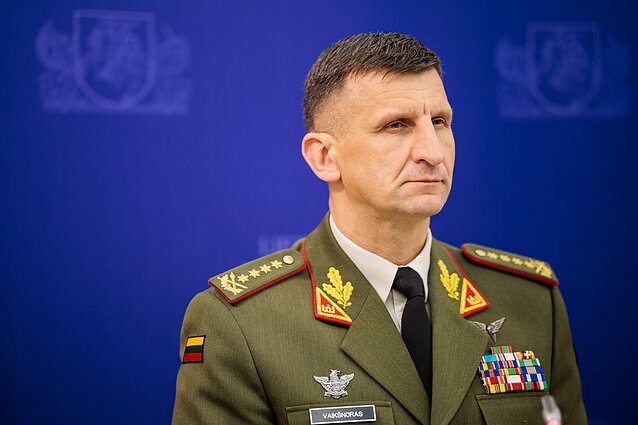

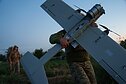












Lithuania’s Chief of Defence Raimundas Vaikšnoras has suggested installing physical barriers along vulnerable sections of the border with Russia’s Kaliningrad region, saying continuous troop patrols are costly and divert soldiers from military training.
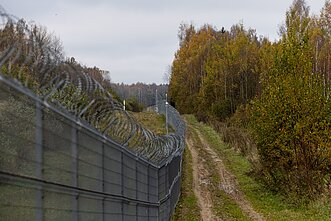
Vaikšnoras said the military should consider alternatives to maintaining a constant presence along the border, including barriers similar to those installed along Lithuania’s border with Belarus.
It was announced Monday that enhanced security measures along the Kaliningrad border had been extended until the end of November.
“There is a request from the Ministry of the Interior to extend joint patrolling with border guards to reinforce border security in areas, I stress, in areas that are potentially at highest risk,” Vaikšnoras said.
He said the heightened security measures were intended to counter potential activities by hostile saboteurs, draft evaders and smugglers.
Although the number of troops deployed along the border remains relatively small, security has been reinforced in specific sectors in cooperation with the State Border Guard Service.
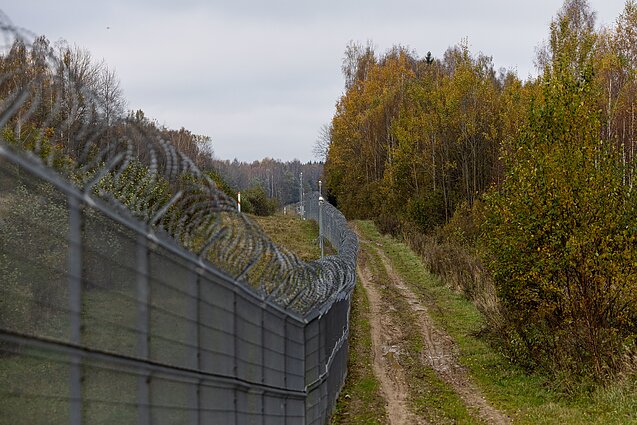
Vaikšnoras said army patrols required significant resources and took personnel away from military training, making physical barriers a possible longer-term solution in the most vulnerable areas.
Lithuanian military personnel have been assisting the State Border Guard Service along the border with Russia’s Kaliningrad region since October 8. In mid-October, Defence Minister Robertas Kaunas extended the assistance until mid-November.
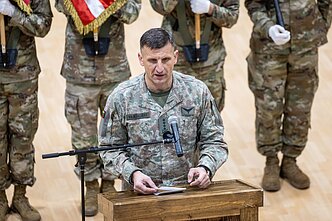
The armed forces have deployed around 100 troops to patrol areas under the jurisdiction of border checkpoints alongside border guard officers. Mobile patrols, mobile surveillance posts and Military Police units can also be deployed as needed.
Interior Minister Martynas Katelynas previously described the military deployment as a preventive measure prompted by public reports – rather than intelligence assessments – suggesting that Russia planned to mobilise forces after its State Duma elections.
Officials have stressed that the threat level along the border has not increased.

Newsletter
Every Friday morning.