
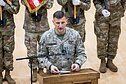
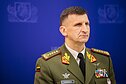
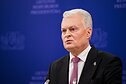



Lithuanian President Gitanas Nausėda delivered his annual State of the Nation Address, in which outlined the main challenges the country is facing.
Speaking in front of MPs in the parliament, Seimas, Nausėda gave his third annual address since becoming president in 2019. The full text of the speech, in English, is available here.
End of tranquility
Russia’s war in Ukraine ended the period of relative tranquility for Lithuania and Europe, Lithuanian President Gitanas Nausėda said, calling Ukraine’s post-war restoration his “personal commitment”.
“Just as we started to feel more confident about life after Covid-19 at the beginning of this year, we witnessed yet another tragic event,” the president told Lithuanian lawmakers on Thursday, delivering his State of the National Address. “Russia’s renewed full-scale war against Ukraine signaled the end of peace and relative tranquility for Lithuania and Europe.”
Having been taking the path of rapid change since the re-establishment of its independence, Lithuania has not seen “occupying troops” for the past three decades, and the country has been an active NATO and EU member, the president underlined.

“These are outstanding achievements. They testify that we have not been idle since regaining freedom. […] Therefore, today we are able to confront danger with courage, to stand up for our principles and to extend a helping hand to those who need it most,” the Lithuanian president said.
In his words, in pursuit of well-being and prosperity, Lithuania needs to act in three main directions. First, to support Ukraine and its people in their fight for freedom, dignity and a better future, as “it will make us stronger too”.
“Second, we must with all possible means restrain the aggression of Russia, which has returned to the path of autocracy, imperial thinking and territorial expansion, and at the same time maintain the international rules-based world order,” the president said. “Third and foremost, it is our duty to work together to ensure that Lithuania remains strong, resilient, advanced, and self-confident in a changed geopolitical environment.”
Commitment to restore Ukraine
Lithuania is “handling the first task in an exemplary way”, Nausėda noted in his speech. People in Lithuania have opened their homes to Ukrainian refugees, donated for humanitarian aid and voiced their support through various actions.
“We were among the first to provide military assistance to Ukraine. We send as much armaments and ammunition as we can afford while keeping Lithuania’s defences intact. We are also among the leaders in private military contributions,” the Lithuanian president said, adding that Lithuania will continue to provide it as Ukraine is “a sisterly nation”.

The president says it views this as “a personal commitment” for Lithuania to contribute to Ukraine’s post-war restoration.
“Lithuania will help Ukrainians to rebuild their country. We are already preparing for this today. For me, this is a personal commitment. I saw with my own eyes destroyed Ukrainian homes, with only charred walls left. I deeply and painfully grieve for the irreparably ruined human lives,” Nausėda said.
In Ukraine, he said, the fate of the whole of Europe is being decided. Therefore, EU and NATO countries must act together “to curb Russia’s imperial ambitions”.
Ending energy dependence
EU member states need to secure their energy independence from Russia, Lithuanian President Gitanas Nausėda says, while Lithuania needs to step up its power synchronisation project and focus on renewables.

Coordinated with transatlantic allies, the existing sanctions are increasingly straining Russia’s energy exports crucial for the Kremlin’s ability to finance the war, but the long-term strategic goal is to free the EU and NATO countries from energy dependence on Russia, Nausėda said on Thursday, delivering his State of the Nation Address in the parliament.
“Once the European countries break free from Russia’s energy grip, the groundwork will be laid for the EU’s full political autonomy. Humble telephone calls to Moscow will finally end. It is worth the effort.” the Lithuanian president said.
In his words, the early launch of the Gas Interconnection Poland-Lithuania (GIPL) is also an important achievement. It allows Lithuania, Poland and other countries in the region to receive natural gas supplies using each other’s terminals and storage capacities.
However, Nausėda called for stepping up the synchronisation with continental Europe and refocus on renewable energy.
More investment into defence
“The immediate task today is to strengthen our country’s military security. The heroic defenders of Ukraine show how much can be achieved by joining forces in the face of mortal danger,” Nausėda said.

“This year, we will spend 2.5 percent of GDP on defence. In the coming years, we will have to invest even more as well as to ensure the systematic education and training of military reserve personnel,” the president said, stressing that the more men and women are prepared to defend their country, the greater the deterrent effect.
Speaking of the upcoming NATO summit in Madrid in late June, Nausėda voiced his expectation for “ambitious decisions […], which will significantly strengthen the deterrence and defence of the eastern flank of the alliance”.
“NATO has already responded to the Russian threat by expanding its air policing mission in the Baltics. We must substantially reinforce air defence capabilities in Lithuania and the other Baltic states,” he said. “I cannot see effective deterrence without expanding NATO’s enhanced forward presence to brigade size. We have recently agreed on this with German Chancellor Olaf Scholz.”
As the geopolitical situation deteriorates, the country needs to rapidly prepare for national defence, the Lithuanian leader said.
“To achieve comprehensive security, we must ensure that state institutions, businesses, non-governmental organisations, and ultimately all citizens are ready to fully support armed defence. The contribution of each and every one is significant,” Nausėda said.
In his speech, the president also stressed the importance of bolstering civil protection.

“We also have the unsafe Astravyets nuclear power plant – yet another tool of Russian and Belarusian aggressive policies – in our immediate neighbourhood. We, therefore, need to establish the Crisis Management Centre as soon as possible, start organising civil exercises at national level, and move from declarations to actual work on reinforcing fire safety and civil protection,” the president said, stressing the need for all municipalities have well-equipped shelters that meet at least minimum needs.
On irregular migration, Nausėda praised the country’s institutions successfully handling the influx of asylum seekers from Belarus.
“Most importantly, the migration crisis provided an impetus to launch long-delayed work on strengthening the protection of Lithuania’s national and the EU’s external borders,” Nausėda said.
Helping businesses hit by China sanctions
The government must help business to find alternative markets, diversify exports and promote investments to make use of the Lithuanian economy’s full potential and competitiveness, President Nausėda said.
“I cannot see rapid economic growth without smart economic diplomacy and state level efforts to open new markets for our businesses,” Nausėda said.
He also pointed out that some Lithuanian businesses had suffered from China’s stormy reaction to the opening of a Taiwanese representative office in Vilnius, and criticised the government for its failure to prepare for retaliatory action.

“This decision was made on the assumption that China’s response would be limited to restricting export and import operations and would not affect third-country business in Lithuania. It turned out to be overly optimistic. Still worse, no countermeasures were prepared. Businesses were not notified in time,” the president said.
“I would like to remind you that until recently Lithuanian businesses were encouraged to develop cooperation contacts with Chinese companies. But those who had suffered losses were told to be patient. And, in between the lines, to keep quiet. The state must help businesses to open the door to alternative markets, to diversify exports and investments. The principle of ‘the wood is cut – the chips fly’ is not only short-sighted but also morally irresponsible,” Nausėda underlined.
In his words, the success stories in biotechnology, information technologies, lasers, and other sectors are encouraging. Traditional economic sectors are not less competitive. Moreover, the 2.2 billion euro funding from the EU’s Economic Recovery Fund, which has been extensively negotiated at the European level, opens new horizons for Lithuania, according to Nausėda.

Newsletter
Every Friday morning.