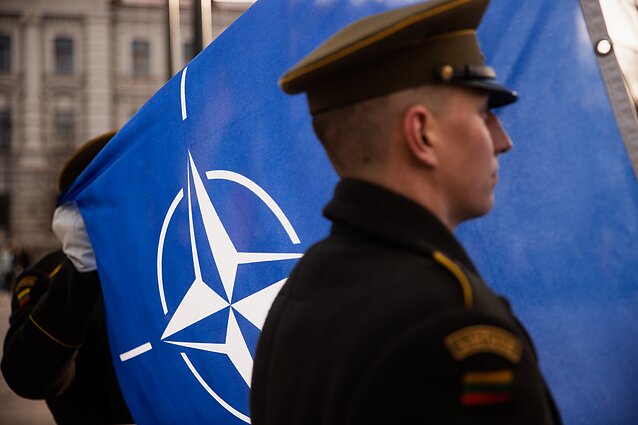

















Since Russia invaded Ukraine, the Baltic states have issued urgent calls for more NATO presence, saying they could be next. However, the alliance is not eager a station thousands more troops next doors to Russia, according to the Reuters news agency.
Reuters interviewed seven senior diplomats and officials from leading NATO allies showing the June 28–29 summit in Madrid will not result in a significant increase in permanent allied deployments in the Baltic states.
This is due to the multitude of defence tasks faced by NATO, as well as the prospects of Finland and Sweden joining the alliance, which would significantly transform the security outlook in the Baltics.
Since 2017, Estonia, Latvia, and Lithuania have each hosted a multinational NATO battalion of some 1,000 troops, called the Enhanced Forward Presence.
But "it’s a joke" that Russia would be deterred by a battalion, according to Kusti Salm, the permanent secretary of Estonia’s Defence Ministry. Speaking to the Defense One news website, he said the current NATO deployments are "obsolete".
Now, the three countries are asking the alliance to increase its presence of some 5,000 troops "by as much as tenfold, as well as adding air and maritime defences", according to Reuters. Baltic officials maintain that Russia’s brutality in Ukraine means no territory can be lost even at an early stage of any potential aggression.

"The situation in Ukraine shows we were right," Estonian Colonel Andrus Merilo told Reuters. "Estonia cannot lose territory, NATO cannot lose territory."
But to base such an increase in troops and equipment, the Baltic states are yet to construct adequate infrastructure, as the recent controversy surrounding a German-led brigade has shown.
On Wednesday, a report by Financial Times alleged Berlin had backtracked from its earlier proposal to deploy a "combat-ready" brigade in Lithuania.
However, the claim was countered by German and Vilnius officials, saying Lithuania needed time to prepare bases and infrastructure which could take years. Now, Germany is only intent on establishing a permanent headquarters and pre-positioning equipment, with additional troops rotating to Lithuania for training. This was later also confirmed in Brussels by NATO’s Secretary General Jens Stoltenberg.

Read more: LRT FACTS. Did Germany backtrack from deploying a brigade in Lithuania?
Three of the diplomats also echoed the statement, saying "many members, including Britain and the United States, do not favour permanent new bases in the Baltics".
"They said it would cost billions and be hard to sustain: The states may not have enough troops and weaponry, and a permanent presence would be highly provocative for Moscow," Reuters reported.
The proposal instead focuses on intelligence as seen in the run-up to the Ukraine invasion.
While Lithuanian officials continue to stress the need for more permanent deployments, Lithuania’s Chief of Defence Valdemaras Rupšys also said "Russia will still have huge military capabilities remaining" following the war in Ukraine.
"After some time [...] they will try to threaten us by military means," he told Reuters. "You will see."

Newsletter
Every Friday morning.