














LRT English Newsletter – May 22, 2026.
It’s just past 9:30 on Wednesday morning. You are grabbing a second coffee, cramming for an exam, or waiting for your flight at Vilnius airport.
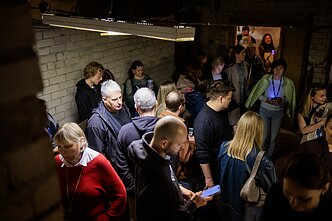
Suddenly, your phone goes off – "Air alert! Immediately head to a shelter or a safe space." The alert directs you to the government's emergency preparedness portal, LT72.lt. You try opening the website – it crashes. The app won't open. The shelter map won't load. You eventually find your way to the nearest designated shelter – it's locked. An underground parking lot will have to do.
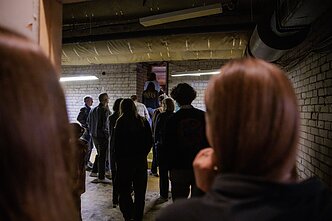
At school, the administration looks uncertain. Some students are shepherded to the basement, only to find it half-blocked by old furniture and construction equipment – no room for everyone. The rest wait in windowless interior corridors.
At Vilnius airport, recently renovated, there's no shelter at all. Flights are delayed as airspace closes, but the terminal carries on largely as normal. Some foreign visitors, who never got the alert in English, are tapping locals on the shoulder asking what on earth is going on (here’s how to change that).
This is a composite picture of Wednesday's events, drawn from complaints that reached LRT.lt from Vilnius residents. Not everyone ran into problems listed above, but taken together, they reveal the fault lines in a system that had never been tested quite like this before.
In many ways, the system did work. Trains stopped, airspace closed, the president and parliament moved to shelters, hospitals paused planned surgeries. The response resembled what you'd expect in wartime. But the gaps were real and visible and we at LRT weren't exactly flawless either: between expert interviews on what to do in an air alert, the radio was playing songs like Frank Sinatra's My Way. Look up the lyrics. It has now become a meme.
The alert was lifted shortly before 11:00. As of Thursday evening, the drone that triggered it has not yet been found. The military resumed searches Thursday across the Vilnius and Varėna districts after an overnight pause, but the object vanished from radar. Its origin, ownership, and flight path remain unknown, though the pattern fits a growing series of Ukrainian drone incidents over the Baltic states attributed to Russian electronic warfare efforts.
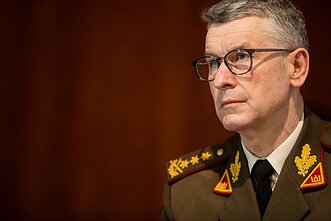
State Security Department chief Remigijus Bridikis said Wednesday that Lithuania's security situation is growing increasingly tense – and lawmakers across the board have been clear: this is likely to happen again. At virtually every level, authorities are promising to do better next time.
As if on cue, Thursday brought another test. An air alert was declared in Lithuania's northeastern Utena district after radar picked up objects likely entering from Belarus – possibly two drones. The objects disappeared from radar before being identified, a military helicopter and NATO jets were dispatched to search the area. The pattern, it seems, is not waiting for anyone to do better.
GAPS IN DRONE DEFENCE SYSTEM
Wednesday's air alert was the most dramatic illustration yet of Lithuania's drone problem, but it wasn't the first warning sign. On Sunday, a drone came down in a field near Samanė village in the Utena district without military systems detecting it at all. By Monday, it was confirmed to be carrying explosives and was neutralised on site in a controlled explosion. It's believed to have been Ukrainian, knocked off course by Russian interference – the same explanation given for a drone that came down in Varėna in March.
Taken together, the incidents made the underlying problem impossible to ignore. Lithuania's early warning system is not functioning properly – built for bigger and slower-moving objects, it struggles with fast drones that fly low. Newly delivered radars aren't fully integrated yet. A complete system had been targeted for before 2030, a timeline now under pressure.
Officials have identified the most promising fix: closer cooperation with Ukraine, which has more practical anti-drone experience than almost anyone. A team of Ukrainian experts is expected in Lithuania shortly.
THE NUCLEAR QUESTION
Buoyed partly by French President Macron's proposal for a broader European nuclear deterrence model, Lithuanian politicians have opened a debate this week that would have seemed unthinkable not long ago: should Lithuania amend its constitution to allow nuclear weapons on its territory?
Article 137 currently bans weapons of mass destruction and foreign military bases outright. Changing it requires 94 out of 141 MPs to vote in favour, twice, with a three-month gap in between. That's a high bar. But the Seimas Speaker, the President, the defence committee chair, and leaders across the opposition have all said the conversation is worth having.
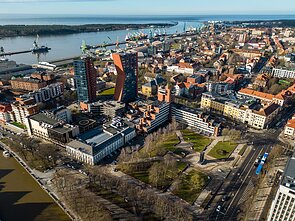
The debate also has a practical trigger: the Seimas just upheld a port law that was vetoed by President Nausėda, who argued its wording could allow nuclear-armed ships into Klaipėda, which would already breach the constitution as written. MPs voted this week to reconsider the law, with deliberations continuing.
PAYING FOR DEFENCE
Lithuania is spending more on defence than almost anyone in NATO – 5.4% of GDP and rising. The Rūdninkai military campus alone, being built to house the incoming German brigade, just raised another €27.3 million from Baltic investors for its second phase, backed by a €540 million European Investment Bank loan.
But the National Audit Office issued a sobering warning this week: the bills are starting to add up in ways that will be hard to manage. Without new revenue sources, the general government deficit could hit 3% of GDP by 2028 and breach EU fiscal rules the year after. Public debt is projected to climb from 45% to 55% of GDP by 2029. Defence spending gets a temporary EU exemption until 2028, but that clock is ticking.
Lithuania remains one of the lowest public-revenue countries in the EU. At some point, defence spending at this scale and public services are going to compete for the same money.
STUBB IN VILNIUS
Finnish President Alexander Stubb was in Vilnius this week, and he had a lot to say.
– On the drone incidents, he offered a paradox: the Baltic states need to learn how to defend against stray Ukrainian drones – from the Ukrainians themselves. Don't blame Ukraine for fighting a defensive war, Stubb said, but do raise the problem of collateral damage, and fix the gaps by learning from the pros.
– On the war itself, Stubb was confident. Ukraine holds all the cards going into any eventual talks, he argued that Russia is weakening, and the math is shifting.
– On NATO and the Americans – Stubb is convinced the US is not leaving the alliance. US bases in Europe are essential for Washington to project power globally; Russia's nuclear arsenal on the Kola Peninsula is aimed at New York, not Vilnius. America needs Europe and vice versa.
LGBTQ+
The Justice Ministry is appealing court rulings ordering it to register same-sex partnerships rather than implement them. Courts have so far recognised 24 partnerships; the ministry has appealed four of them. Its argument: no Partnership Law, no legal basis to act. Lawyers disagree, saying that the Constitutional Court's ruling last April was explicit – registration can proceed through the courts until parliament legislates – and that the ministry is simply choosing not to comply.
That reluctance to act fits a broader pattern. Lithuania met just 5 of 32 criteria in Transgender Europe's annual rights index – scoring on par with Belarus. Only Romania, Hungary and Turkey scored lower.
EDITOR’S PICKS:
– An anthropologist spent months talking to Indian migrants in Lithuania – what she found challenges almost every assumption Lithuanians have about them.
– How a Telegram meme account briefly convinced half of Europe that Estonia was on the brink of separatism – and how the institutions meant to stop that from happening were the ones who made it go viral.
– The man Putin tried to silence says his end is closer than it looks.
– Celebrate the incredible history of the Lithuanian Chicago Opera that is marking its 70-year anniversary
– What does it take to bring gira (kvass) to Britain?
Written by Austė Sargytė
Edited by Benas Gerdžiūnas

Newsletter
Every Friday morning.