














Lithuania's defence minister has called on the Air Force to clarify how long it will take to fully integrate newly delivered radars into the country's detection network, after military systems failed to spot a drone that crashed in the Utena district on Sunday.
Robertas Kaunas said the aim was to link all available radars into a unified network to improve drone detection.
The Air Force has been tasked with pursuing two parallel workstreams: testing Lithuanian-developed software that connects short-range radars with drone interceptors, and working with Ukrainian air defence experts to build a seamless anti-drone system.
Kaunas had previously set a target of having a fully integrated air defence detection system in place before 2030, but acknowledged that the public was expecting faster results.
"We are accelerating as much as possible, but unfortunately we must accept that it takes some time," he said.
The minister stressed that some detection capability was already in place, but cautioned against unrealistic expectations.
"We are already able to spot some low-flying drones, but it must be understood that 100% detection does not exist in Ukraine, Russia, America or anywhere else in the world," he said. "Our capabilities grow every day with every new radar and technology the Lithuanian Armed Forces and the Ministry acquire."
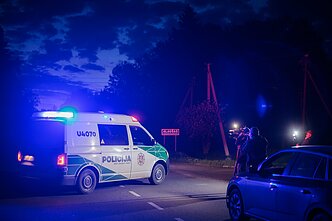
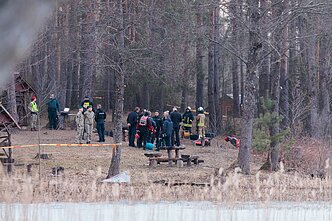
Sunday's incident came after residents reported a drone coming down in a field near Samanė village in the Utena district shortly after 19:00 local time. Officials believe the aircraft was Ukrainian in origin and was not carrying explosives.
It is the latest in a series of drone incidents in Lithuanian airspace. A Ukrainian military drone crashed in the Varėna district in March, while Russian Gerbera drones breached Lithuanian airspace twice last year – one of which was carrying explosives.

Newsletter
Every Friday morning.