








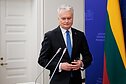


Seimas Speaker Juozas Olekas said on Tuesday that Lithuania should consider amending its constitution to allow the deployment of nuclear weapons on its territory, citing the current geopolitical situation.
"Given the situation we are in, the geopolitical situation and what is happening, I believe it is certainly worth doing," Olekas told reporters at the parliament.
Article 137 of the Lithuanian Constitution currently stipulates that there may be no weapons of mass destruction or foreign military bases on Lithuanian territory.
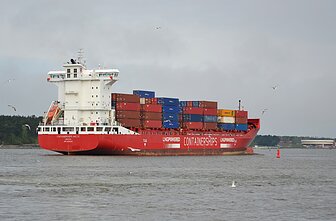
The Seimas is simultaneously deliberating on the Law on the Klaipėda State Seaport, which was vetoed by President Gitanas Nausėda.
The president argued that the law’s wording could create preconditions for ships carrying nuclear weapons to enter the port, which he said would violate the Constitution.
Olekas said Lithuania should define its position on nuclear deterrence more clearly and consider joining broader NATO or European "nuclear umbrella" initiatives.
The Seimas Speaker also noted that various scenarios – ranging from the deployment of nuclear weapons to the movement of nuclear-powered ships or aircraft – should be thoroughly evaluated before any decisions are made.
Discussions regarding constitutional changes on this issue have previously been raised by former Defence Minister Dovilė Šakalienė.
The current Defence Minister Robertas Kaunas maintains that Lithuania relies on US nuclear deterrence guarantees, while France has proposed creating a broader European nuclear umbrella.
President backs, committee chair talks
President Gitanas Nauseda supports discussions on amending the constitution if Lithuania seeks to host nuclear weapons on its territory, a presidential aide said on Tuesday.
"The president supports a discussion on changing the Constitution, given today's geopolitical situation," presidential aide Ramunas Dilba told reporters on Tuesday.
The president previously proposed that parliament establish a total ban on nuclear-armed ships entering Klaipėda port, while maintaining a limited exception for nuclear-powered vessels, provided they do not pose a threat to national security.
According to Nausėda, the presence of allied nuclear weapons on Lithuanian soil could serve as an appropriate and proportionate deterrent against armed aggression from hostile foreign states.
However, he stressed that the Constitution must be amended before such a measure could be legally implemented.
Dilba said the president supports high-level political debate on the matter, though final decisions rest with the Seimas. He also noted that Lithuania, as a NATO member, is already part of a nuclear alliance.
The chairman of the Seimas Committee on National Security and Defence, Rimantas Sinkevičius, also backed such discussions.

"I believe such a need exists; it is real. Amending the Constitution, as you know, is not a simple process. It must be achieved through cross-party agreement, and such a process should begin," Sinkevičius told reporters on Tuesday.
He said that as part of defensive alliances, Lithuania could consider using its infrastructure or airspace for allied deterrence measures in certain situations if necessary.
To amend the Constitution, at least 94 out of 141 members of parliament must vote in favour twice, with a three-month interval between the votes.

Newsletter
Every Friday morning.