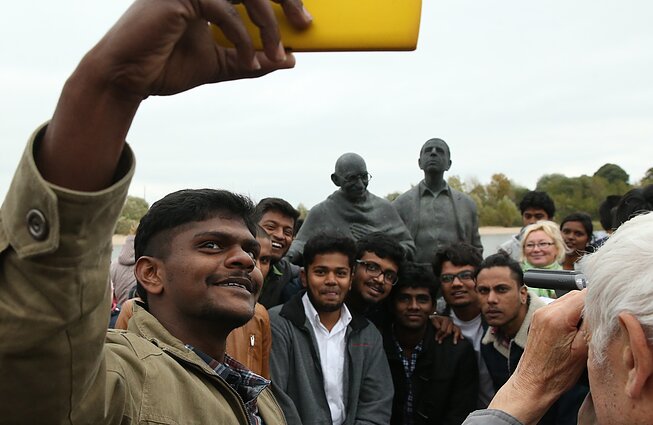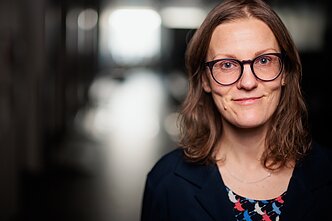











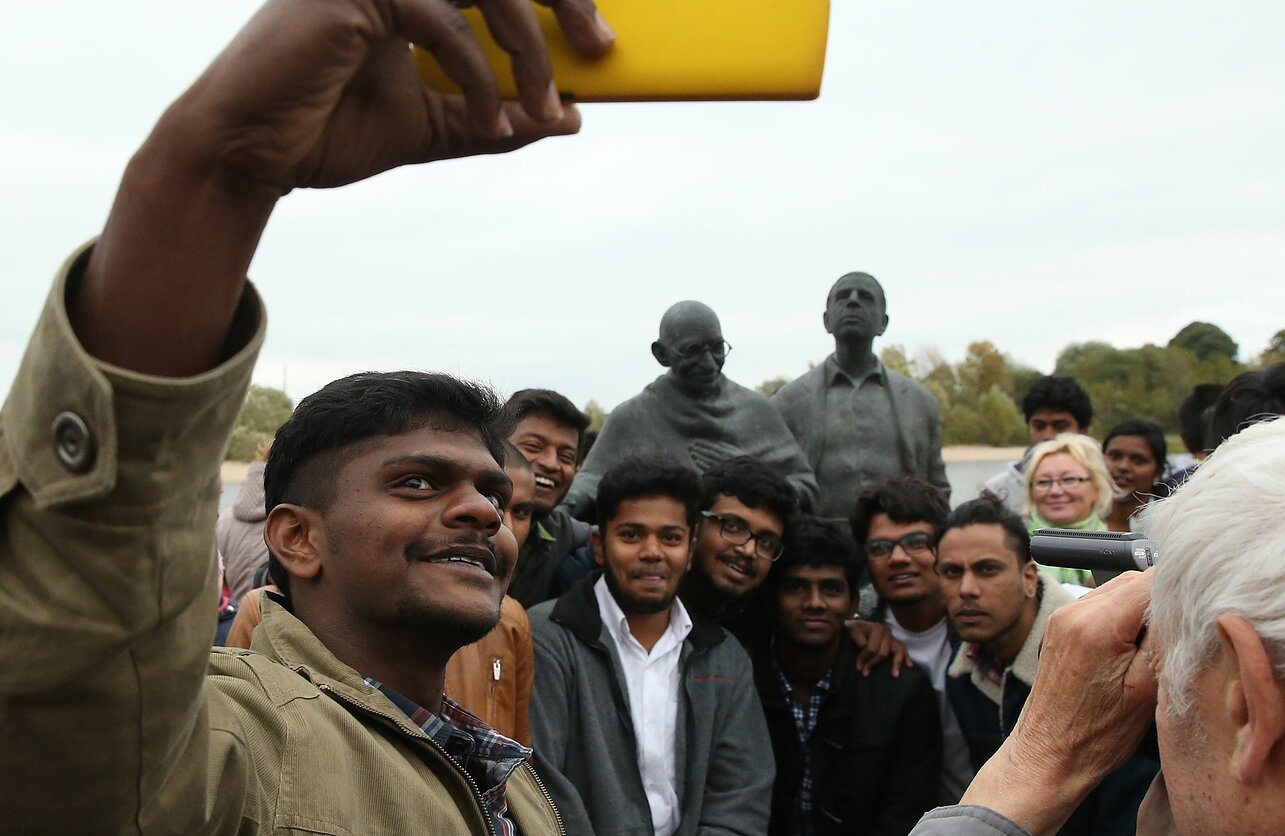
Anthropologist Kristina Garalytė found that the biggest challenge facing Indian nationals in Lithuania was the language. As part of her study, she also looked into cultural differences, including the diverging attitudes toward Russia and its war against Ukraine.
“This was a new situation for me – previously I had worked in India, whereas here I had to establish contact with people living outside their own country and therefore was more cautious,” says the scholar from the Institute of Asian and Transcultural Studies at the Faculty of Philosophy of Vilnius University.
The research, conducted primarily in Vilnius, Kaunas, and Klaipėda, involved more than 30 participants and focused on questions of migrant identity, including those in the context of the war in Ukraine.
“We were interested in how people position themselves – nationally and transnationally – and how they perceive what is happening around them,” Garalytė says.
Working in diverse sectors
One of the key concepts Garalytė uses to describe the position of Indian migrants in Lithuania is the term “convivial disintegration”, coined by scholars Fran Meissner and Tilmann Heil. In her interpretation, it can be understood as “communal disintegration”.
According to the researcher, this contradictory condition best reflects people’s everyday experiences.
“It refers simultaneously to a desire for connection and participation in society, and to distance and detachment. These are coexisting, and sometimes conflicting, ways of being,” she says.
This paradox is visible even within the Indian diaspora itself. Despite an outward sense of unity, the community is divided along various regional and cultural lines.
“The clearest division is between people from northern and southern India, as well as between different states and cultural traditions,” the researcher notes.
At the same time, she stresses that this does not mean a loss of shared identity.
“It does not mean that by maintaining their regional culture, they stop being Indian. But at certain moments these differences become significant and visible.”
Relations with the host society are equally complex.
The research documented numerous accounts of distance – from stories of discrimination to feelings of cultural difference and incomplete inclusion.
“This emerges through personal stories and through the feeling that you are not fully accepted,” the researcher says.
At the same time, these observations are not limited to negative experiences. Alongside them is a clear desire for integration.
“We see efforts to participate, engage and build connections. One respondent said directly: ‘I understand this may sound strong to Lithuanians, but I genuinely love Lithuania.’”
The research also shows that the stereotypical image of Indian migrants in Lithuania – most commonly associated with courier work or low-skilled labour – hides a far more diverse reality.
A significant proportion of respondents were students or former students trying to establish themselves in the labour market. Alongside them were highly qualified specialists working for international companies.
“The community is much more diverse than people tend to think,” Garalytė says.
She also draws attention to motivations for migration. While political circumstances are central for Ukrainians and Belarusians, Indian migrants are more often driven by economic and educational reasons.
Even here, however, the picture is not straightforward.
“There are also people who choose Lithuania not only because of work or income, but because they want the experience of living in a society less saturated by migration, in a different cultural reality,” she explains.
According to Garalytė, some highly skilled professionals increasingly see traditional destinations such as the United States, Canada or the United Kingdom as less attractive precisely because there they once again find themselves within a familiar Indian cultural environment.
“In this sense, Lithuania is perceived as more authentic, not yet ‘colonised’,” she says.

Integration and ‘colonial thinking’
Speaking about integration, Garalytė notes that the term itself is increasingly debated in academic circles.
“Many researchers criticise the concept of integration because it reproduces a kind of colonial thinking – as though migrants are expected to meet certain difficult standards and expectations,” she says.
According to her, academic work increasingly prefers to speak not of “integration” but of “inclusion” or “participation” in society.
At the same time, she argues that it is impossible to abandon the term completely in practical policymaking. “Integration remains a working concept, though it must be used carefully.”
In her own work, she proposes examining the process through the eyes of everyday experiences.
One of the study’s key questions concerned the future plans of Indians arriving in Lithuania. The findings suggest that, in most cases, the choice is pragmatic.
“Many first hear about Lithuania through intermediaries – educational or employment agencies. The country is presented to them as a more accessible alternative to other European states,” the researcher explains.
Lower tuition fees, higher salaries than in Gulf states, and the opportunity to move around the EU and seek work elsewhere all make Lithuania something of a “gateway” to Europe.
Long-term plans, however, vary widely. Some come for a few years to study or work temporarily before moving on, most often to Western Europe. Others return to India, often because of strong family ties.
“Even those who would like to stay often say: my parents are still there, and I need to care for them – and that becomes the deciding factor,” she notes.
Nevertheless, some remain and attempt to build a life in Lithuania. Among them are highly qualified professionals working in international companies, as well as people who originally arrived to study.
“There are stories of people who graduate, find work, bring over their family and build a life here,” Garalytė says.
Even in such cases, however, barriers remain – above all, bureaucratic ones. Restrictions linked to property purchases or third-country national status constantly remind migrants of their position and complicate long-term planning.
Lithuanian language a major obstacle
Language emerged as a separate and important theme. On the one hand, most respondents acknowledged that Lithuanian was the greatest challenge in everyday life.
“When I asked what was hardest, most people answered: the language,” the researcher says.
On the other hand, actual motivation to learn it remains mixed.
“For a long time, many people managed with English, and the system allowed it. Language requirements were relatively low, so some people simply did not need to learn Lithuanian in depth,” she explains.

That situation is gradually changing, partly because of stricter language requirements in the service sector.
According to Garalytė, there is already a noticeable movement within the Indian community towards learning Lithuanian: people are looking for courses, discussing language learning in community groups and trying to find opportunities to study.
“I attended an event organised by the Indian community in Klaipėda and was pleasantly surprised when its leader spoke Lithuanian. So there are definitely people who speak the language,” she says.
At the same time, the researcher stresses the need for realistic expectations.
“If someone has arrived for only a year or two, works on temporary contracts or moves frequently, it is not entirely fair to expect them to master the language at a high level,” she says.
Garalytė notes that everyday experiences also depend heavily on the type of work migrants do. Those in highly skilled jobs generally view life in Lithuania positively. Among people employed in lower-skilled sectors, however, more difficult stories emerge. Interviewees spoke of discrimination, exploitation and cultural barriers in relation to local society.
At the same time, she argues that responsibility for language difficulties should not be placed solely on migrants themselves.
“It is important to look at what conditions the state creates: how accessible language courses are, whether they are adapted to different groups, and whether they take account of people’s working schedules and educational backgrounds,” she says.
The anthropologist also points to gradual changes within the Indian diaspora itself.
“People are increasingly realising that life will be difficult without the language. And that is an important moment – when motivation comes not only from external requirements, but from an internal desire to become part of society,” she concludes.
The Russia question
The Russian context was another important aspect of the study, inevitably shaping perceptions of the war and broader views of the region among Indian migrants.
As Garalytė notes, for many respondents, Russia is not simply a participant in the current conflict, but a country with a long history of relations with India.
“In many interviews, people spoke about how India historically felt supported by Russia, especially during the Cold War,” she says.
According to the researcher, this experience creates a certain inertia in perception: Russia is viewed not only through the angle of present-day politics, but also as a long-standing partner that contributed to India’s development.
By contrast, some respondents associated Western countries with colonialism and a lack of support during critical moments in history.
This helps explain the caution often found in their assessments. Many Indian migrants, Garalytė observed, avoid making unequivocal statements, preferring instead to speak about “the complexity of the situation” or “the need to consider different sides”.
“This is not so much a pro-Russian position as an attempt to think in terms of India’s national interests,” she stresses.
Distance also plays a role. For some migrants, the war remains a “foreign” conflict taking place in a region to which they have no direct connection.
“They find it difficult to engage emotionally with this war – it is not their geopolitical reality,” the researcher explains.
That picture changes, however, as migrants become more involved in local society. Those who have lived longer in Lithuania, interact with local residents, or work and study alongside Ukrainians, often begin to reassess the situation.
“The more direct contact people have, the harder it becomes to remain in an abstract, neutral position,” Garalytė notes.
In such cases, interviews began to contain more empathetic statements and, at times, explicit support for Ukraine.
Interestingly, some stories also revealed a deeper reassessment of Russia’s role itself. One respondent admitted that it was only after arriving in Lithuania that he first saw Russia not as a “traditional ally”, but as a power perceived by neighbouring countries as a threat.
“For him it was a kind of rethinking – an encounter with a different historical memory,” she says.

Newsletter
Every Friday morning.