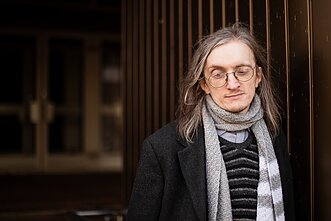














Valdemaras Klumbys, senior researcher at the Lithuanian History Institute, writes a three-part opinion article about the growing polarisation in society. In this instalment, he discusses propaganda blindness sweeping across the country. The original article (in Lithuanian) is available here.
This propaganda blindness is illustrated perfectly well by using the example of the USSR. A system that seemed all-powerful, guarded by the all-knowing KGB, collapsed for many reasons. One of them was that the Soviet elite completely failed to understand either its own society or the processes taking place in the Soviet Union and the world.
Further reading
Yuri Andropov, the then Soviet leader, said bluntly in one speech: “We have not adequately studied the society in which we live and work.” And this was said by the leader of the USSR, who had recently headed the KGB – it would seem that if anyone should have had all the information about what Soviet society was like and what was happening in it, it was he.
But propaganda tripped them up, blinding the Soviet rulers, those proposing solutions, and those making decisions. In the Soviet system, reality was seen through the prism of ideologised propaganda.
Thus, after the protests following the self-immolation of Romas Kalanta in Kaunas in 1972, the Soviets were feverishly trying to understand what to do. The very idea that youths born in the USSR and educated in Soviet schools were rebelling did not fit into the propaganda framework – after all, they were supposed to have been raised as builders of communism: modest, socially minded, ideologically conscious.
And yet this youth were becoming hippies, listening to Western music, flocking to non-Soviet films, and adoring Western clothing.
What answer can propaganda offer? The same one as our current propaganda, which sees Russia’s hand everywhere – the hostile propaganda is to blame. The solutions were correspondingly familiar:ideological work with schoolchildren, students, and working-class youth must be strengthened.
In practice, at the time, it meant replacing chief editors of youth publications, tightening censorship, fighting rock music, and exerting pressure on ethnocultural activists and hiking clubs. The result was that more than a few apolitical young people began reading banned literature, and some even became involved in anti-Soviet resistance.
The outcome could not have been otherwise. Decisions driven by propagandistic blindness were completely ineffective because they did not even touch the reasons for young people’s alienation from Soviet ideology, their interest in Western culture, and their attraction to national identity.
Social and cultural norms changed throughout the USSR, but not because of any propaganda, rather because society was developing, its way of life was becoming more modern, and there arose a need for a different understanding of national identity. And the youth culture shaped by the state was unable to offer anything adequate to these changed needs.
And this was how things went in all areas of the USSR – economics, the social sphere, and culture. Known in advance, ideologically “correct” solutions were applied instead of searching for new ones.
The world was changing, including within the Soviet Union itself, while the state offered decades-old recipes that did not work or even made the situation worse. The entrenched propagandistic mindset made it impossible both to understand the causes of problems and to find effective solutions.
The reader may object: why so much attention to Soviet ideocracy, how can its experience be applied to our society, as it is different – there is no censorship or official ideology, there is a democracy.
However, I wrote in the first article that the effect of propaganda is the same in all systems; there is no need to reassure ourselves that democracy is an antidote to propaganda or that democratic propaganda is somehow different.
An entrenched propagandistic mindset inevitably puts blinders on, directing thinking in a single direction. It does not matter that very righteous ideas lie behind it, whether gender equality, democratic values, or the fight against an aggressor.
Everything is evaluated through the prism of a propagandistic matrix, especially if something does not fit into it.
For example, if an expressed opinion does not meet the propagandistic criteria of a “correct” opinion, it becomes evidence of unreliability or even hostility. In such an interpretation, there is no need to discern malicious intent, conscious harm, stupidity, or unwillingness to think more broadly – it is simply impossible to think otherwise when propaganda takes hold.
Political scientist Mažvydas Jastramskis, analysing the data of the latest Democracy Sustainability Barometer study, in my opinion, quite often simply repeats our propaganda.
The fact that 40 percent of respondents think that Lithuania’s rhetoric toward Russia is overly aggressive means to him that “people do not understand the Russian threat”. Really? In the same survey, when asked directly whether Russia poses a threat to the Baltic states or whether more NATO troops are needed here, the majority answered affirmatively, and the majority also support the need to support Ukraine.
I have little doubt that some of those 40 percent are simply afraid that overly aggressive rhetoric could provoke Russia. The question is rather abstract, so some respondents may also have thought that it referred to the banning of Russian culture, the equating of all Russian residents with Putin’s regime, and other manifestations of propaganda prevalent in the public space that are not acceptable to everyone.
Different, more nuanced questions and qualitative interviews supplementing this quantitative survey are needed to better understand what respondents had in mind. But propaganda offers self-evident interpretations.
It is even stranger that the data showing that “about 60 percent of people think that the conflict with China harms Lithuania’s economy, and about half of the population thinks that the conflict with Russia is harmful” are also considered evidence that the resilience of Lithuania’s population “is not satisfactory”.
But did the conflict with Russia really not harm Lithuania’s economy? The rise in energy resource prices after the start of the war, record inflation, reduced tourist flows, stalled investments – none of this happened, or perhaps it had a positive effect on the economy? Economists spoke about difficulties – are they also not resistant to the all-powerful Russian propaganda?
Interpreting the data in such a way shows that the interpreter himself is trapped in propaganda.
People who are more educated are more strongly influenced by propaganda, because they answered this question “more correctly”, ie what the society expects to hear.
This also shows how propagandistic thinking narrows the possibilities for understanding one’s own society when propaganda reproduces itself. That’s because people who find themselves in such conditions imagine that their opinion is the dominant one in society.
Therefore, the author of the LRT.lt text probably quite sincerely believes that Ainė Ramonaitė “surprised everyone” with her critical view of the cultural workers’ protest.
Unfortunately, this only once again demonstrates a detachment from reality: I know more than one Vilnius-based person from the cultural sector who, to put it mildly, is critical of the protest following the resignation of Ignotas Adomavičius (as the protest began because of his appointment).
A position validated by propaganda seems self-evident and the only correct one, so all “normal” cultural workers automatically appear to adhere to it – after all, it simply cannot be otherwise.
Of course, there are dangerous ideas, such as the belief in the harmfulness of vaccines. Unfortunately, changing it is difficult.
However, the way antivaxxers were fought during the Covid pandemic was ineffective and increased their numbers rather than reducing them. Precisely because it was a fight – misguided people were shamed rather than talked to. Coercion naturally provokes rejection and resistance.
But it is not only imprisonment in a propagandistic matrix that blinds and shapes thinking. The already discussed censorship formed by the pressure of patriotic unison prevents the expression of opinions that do not conform to that unison.

One can also recall the epidemic of political correctness that infected the Western world. As often happens, it was based on correct ideas of respect, diversity, inclusion, and equality. (By the way, many Bolshevik ideas were also good; their value was destroyed by repressive implementation and propagandistic simplification.)
However, when this turned simply into propaganda, creating zones of silence on certain issues, where one can either agree or remain silent, the ideas implanted in this way began to repel part of society – we now have an ultraconservative reaction.
In Lithuania, it is vitally important to know the situation in Russia. But I can only agree with Mariusz Antonowicz’s doubts as to whether we are experts on Russia – what dominates the public space is a propagandistic image of it, through which we do not see reality.
It is difficult to say something “good” (that is, not corresponding to the propagandistic image) about Putin’s Russia – you can easily be labelled some kind of “vatnik”. Meanwhile, the views on Russia swing from it’s about to lose and go bankrupt, to how it will easily win over Europe.
This maintains a propagandistic tone by appealing to emotions of pleasure and fear, but has nothing to do with reality. And this, by the way, also harms societal resilience.
The collapse of unrealistic expectations caused by propaganda is dangerous because it generates disappointment, apathy, and even anger. For some people, supporting Ukraine begins to seem harmful, while an agreement with Putin, who appears invincible, starts to look beneficial.
Such a reaction to the mismatch between propaganda and reality in part of society is inevitable. The greater the mismatch, the sharper and broader the reaction.
The discrepancies between Western propaganda and reality are also exploited by Kremlin propagandists, who expose them and thus strengthen their own propaganda, drawing into their orbit those who also see the discrepancies.
People, unlike how the elite perceives them, are not stupid. Perhaps they do not always find answers that correspond to reality, but they are certainly capable of exposing the lies and distortions of “correct” propaganda.
I myself have encountered the avoidance of taboo topics, to put it mildly. In 2023, an interview with me in Russian for a Lithuanian news website about the Soviet legacy, de-Sovietisation, and the situation of Russian speakers in the context of the war was initially postponed for several months by editorial decision because “it was not the right time,” and it never appeared later either.
I am not disclosing the news website, because I understand that those who provide information in Russian in Lithuania are simply forced to exercise caution, so as not to be accused of all possible sins.
What seemed to me to be a necessary, even if not very pleasant, conversation with our Russian-speaking population did not correspond to the image of Russian-speakers created by our propaganda. They will now be welcomed by the Kremlin propaganda.
Another censoring factor is the symbiotic relationship between our own and hostile propaganda. An opinion that corresponds to Putinist propaganda is immediately discredited.
On the one hand, this seems to be how society should react to hostile propaganda. However, it should be remembered that propaganda aimed at external audiences, when it is good (and Putinist propaganda, unfortunately, is good), rarely uses blatant lies that can be easily refuted.

Once a person is already drawn into a propaganda bubble, they are influenced by another kind of propaganda, which is intended for an internal audience that allows for a much broader use of lies.
There are not many people abroad who succumb to such an approach, with the exception of Moldova. Therefore, to influence large segments of society, there has to be a more sophisticated methods than using blatant lies, like seeking out real problems and sensitive points in society and interpreting them in a way that is beneficial to the Kremlin.
In Lithuania, this is especially evident in matters of history. Putinist propaganda has appropriated the victory in the Second World War and May 9. And our side did not even try to offer an alternative interpretation: politicians would not go to soldiers’ cemeteries on that day and did not attempt to promote a moderate narrative that would block the Putinist one.
And how could they have done otherwise – they would immediately have been branded as disseminators of “Kremlin manuals” and the like. All that remained was to insistently push the alternative of May 8. Formally, everything seems fine, as Europe commemorates this day.
But in Lithuania, people commemorated the Soviet date for more than half a century. For a long time, even after the restoration of independence, this did not provoke major controversies.
This means that a tradition had formed. For more than one generation of those who commemorate this date, it is important. And suddenly it is imposed from above that another day must be commemorated, and that Soviet soldiers were occupiers.
This is reminiscent of the ban on February 16 during the Soviet era. Today, no one is prosecuted for celebrating May 9, but public condemnation and shaming are effective instruments.
An important place never remains empty, and with the help of our propagandists, this day has become a powerful weapon of Kremlin propaganda. We handed it over ourselves and then are indignant that those who commemorate this day are victims of Kremlin propaganda.
But that is far from the truth. In a 2022 LRT report about the commemoration of May 9, alongside various odious exponents of the Kremlin narrative, there was also a Ukrainian with a Ukrainian flag, and a person for whom it is a day of remembrance, unrelated to Putin.
How many such moderate people, who simply want to mark a day familiar to them, have our completely inflexible propaganda pushed into the embrace of Putinist propaganda? And who benefits from this? I can only state that Kremlin propaganda is of higher quality than ours.
When Kremlin propagandists and their mouthpieces in Lithuania claim that if not for the Soviet occupation, Lithuania would have been occupied by the Nazis and most Lithuanians would have been exterminated, Andrius Tapinas, in the pseudo-counterpropaganda segment of his programme, can only feebly resort to irony about the campaign “choose the Russian occupation”.
Unfortunately, our propaganda cannot answer this question with even minimal argumentation. Such were the circumstances during the Second World War that there were no possibilities to restore independence. Some Lithuanians chose an absolutely illusory option – that a victorious Germany in the future would, for some reason, grant independence to Lithuania – while others chose a repressive occupation that at least formally and entirely fictitiously recognised Lithuania as a union republic.
Quite a few Lithuanians hoped that at the end of the war it would be possible to repeat the declaration of independence of 1918, but after the Yalta agreements, this became impossible.
Those who chose the Soviet option were right at least in the sense that they chose the winners. And then there was the Holocaust, the wartime transfer of Lithuanian farms to German colonists, the telling refusal to recognise the restoration of independence both while preparing the June Uprising and after it took place, and the unwillingness to form SS battalions from Lithuanians in 1941, clearly due to a racist view of our nation as inferior.
Unfortunately, the Soviet occupation appeared more acceptable. You may register me among the “vatniks”, but the fact that a person’s opinion partially coincides with that of Putinist propagandists does not mean that he is influenced by that propaganda.
And why did I call the segment of Tapinas’s programme about “Kremlin manuals” pseudo-counterpropaganda? That’s because it’s a product of internal propaganda, intended for those already within the propaganda bubble, merely confirming their opinion and reinforcing it.
It is completely ineffective as a tool of counterpropaganda, because it does not speak to those who doubt, who ask questions, who think differently; it does not even attempt to draw such people to its side.
In Russia, programmes by Vladimir Solovyov and similar propagandists are of this kind. Russian opposition figures and Ukrainian counterpropagandists love excerpts from them, because they broadcast the most odious narratives (that an atomic bomb should be dropped on Brussels, that Emmanuel Macron’s wife is a man, or that perhaps it is time to occupy Estonia, and so on).
There are no arguments in them, only emotions, and they are oriented toward eliciting an emotional response from viewers. At the beginning of the war, I tried to watch what Kremlin propagandists were saying, but it was simply unpleasant. Listening to “Kremlin manuals” is similarly unpleasant.
In my opinion, they display exactly the same aggressive, emotional demonstration of righteousness, a great deal of mockery and hate speech – all of this provokes a reaction of rejection, even when one agrees with the core claims.
What this manner of speaking, consciously or not, seeks to achieve is to silence those who think differently and to demonstrate symbolic power. It also contributes to the depletion of the public sphere, turning it into a collection of agitational messages. Such an environment blinds people, preventing them from understanding the surrounding world.
Life is more complex than the picture offered by propaganda, and alongside us, there are people who think differently, not necessarily wrongly or pro-Russian. Unfortunately, it seems that in Lithuania different societies are forming – or perhaps have already formed – that can barely communicate with one another.
If “correct” politicians appeal only to “correctly” thinking voters, someone will emerge to gather the rest. And I fear that the populist politician, Remigijus Žemaitaitis, may be far from the worst option.
For now, however, one can enjoy the illusion of unity in the public space and chase away everyone who does not march in lockstep.

Newsletter
Every Friday morning.