







LRT English Newsletter – March 1, 2024
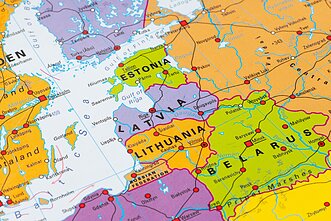
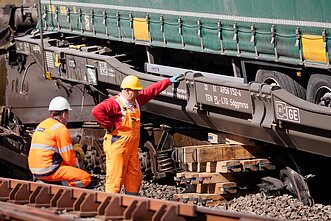
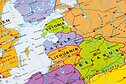
It’s the first day of spring and we start with a “partial” blockade of the road connecting Lithuania with Poland. The week-long action is organised by Polish farmers disgruntled by the effects of duty-free Ukrainian grain imports on their business. They have been blockading the roads on the border with Ukraine and even Germany – and also say that cheap grain is coming to Poland via Lithuania.
What does the “partial blockade” mean? We will only find out once it starts, said Lithuania’s Agriculture Minister Kęstutis Navickas on the eve, having been in unsuccessful talks with the Polish authorities and farmer representatives about changing their minds.
How come this is happening in a country that is otherwise one of the staunchest supporters of Ukraine? The Russians must be behind it – at least that’s the take expressed by both Lithuania’s head of government and foreign minister. Poland’s ambassador said it’s wrong to accuse the protesting farmers of being influenced by Russia.
Lithuania is starting a blockade of its own – today, we are closing down two checkpoints on the border with Belarus.
MACRON THE HAWK
Since the start of the Ukraine war and even before, the French president has always come across as a moderate in the so-called Western camp, occasionally drawing ire from hawks for suggestions seen by them as too accommodating to Russia. Well not anymore – this week Emannuel Macron made headlines by apparently suggesting that NATO could send soldiers to fight in Ukraine. A change of heart or is he trolling his erstwhile critics and daring them to put their money where their mouth is? Either way, the possibility has been firmly dismissed by the other allies, including Germany and the US.
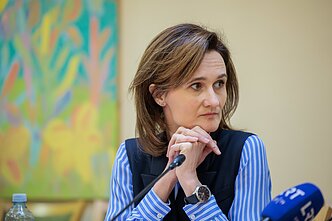
Lithuania’s defence minister has also said the country is not planning to send troops to fight in Ukraine – but could send them to train the Ukrainians. Other Lithuanian politicians seem not at all averse to Macron’s challenge – the parliament speaker welcomed his breaking “a taboo”, while the foreign minister said this started a useful discussion in which “no option can be rejected out of hand”.
There have been more exchanges of combative rhetoric between NATO and Russia. Lithuania’s former foreign minister and now ambassador Linas Linkevičius welcomed Sweden’s accession to the alliance with a tweet saying that Kaliningrad “would be neutralized” if Moscow challenged NATO in the Baltic Sea which has become a “NATO lake”. The Russian Foreign Ministry’s spokeswoman called it a salvo in an “information war” and noted that Linkevičius no longer had the authority to make such statements.
MUSIC AND POLITICS
Lithuanian fans of the American singer LP were in for a disappointment this week. The singer caused controversy by posting a video in which she is wearing a hoodie with the Russian flag gifted by her Russian fans. LP took down the video soon enough and posted a new message expressing support for Ukrainians, but this hardly quelled the outrage. Later in the day, Žalgiris Arena – the venue of the concert she was to play next week – cancelled the event.
BALTCAP UPDATE
As the investigation into large-scale embezzlement at the investment fund BaltCap continues, a court has allowed keeping the suspect – former fund manager Šarūnas Stepukonis – under arrest for another month.
Meanwhile, an internal investigation at BaltCap has found that the total sum of money that Stepukonis embezzled from the fund’s companies and possibly gambled away in casinos stands at 40.4 million euros. BaltCap also said he had no accomplices in the company and was covering his tracks with large quantities of forged documents.
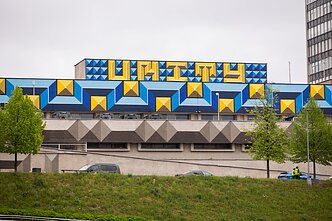
Meanwhile, the national stadium project in Vilnius – which was to be built by one of BaltCap’s companies – is moving ahead after the city’s council endorsed changes to the contract allowing for a 40-percent increase in construction costs.
NO FREE COFFEE
The presidential election is in two and a half months and the potential candidates are now collecting voter signatures in order to be put on the ballot. To speed things up, the incumbent Gitanas Nausėda promised to invite a handful of signatories for coffee and a discussion about “books, basketball, and the future of Lithuania”. And sparked a controversy.
After receiving a complaint, election watchdogs cautioned Nausėda that he cannot buy coffee for voters since that would be a material benefit for their signatures. They will have to pay for their coffee themselves, Nausėda corrected his offer.
Freedom Party MP Tomas Vytautas-Raskevičius, who has clashed with Nausėda over LGBTQ+ rights on numerous occasions, has said he is one of the lucky signatories to win a coffee date with the president.
EDITORS’S PICKS
– The European Union requires that the vast majority of people living in settlements of at least 2,000 people be connected to a centralised sewage system. In Lithuania, only around half of the country’s 60 municipalities have reached this goal.
– Berlin-based military journalist and expert Thomas Wiegold knows about all German missions abroad ever, and he follows the news about the German-led NATO Enhanced Forward Presence battle group in Rukla very closely. “The public is only gradually realising that defence is not just about having an army in your own country,” he says about the future German brigade in Lithuania. In an interview with LRT.lt, he spoke about what is worrying the German soldiers considering moving to Lithuania, whether Lithuania needs tanks or not and what to expect in Ukraine.
– Silvester Belt became a star in Lithuania overnight after he was selected to represent the country at the Eurovision Song Contest in Malmö, Sweden. In an interview with LRT.lt, he speaks about waiting for this moment all his life and the courage to be himself.
– Several drivers from the Republic of Ghana have recently started operating buses on the streets of Vilnius, filling the empty vacancies. Justice Kudjo Bekai, who has been working in Lithuania for three months, talks to LRT.lt about his experiences and the differences between driving in Europe and Africa.
– Last Saturday marked two years since the fateful February 24 when Russia launched its full-scale invasion of Ukraine. These years have taught the West many lessons about warfare and geopolitics, but not all of them have been learned, according to experts interviewed by LRT.lt.
Written by Justinas Šuliokas
Edited by Ieva Žvinakytė
Would you like to contribute to LRT English? Please send your suggestions, submissions, and pitches to english@lrt.lt

Newsletter
Every Friday morning.