
















Berlin-based military journalist and expert Thomas Wiegold knows about all German missions abroad ever, and he follows the news about the German-led NATO Enhanced Forward Presence battle group in Rukla very closely. “The public is only gradually realising that defence is not just about having an army in your own country,” he says about the future German brigade in Lithuania.
In an interview with LRT.lt, he spoke about what is worrying the German soldiers considering moving to Lithuania, whether Lithuania needs tanks or not and what to expect in Ukraine.
How has Germany’s approach to defence and security changed historically? Was the war in Ukraine decisive and why?
We must distinguish between two different periods: from the 1990s to, say, two years ago. Before that, the most important missions for the German armed forces were abroad, for example, Afghanistan [...]. After the German reunification, it was common to assume that the army was no longer needed for territorial defence in the same way as before, that it was needed for solving international crises. The army has been reduced quite drastically.
During the Cold War, for example, West Germany had half a million soldiers in peacetime, East Germany had 250,000 troops. This number has been decreasing year by year and now we have fewer than 200,000 troops. Army size, equipment, training, the focus has been on crisis management abroad, as in Afghanistan and elsewhere. This influenced both the equipment and the attitude.

After the Crimea annexation in 2014, but basically after 2022, the situation slowly turned around. All Germany’s main international missions ended, for example the mission in Mali ended last year – because of Mali, of course, and not because of Germany itself. Coincidentally, it has only ended now, but it was a turning point, a change from the international crisis management to territorial and ally defence. This is now the main issue on the agenda.
And what about the opinion of the population, is it the same as that of military experts and politicians?
Partly. Among other things, Germany abolished universal conscription in 2011. The link between society and the army disappears [when you have professional army]. Average Germans have had no contact with the army in recent years, the military has not been part of everyday life, of politics, unless something happened in Afghanistan. I think that public opinion has changed since the Russian invasion of Ukraine. Suddenly, many Germans understood why countries need armies at all.
Lithuanians often say that we understand the Russian threat better than Germany does. What do you think about this? From what you say, it seems that the war is taken seriously here too.
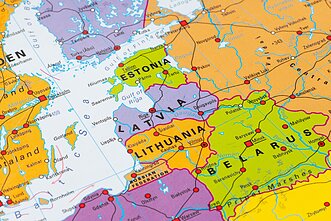
Yes, first of all, because there are so many Ukrainian refugees here. Everybody knows about the war because of how many Ukrainians they see every day. On the other hand, the Baltic states, as far as I can see, have a different perception of the threat for two reasons. Firstly, they have not been part of the Soviet Union for only 30 years, and secondly, all three have a direct border with Russia or Belarus.
Germany was in a similar situation during the Cold War, when it had a border with the Eastern Bloc. The perception that there is an immediate threat when you have a line of confrontation in your country is quite different from when that line is a few countries away.
Can Germany be expected to send more military aid to Ukraine, and what kind of aid?
Firstly, Germany is the second largest aid provider after the US. The budget was increased to 7.5 billion euros for this year. The problem, as I said, is that the German armed forces have shrunk over the last 30 years, not only in terms of numbers but also in terms of material.
There is a limit to how much can be given from the Bunderswehr reserves. Anything that is given to Ukraine has to be replenished, but replenishing military stocks takes a long time. If you order a tank today, it takes a year or more to get a new one. This is the case with all complex systems: tanks, howitzers.

The equipment has been ordered, but we will not see any replenishments this year, and if we are lucky, they will come next year. The question of what can be done is not only a question of money, but also a question of capacity. The industry is increasing capacity, but that also takes time.
Lithuania also ordered the Vilkas armed personnel carriers already a few years ago. The defence industry in Europe has also adapted to this downsizing mentality and is not ready for quick deliveries. It has established itself, but it will take time.
Is it likely that Germany might reintroduce conscription?
I am not sure. There are two problems: the first is practical, because the draft has been abolished and there is no longer the infrastructure for exercises, for the accommodation of conscripts. [...] If we are also talking about 60,000 conscripts a year, we need barracks, instructors. That no longer exists. Bringing back conscripts would mean changing the whole infrastructure.
Another important point is the political issue. If we were to bring back conscripts, what kind of system would it be? The German Constitution states that only men can be conscripts. Women cannot be forced to join the army. So should the Constitution be changed?
The other question is whether we should talk about conscription, or just compulsory service for young people, [...] maybe in the army, maybe in the civil service, maybe in the health system.

The old system meant that young men were conscripted, but under the constitution they retained the right, because of their convictions, not to join the army and to do other service, and I did that myself.
Society has changed over the last decades, and there is talk about whether men and women should be conscripted, whether there should be civilian service in hospitals, whether the army should be professional. Do we need a mass army with a slightly trained conscript force, or do we need more professionals who can use complex weapon systems?
Do you have an answer or do you yourself support universal conscription?
I think that before we can talk about whether we need to bring back conscripts, we have to have a fully trained and, even more importantly, a fully equipped army, and we do not have that. I do not think it makes sense to conscript young people when the current army is not fully trained. Conscription would be a second step.
For years, Germany has been lax about building up the reserve. The bulk of the army is made up of soldiers who have signed a contract for 8 or 12 years, at most 25 years.

This makes sense because nobody in the army wants overweight machine-gunners in their fifties running around. So, after their service, these soldiers continue their careers in the civilian sector.
Up until recently, maybe two years ago, the army just let them go and only those who volunteered were put into the reserve, took part in exercises. The others left the army and that was it. Only three years ago did it become compulsory to stay in the reserve for at least six years. So, slowly, a kind of reserve is building up, people who have military skills, who can participate in exercises.
You said there was a lack of equipment in the German army and for professional soldiers. What is it?
For example, in recent years, the ground forces, and to a lesser extent the air force and the navy, have had about 70 percent of the equipment[JB1] they need – this mostly applied to material like tanks, infantry fighting vehicles, helicopters and warships. The German Navy is the smallest German navy ever. Battalions had to borrow tanks from other battalions during exercises. When it came to equipping certain groups, such as the forward battalion in Lithuania, they got everything, but the units at home did not have everything.
The situation worsened because of the weapons given to Ukraine. For example, 18 Leopard 2 tanks have been handed over to Ukraine, which means that the battalion that had those tanks no longer has them. New ones have been ordered, but the replacement will take years. So at the moment, Germany is not armed according to plan.

What about defence spending?
The budget of the armed forces has been increased by 1.7 billion euros this year. This is not really an increase at all, because 1.7 billion is precisely the amount needed for salary increases. It is linked to the fact that all civil servants are getting a pay rise [...].
On the other hand, we have the so-called extra-budgetary fund, a special fund of 100 billion euros for various state needs. It would only cover costs for three or four years. The question is what happens after 2027? So there is an upswing, although technically not. The crucial point will be the future defence budget after 2027.
Lithuania recently decided to buy Leopard tanks. How long can the negotiations and the supply process take if even the German army is short of them?
It depends. Germany has signed an agreement with Krauss-Maffei for a few hundred tanks, and Germany would only want to buy a small proportion. The rest will go to other countries, such as the Czech Republic, which is joining the purchase.
I do not know whether Lithuania is also joining this deal or whether it has its own agreement with the manufacturer. It would depend on the agreement, the speed of production, and I do not know how many tanks Lithuania wants to buy. But it will take a few years.
Lithuania is still talking about whether it needs tanks at all, and we do not have any yet.
It’s almost a religious issue. They say, whether you need it or not, in one situation or another, look at Ukraine, they’ve been bombed... I will not get into that argument, but I think the main point is that you need a certain number of main battle tanks, you do not need the number that was common in the 1970s, in the 1980s.

West Germany had 3,500 tanks, now we have about 300. Back then, it was believed that opposing tanks would meet in the field, in today’s wars that will not be the case, warfare has changed radically[JB2] – just look at drones as a constant threat to armoured vehicles. My understanding is that all the experts agree that a certain number of tanks are needed in the arsenal. The landscape must also be taken into account. [...]
In Ukraine, we see that the Russian army is succeeding in occupying new territories, what do you see happening there at the moment? Why has the Ukrainian counter-offensive failed?
First of all, Ukraine is holding its defensive lines strongly. The counter-attack was not successful, but they managed to maintain the lines of defence.
I think that the fundamental problem in Ukraine is the lack of constant ammunition support. If they are short of artillery, that is a problem, and only one problem. If the support from the US, which is now dwindling, and from Western Europe is cut off, if it does not go straight through, the situation will be much worse.
And the Russian army, why is it doing better than expected?
Well, at the beginning they were worse off than expected, because it was supposed to pass through Ukraine in a few weeks, and it didn’t. Russia has a huge arsenal, which is partly obsolete, but when it comes to artillery shells and tanks, numbers matter. Moreover, Russia is not constrained at all by casualties. I believe that no European, no Western army could survive with so many casualties, killed and wounded soldiers.
The crucial question is whether Western support for Ukraine will hold it [the Russian army] back for long. I am not talking about numbers, but about more accurate ammunition, quality weapons. For example, yes, the Leopard tanks can be destroyed, and we have seen that, but it seems that in that case, the crew has a better chance of survival. That is also important.

Therefore, so far, the Russian army has not been stopped, and I do not know what will happen this year.
You mentioned casualties, and I wonder whether the deaths of Russian soldiers are important to the public, and sometimes it is said that this could stop the war?
Ukraine, I think, is also an exception, because it seems to have a willingness to fight at any cost. I am not sure whether this is the case in Western European societies. And I would not want to have to put this to the test.
In terms of troop numbers, Russia’s losses seem much, much higher than Ukraine’s. And so far this has had no impact on the Russian public. I think there are many reasons, but there is this difference. Western European societies would not be prepared to sacrifice such a large number of people.
Resilience is something the German public has to re-discover – not only for a possible attack and in case of war, but also with regard to castastrophic events like the devastating flooding of the Ahr river a few years ago.
There is a lot of talk at the moment about whether Russia could go to war against NATO. What do you think about this speculation?
I think it is a rather pointless discussion. If there was a war between NATO and Russia, it would look very different from the war in Ukraine. For one thing, Ukrainian forces are limited in what they can do to Russia. If there was a direct clash between NATO and Russia, NATO would quite quickly try to eliminate threats from Russia, attack airfields, cut off raw materials inside Russia. Ukraine is not doing this because it cannot, or to a very limited extent – we see drone strikes.

A clash between NATO and Russia would mean attacks both deep inside Russia and deep inside NATO territory. So the conflict would be very different, and one of the challenges would be how to keep it within the boundaries of conventional warfare, not to cross the threshold of nuclear war. [...] Both sides would have to try very hard not to cross it because then the escalation would be very fast.
If Russia attacks NATO, will it necessarily be the Baltic states?
Honestly, I don’t know. As I understand it, the threat perception in the Baltic states is very high. But what about Romania, for example? Of course, it is often thought that it would be the Baltic states because Russia considers them to be part of its sphere of influence. But that is a psychological thing, and it is not necessarily the case militarily. Or Finland. [...] From the Russian point of view, Helsinki was a Russian city just 100 years ago.
A German brigade is coming to Lithuania in 2027...
Let’s hope so.
Can we relax and be calm yet? There are a lot of questions both in Lithuania and in Germany about its financing.
Well, there are a lot of unresolved issues. The German army has allocated two combat battalions to the brigade. But the troops are only a small part of the whole thing. They need logistics, support, medics, so-called enablers, transport.
This is not the visible, sexy part: everybody is looking at tanks and troops. But it is everything behind them that is needed, and that is not yet clear. Two battalions have been assigned, but where is the support battalion? This will be a crucial task for the German army. What about the medics? And it is not just a question of money, it is a question of finding people.

Is it true that this posting to Lithuania is not seen as very attractive?
It’s not a given that German military personnel is lining up for service in Lithuania. The offer to work in Lithuania is not “quite appealing” – a different, difficult, language, a different social system, what about working possibilities for dependents etc. So it might be appealing for a young single soldier, but for those who have a family it is not that simple.
Also, the question will be what their future position and stationing will be after returning from Lithuania. So not that easy as it might seem from a Lithuanian perspective.
Initially, there were disputes about whether these would be permanently deployed troops. Do you know why the decision changed in the end?
Everybody was surprised, nobody knows yet: was it [German Defence Minister] Boris Pistorius who convinced Lithuania? He did not say so himself.
Polls show that about one in two Germans support the establishment of a brigade in Lithuania, and almost as many say that Germany should defend Lithuania in general if it is attacked by Russia. Around a fifth have no opinion. What do these figures say?
I do not think that the population really understands what this means. Lithuania, somewhere near the Baltic. Brigade, why not.
There has not been much of a public debate yet, and I think the public is only gradually realising that defence is not just about having an army in your own country, that defence is not necessarily the defence of Germany’s borders, but the defence of the allies. There is a lack of understanding of this, I think, and it is only just being achieved.

Newsletter
Every Friday morning.