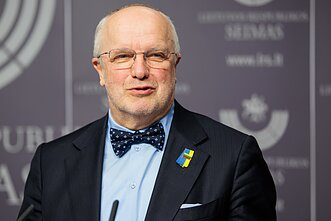










Lithuanian government led by Ingrida Šimonytė is facing its most severe crisis so far. Two ministers have already sent their resignation letters, while the prime minister said it was possible that the entire cabinet could fall.
“I'm not ruling out this possibility. I can say it straightforwardly,” Šimonytė told LRT TV after being asked about the cabinet’s resignation.
“If so many questions are being raised about the government's performance, then perhaps the government, if it's unable to answer those questions, should end its mandate, and some other government could continue the work from scratch,” she added.
How did it start?
Last Thursday, it became clear that the transit of Belarusian fertilisers via Lithuania continues despite the US sanctions on the state-owned potash giant Belaruskali.
Belaruskali exports most of its production via Lithuania. The US sanctions were announced in August and came into force on December 8. Although it only applies to US entities, it had been assumed that Lithuanian companies would immediately stop dealing with Belaruskali because banks would no longer process the company’s financial transactions.
Read more: Lithuania gears up for losses as US slaps sanctions on Belarusian company

But Lietuvos Geležinkeliai (Lithuanian Railways, LTG) said Belaruskali made advance payments in November that were sufficient to cover the cost of rail services in December and January.
The state-owned railway company said it informed the Transport Ministry and the Foreign Ministry about these advance payments.
Who was responsible?
Lithuanian Foreign Minister Gabrielius Landsbergis said he had information only on Belaruskali's advance payment made in September to cover services in October. The Foreign Ministry was not informed about “the subsequent payments that took place”.
Transport Minister Marius Skuodis also said he was surprised by the advanced payments and called them “atypical”.
But both Landsbergis and Skuodis said on Thursday they were ready to take responsibility and resign over the Belaruskali transit scandal. Both ministers sent their resignation letters to the prime minister, saying they were ready to take responsibility for “reputational damage” to Lithuania.
Prime Minister Ingrida Šimonytė also confirmed to LRT TV that she was not ruling out leaving her office. She said some members of the ruling majority expressed their lack of confidence in her due to unfulfilled expectations that the transit of Belarusian fertilisers would stop after December 8.

She said she had been informed about Belaruskali's advance payments this week and asked LTG to repay the money.
Could the potash transit stop?
Igor Udovicki, the majority shareholder of the Bulk Cargo Terminal (Birių krovinių terminalas, BKT), which handles around 11 million euros worth of Belaruskali products every year, told BNS that terminating contracts with the Belarusian company would violate international treaties.
According to him, those involved in the transit of potash fertilisers, including Lithuanian state institutions, have consulted the US Treasury and the European Commission on the application of the sanctions. They were told that Belarusian potash can be transported via Lithuania if payments are made in euros instead of US dollars.
“Therefore, our actions are completely legitimate and coordinated,” Udovicki said.

On Friday, Lithuania's Transport Ministry proposed a law introducing sanctions for goods directly or indirectly imported, bought, as well as transferred from Belarus.
The bill would allow Lithuania to prevent any transit of Belaruskali fertilisers via Lithuania's territory, the ministry said.
“Contracts signed before the implementation of sanctions in Lithuania must be terminated unilaterally or under a mutual agreement, or their implementation must be suspended for the duration of sanctions. Contracts running counter to sanctions implemented in Lithuania are forbidden,” the bill reads.
LTG is also looking for ways to return Belaruskali's advance payments for potash fertiliser shipments in January and February.

Newsletter
Every Friday morning.