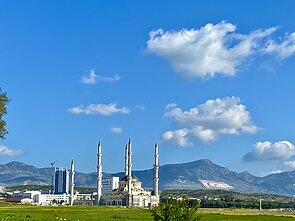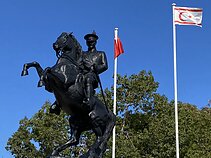





"I come to terms with my conscience," said Arūnas Valinskas, a well-known Lithuanian television personality. For many Cypriots, that casual remark cuts to the heart of a troubling phenomenon – the flourishing Lithuanian trade in legally dubious real estate built on land from which thousands were expelled by force fifty years ago, writes Dalia Staponkutė, a commentator on the LRT Radio programme Kultūros savaitė and a writer based in Cyprus.
One might begin this piece with the flourishing Lithuanian "business" in Turkish-occupied Northern Cyprus – a legally dubious trade in property.
It would take considerable time to explain why, for many Cypriots, this is not merely unlawful but morally intolerable. Yet the history itself has long since settled into United Nations archives, diplomatic memoranda and human memory that does not fade even after fifty years. History, like sea salt, seeps into stone – it cannot be "washed away" by new façades or tourist advertisements.
Cyprus' tragedy did not begin in 1974. It developed slowly – as British colonial rule crumbled and the fragile Republic of Cyprus took shape, a state in which the nationalisms of majority and minority proved stronger than any shared vision of statehood. The island, situated at the crossroads of civilisations and empires, swiftly became not an independent political actor but a canvas for geopolitical projection.
Between 1967 and 1974, the Greek military junta and Turkey's militarised government, operating in the shadow of the Cold War and American strategic interests, turned Cyprus into a sphere of influence. Turkey's 1974 invasion was no spontaneous reaction – it was a carefully calculated exercise of force, aimed not at temporary intervention but at long-term control. Only pressure from the United States, the United Kingdom and the Soviet Union prevented the complete occupation of the island. Turkey retained 37 percent of Cypriot territory.
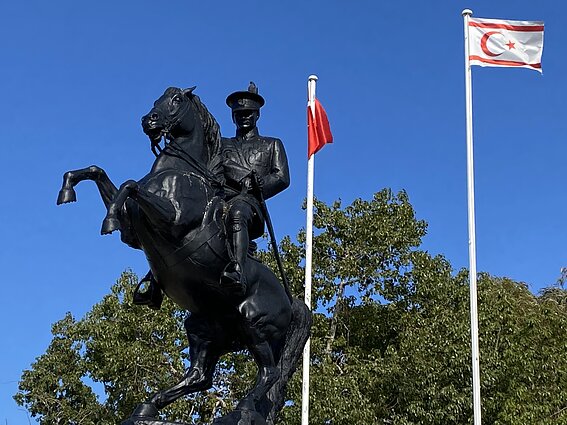
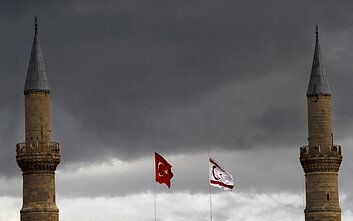
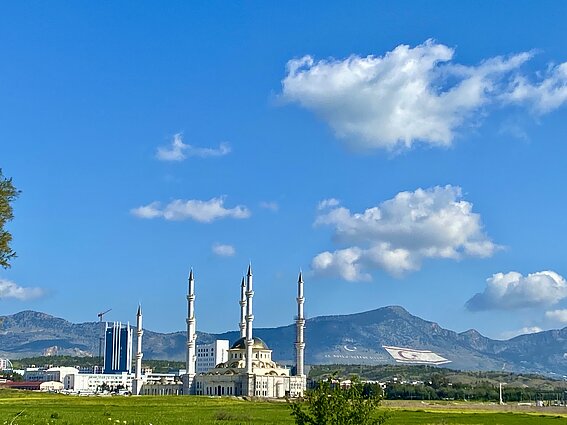
Thus was born the so-called Turkish Republic of Northern Cyprus – a territorial entity that to this day remains unrecognised by the United Nations.
A third of the island's population – Greeks and Turks alike – were driven from their homes within a single day. United Nations soldiers loaded people onto buses, transporting them to camps, to tents, to uncertainty. Those who resisted were met with gunfire. Some were killed; others vanished without trace. Greek forces could not hold out against the Turkish army – it was, in effect, a symbolic resistance against an overwhelming military superiority. The war lasted barely thirty days, yet its consequences have endured for half a century.
Why?
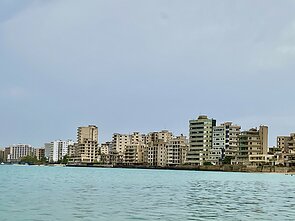
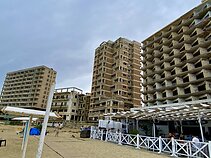
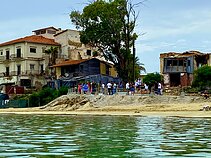
Because on a small island, nothing disappears beyond the horizon. Everything remains visible: barbed wire, walls, abandoned houses, empty courtyards, and the "new owners" settling comfortably into someone else's space. Large states may conceal the scars of history beneath the noise of cities or the layers of time. Small territories cannot. They resemble an open wound, illuminated anew by the sun each morning.
Until 2004, when Cyprus joined the European Union alongside Malta as an island state meeting all Maastricht criteria, the northern part of the island functioned essentially as a Turkish military base. One of the EU's central objectives was the reunification of Cyprus – at least along federal or confederal lines. European investment began flowing into the north; infrastructure improved. Yet wherever international law remains suspended, a shadow economy almost invariably emerges.
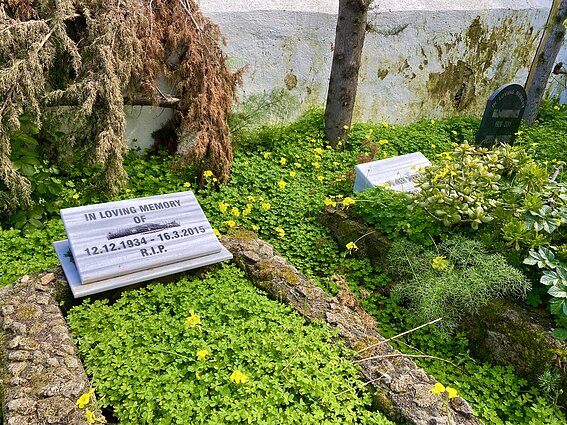
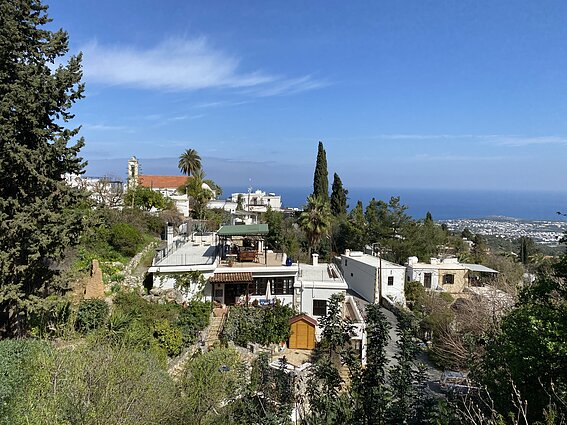
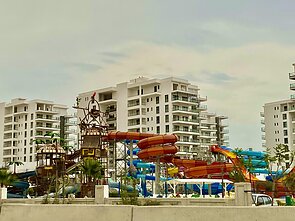
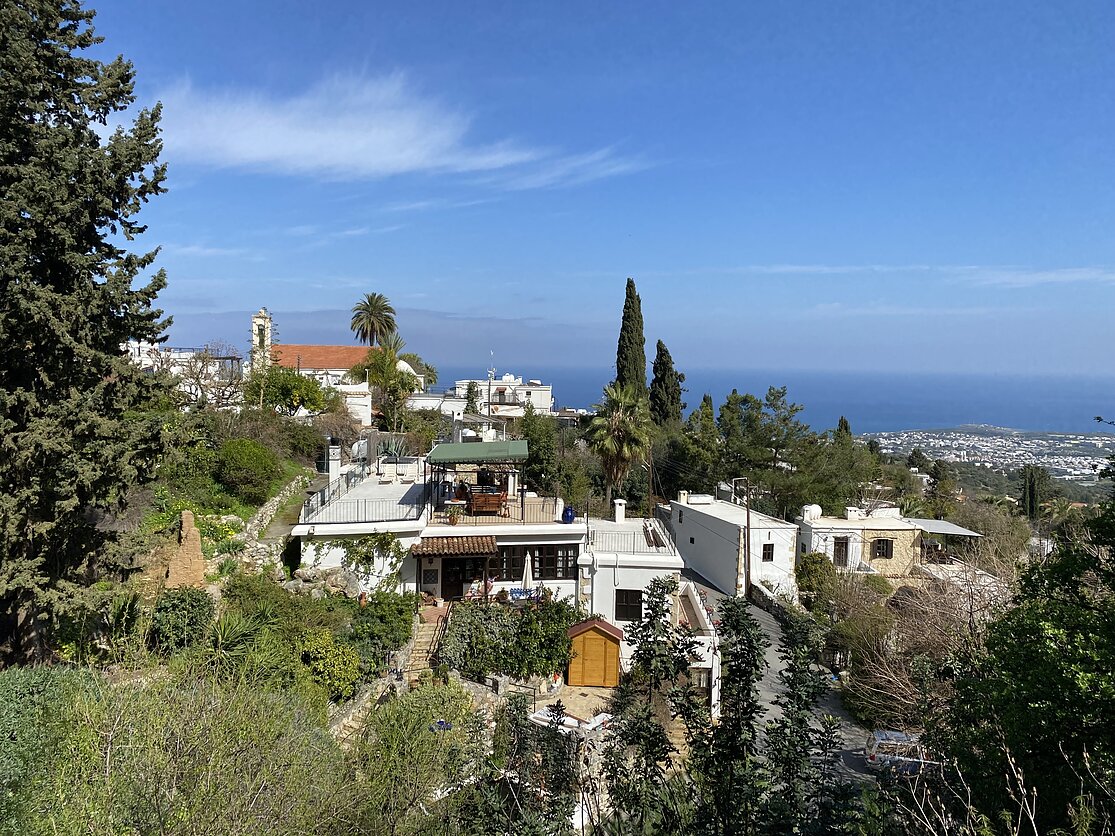
In Northern Cyprus, it has taken a particularly cynical form: apartment blocks constructed on the land of people who were expelled, killed or disappeared, with flats advertised en masse to foreign buyers. An entire industry has taken shape – agents, marketing campaigns, sales networks, investment promises.
Lithuanians are active participants in this process. A young Lithuanian broker explained on social media that Northern Cyprus had become an excellent opportunity to earn money, since it was "hard to get ahead" in Lithuania. Another broker rejoiced that, having been born in a free Lithuania, she was at liberty to choose where to live and invest – unlike her parents. Many here are seeking not merely economic opportunity but a new identity, a new life among welcoming Turks.
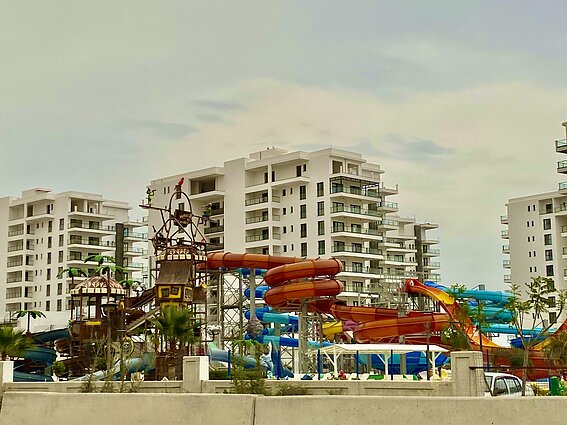
Lithuania's public culture has become entangled in this world as well. One Lithuanian woman invited television and online personalities to her villa – among them Orija Gasanova and Arūnas Valinskas. Against a backdrop of swimming pools, sunsets and parties, Valinskas breezily recounted the history of Cyprus, even joking about a sea running red with blood. It is doubtful he paused to consider that his words might be heard by a refugee's child, a widow, or a Cypriot with some understanding of Lithuanian.
"Conscience?" he mused rhetorically in a YouTube conversation entitled "The Real Cyprus." "I come to terms with my conscience."
That phrase is more than a personal motto. It embodies a broader problem of attitude: the capacity to accommodate moral ambiguity for as long as it remains financially advantageous. Conscience becomes, in effect, a subject of negotiation – the quiet inner judge transformed into an accountant tallying up the gains.
Valinskas' villa in Northern Cyprus is visited each year by a procession of well-known Lithuanians – actors, businesspeople, television personalities, an entire milieu that considers itself high society. White sails, parties, luxury, sunsets over the Mediterranean. At first glance, it appears not life but paradise. Yet Cypriots frequently ask a different question: where is your sense of decency?
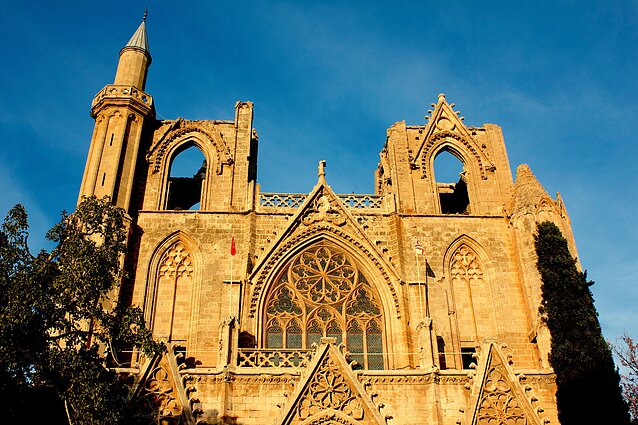
And it is here that an uncomfortable reflection about ourselves opens up.
Lithuania has rarely been a "modest" nation. Though we endured occupation for many years and experienced oppression ourselves, history taught us not only to suffer but to adapt.
Occupation frequently breeds a dual morality: to condemn force in public whilst privately seeking ways to profit from it. During the Soviet period, the ability to "work around the system" was regarded as almost an art of survival. To deceive the authorities, to outwit others, to find a loophole – all of this became less a survival tactic than a moral reflex.
The problem begins when such thinking is transposed onto international politics and ethics. At that point, a person ceases to ask whose house was demolished or who was forced to flee. Only one question remains: is it worth it?
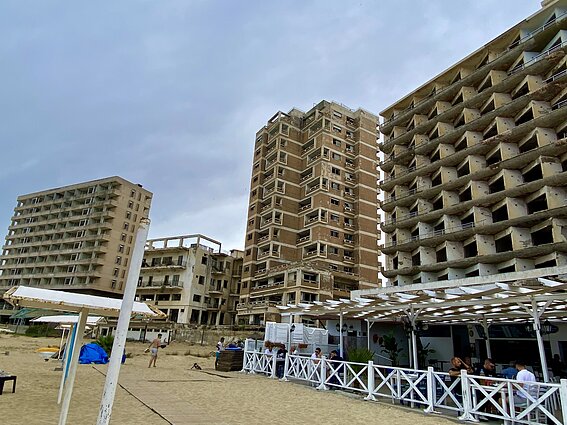
Cyprus thus becomes a kind of litmus test. It reveals not so much geopolitics as a nation's relationship with its own conscience. Paradoxically, those who speak most loudly of patriotism are often the quickest to justify the exploitation of someone else's territory, provided it yields personal gain. And this has nothing to do with education.
Even Lithuanians working in Brussels purchase property in the northern part of Cyprus. Wizz Air flights are filled with passengers clutching architectural drawings; they land in the southern, internationally recognised part of the island, cross the Pyla checkpoint and drive north, where Turkish brokers and drivers await them.
Why not fly via Turkey?
Because they exploit the legitimacy conferred by the European Union. They arrive as Europeans, making use of the internationally recognised Larnaca airport, though their ultimate destination is a territory whose legality is recognised neither by the United Nations nor by the European Union itself. Here another truth becomes apparent: small states frequently seek the favour of the powerful. Lithuania takes pride in its good relations with Turkey, and Turkey understands perfectly well how to make use of that goodwill. A Lithuanian stepping off a plane at Istanbul airport is greeted with smiles, hospitality and attention. Empires rarely arrive on tanks alone – they frequently come bearing warmth, trade and the promise of belonging to a larger world.
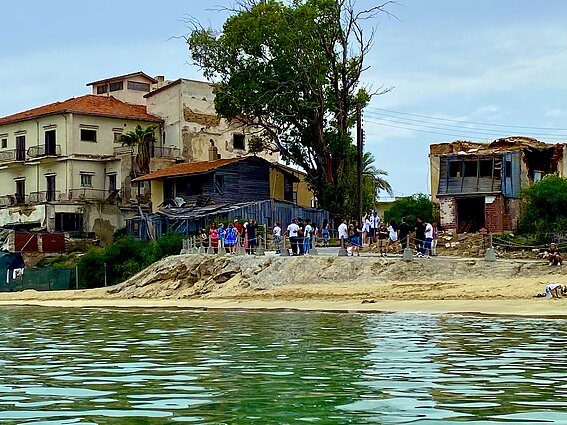
In time, new versions of history emerge. On social media, one can hear Lithuanians explaining that the Greeks in Cyprus were "the real aggressors", that the Turks were simply "retaliating", that there is nothing wrong with occupation, and that Lithuanians who criticise it are traitors. Such narratives do not arise from historical knowledge – they arise from the need to justify one's own choices.
International law is imperfect. It is frequently powerless against the interests of great states. But without it, only the law of force remains – one in which the stronger party decides whose home shall become an investment opportunity.
Perhaps this is why the Greek writer Nikos Kazantzakis wrote: "Nothing exists. There is only fire." That fire may signify passion, greed, fanaticism – or civilisation's compulsion to burn what it cannot possess by right.
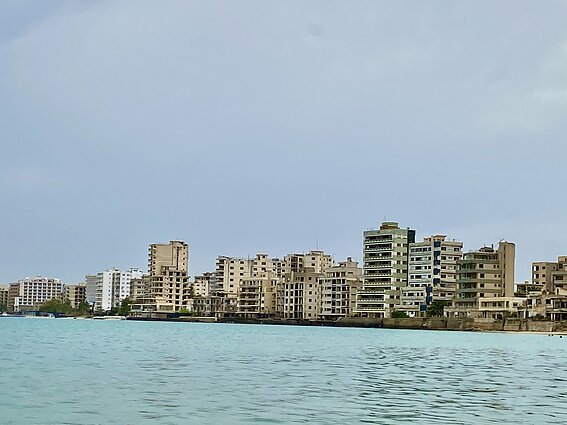
In Northern Cyprus, that fire smoulders still beneath the balconies and swimming pools of modern apartment complexes – like invisible lava beneath the paving stones of a luxury resort.
And the question that remains for us is not about Turkey, nor about Cyprus.
It is about ourselves: how readily a person can come to terms with their conscience when profit lies within reach.
The views expressed in this article are those of the author alone.

Newsletter
Every Friday morning.