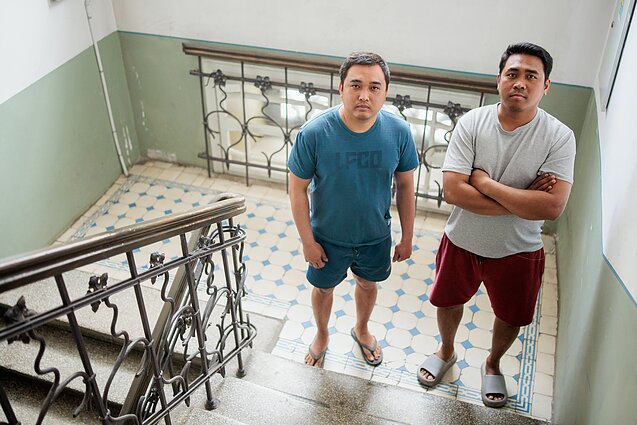















Around 140 Filipino workers brought to Lithuania to work in poultry processing plants were subjected to deception, humiliation and the confiscation of their identity documents, according to a criminal investigation now under way. Two labour contracting companies and seven individuals face suspicion of human trafficking and document forgery.
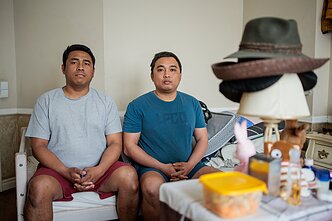
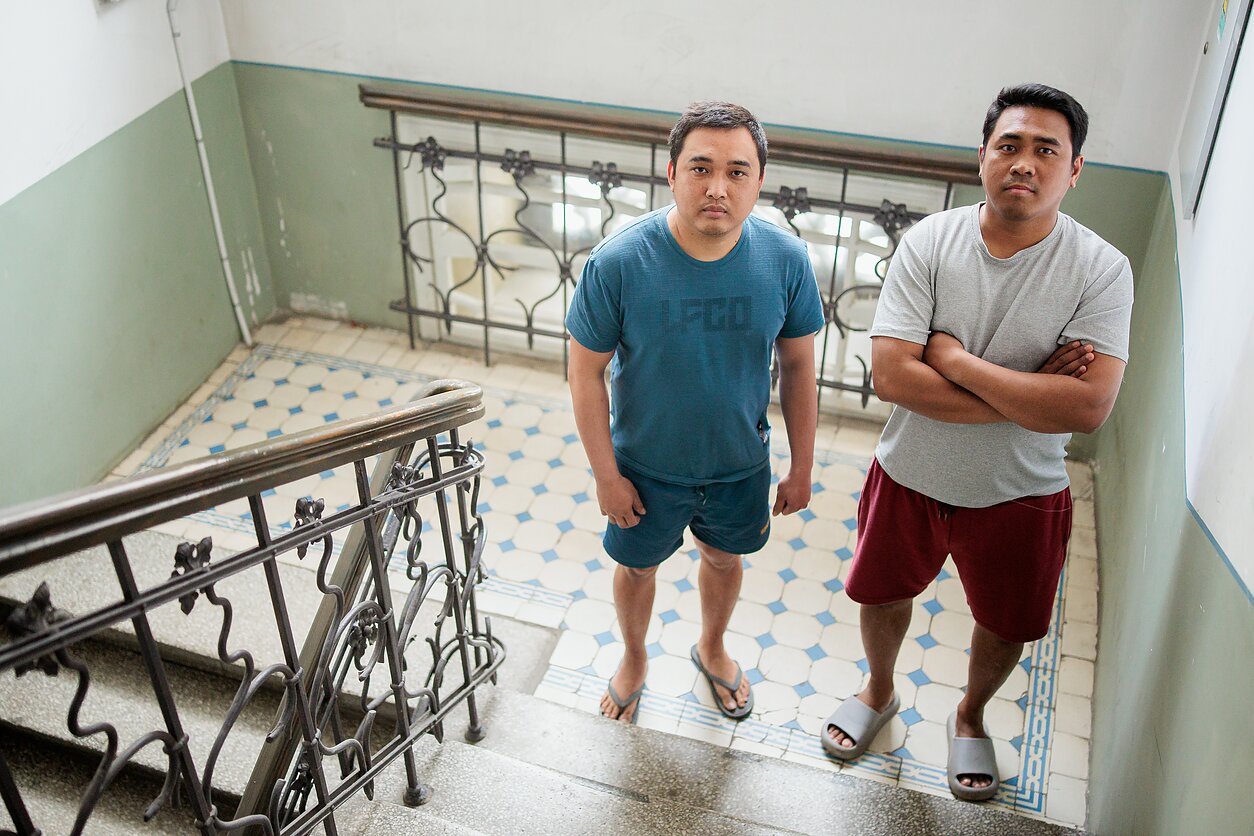
Jerwin and Elmer, both Filipino nationals now living in Vilnius, told LRT they each paid approximately €4,000 to a recruitment agency in the Philippines for the opportunity to work in Lithuania. What awaited them, they say, bore little resemblance to what had been promised.
Jerwin, 26, arrived in Lithuania in June 2025, travelling from the Philippines with nine other compatriots. He had originally applied to work in Poland but was strung along for nearly two years before being offered Lithuania instead.
"They took us from Vilnius airport and brought us to our accommodation. They said we would discuss the contract the next day," he recalled.
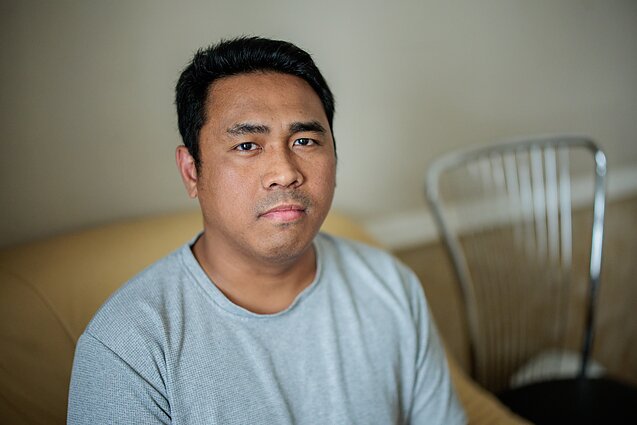
He described arriving at his accommodation in Rudamina, a small town south of Vilnius. He had expected to live alongside other Filipinos, but instead found himself sharing with workers of other nationalities – an arrangement he found difficult given differences in religion, language and diet.
"I am Christian and they were Muslim. It was very hard to communicate, and there were issues with food and so on. I asked to live with other Filipinos, but the employer refused," he said.
He worked eight-hour days with weekends off, but found the monthly wage of around €700 deeply inadequate. Contracts, he said, required workers to complete 220 hours a month or bear the cost of their own accommodation.
Residence permit cards were taken from them, and some colleagues also had their passports confiscated – items they repeatedly asked to have returned.
Elmer, 31, arrived a few months later, in August 2025. A father of two children, he said it was his first time working abroad.

His experience was similar: five men to an accommodation, no interpreter present when signing a contract, work shifts that sometimes stretched to 17 hours but still didn't meet the required 220 hour/month quota, and wages paid twice a month with no payslip and no explanation of deductions.
Both men later discovered that neither income tax nor social security contributions were being paid on their behalf. Their wages were transferred directly to their Revolut accounts.
Documents destroyed in front of their eyes
The incident that prompted them to go to the police was, by their account, a deliberate act of humiliation.
A member of staff at the contracting company FA Solutions, whom they identified only as Anželika, cut up their temporary residence permits in front of them when they asked for the documents to be returned.
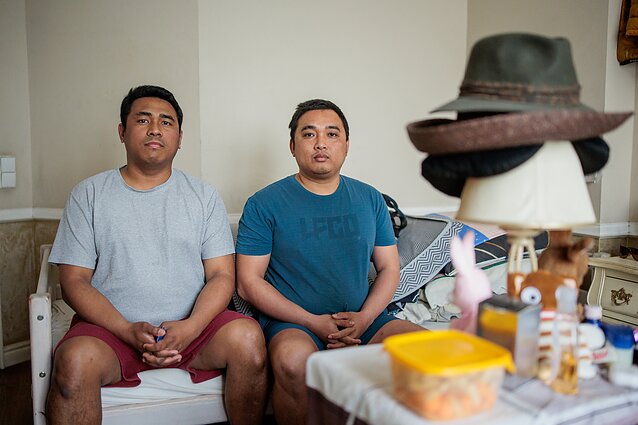
"She laughed at us. The next day we called the police. The police said we should show them a video, but we had not expected her to cut them up – we had not filmed it. I was shocked. Those are our documents. I was very frightened," Jerwin said.
Both men now have replacement documents. They described the period without them as deeply unsettling.
"I was very worried. How could I go anywhere? What if the police stopped me?" Jerwin said.
A new start
Both Jerwin and Elmer have since found new employment at Acrylicon Baltic, a company that manufactures industrial flooring. They now share a flat in central Vilnius.
"I am very happy in this job. Our manager is a very good person," said Jerwin.
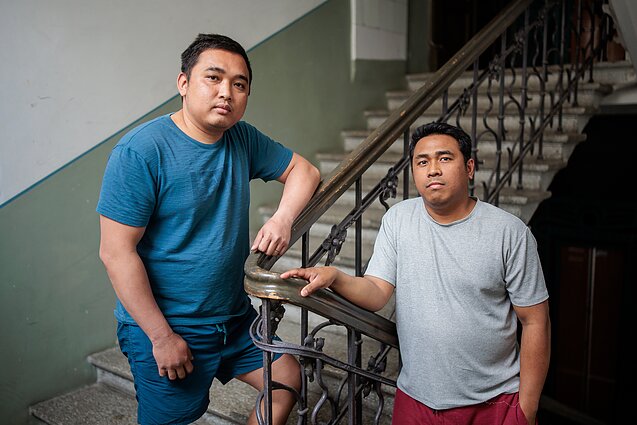
Despite everything, both men say they like Lithuania.
"We feel very safe here. Lithuania is a wonderful country," said Elmer – before adding that the €4,000 he borrowed to get here still weighs on him.
Elmer explained that most of the Filipino workers had borrowed money to pay the €4,000 recruitment fee and faced ongoing loan repayments – something that was simply impossible to manage on the wages paid at the poultry plant.
Investigation under way
The Vilnius Regional Prosecutor's Office confirmed to LRT that a pre-trial investigation into suspected human trafficking and document forgery is ongoing. Suspicions have been formally brought against two legal entities – FA Solutions and World Halal Trust – and seven individuals.
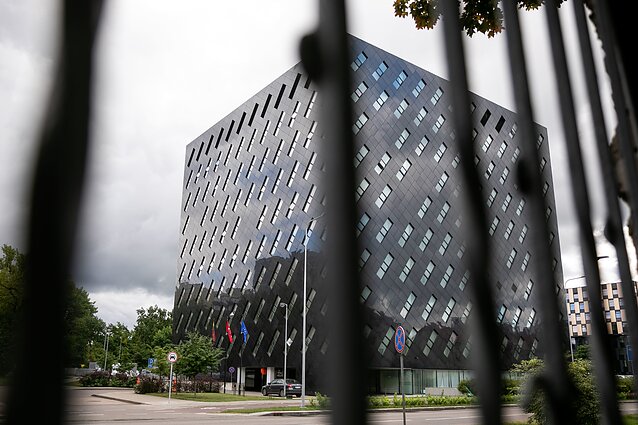
The companies operated as labour contractors supplying workers to two poultry processing plants: the Vilnius Poultry Plant and the Kaišiadorys Poultry Plant, both part of the publicly listed Akola Group. The plants themselves are not subjects of the investigation.
Sandra Vičienė, a spokesperson for the Vilnius Poultry Plant said the Filipino workers were employees of the contractors, not of the plant, and that the company had been provided with documentation confirming their lawful employment before work began.

Both FA Solutions and World Halal Trust share a connection to a family with the surname Azimov. Company registry data shows the principal shareholder and director of World Halal Trust is a Uzbek national, Farrukh Azimov, while FA Solutions is directed by Jekaterina Azimova.
Speaking on behalf of both companies, Azimova denied any wrongdoing, insisting that the employment, pay and living conditions of workers of all nationalities complied fully with Lithuanian law.
She said the companies were trying to establish why Filipino workers in particular were filing complaints when employees of other nationalities had raised no concerns.
Azimova suggested the complaints had been orchestrated by a rival company seeking to poach Filipino workers, and claimed that a recruitment agent in the Philippines – against whom criminal proceedings are now under way in that country – had deceived both the workers and the companies.

She also disputed the figure of 140 Filipino workers, saying their actual number was closer to 60, all based in Vilnius.
"Those workers who have submitted complaints – some continue to work for the companies and have raised no grievances. Others left without any obstruction and are now working for jobs found by the competing company," she said.
She also noted that before receiving residence permits, all foreign nationals including Filipinos were interviewed by Migration Department officials, who verified that declared wages matched what the companies reported.
She denied that documents had been confiscated, pointing to the fact that workers had moved freely around Lithuania, stayed in hotels of their choosing and terminated their contracts without obstruction – all of which, she said, was verifiable from their social media activity.
She concluded that the investigation had already cost the companies a significant portion of their workforce, and that frozen accounts and other restrictions posed a serious threat to their survival.
'Lithuania is not ready for this'
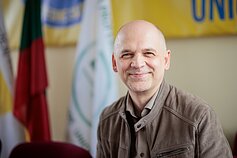
Andrius Markevičius, a representative of the Filipino community in Lithuania, said the workers came to him and his wife because they did not know where else to turn. They feared deportation, indifference from the authorities, and retaliation from their employers.
"When a significant number of victims approached us, we began to suspect that this went beyond labour code violations – that there were elements of human trafficking," he told LRT.
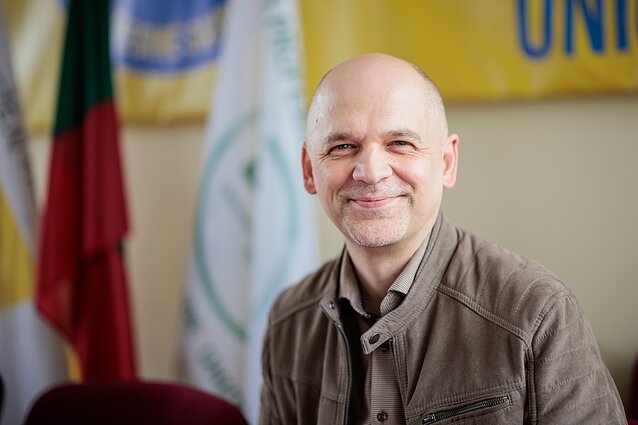
He contacted the Centre Against Human Trafficking and Exploitation last autumn, which helped find a lawyer and ultimately led to the case reaching prosecutors.
Under the provisions of Lithuania's Criminal Code, human trafficking carries a custodial sentence of between three and ten years, while document forgery is punishable by community service, a fine, restriction of liberty, arrest or imprisonment of up to three years.
Markevičius recalled that the first Filipino workers to raise the alarm had simply been turned out onto the street. Because their accommodation was tied to their employment, losing their jobs meant losing their housing simultaneously – with no warning and no time to make other arrangements.
Markevičius reflected on the broader significance of the case.
"For a long time, Lithuania was a country that sent its own people abroad. We had our own citizens who fell victim to human trafficking. Now we are a country that receives immigrants. Sadly, these things are happening here too.
I don't think our state institutions are yet sufficiently prepared to receive these immigrants. There are gaps in the law, and these people need help. This case matters for the Lithuanian justice system – the number of victims is very large. I hope it sets a precedent," he said.

Newsletter
Every Friday morning.