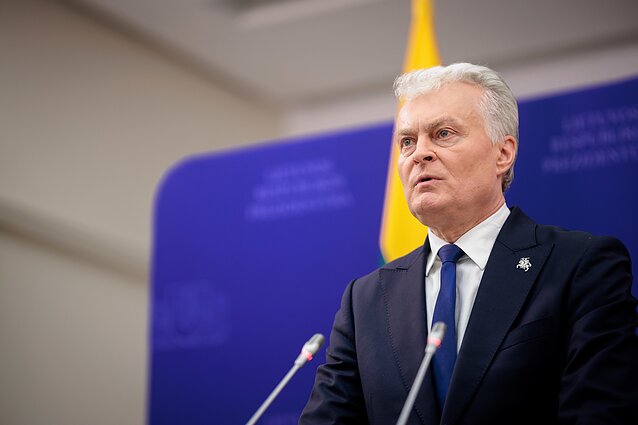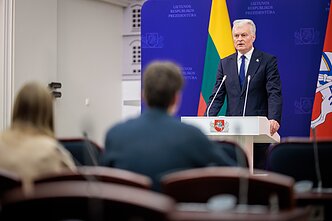












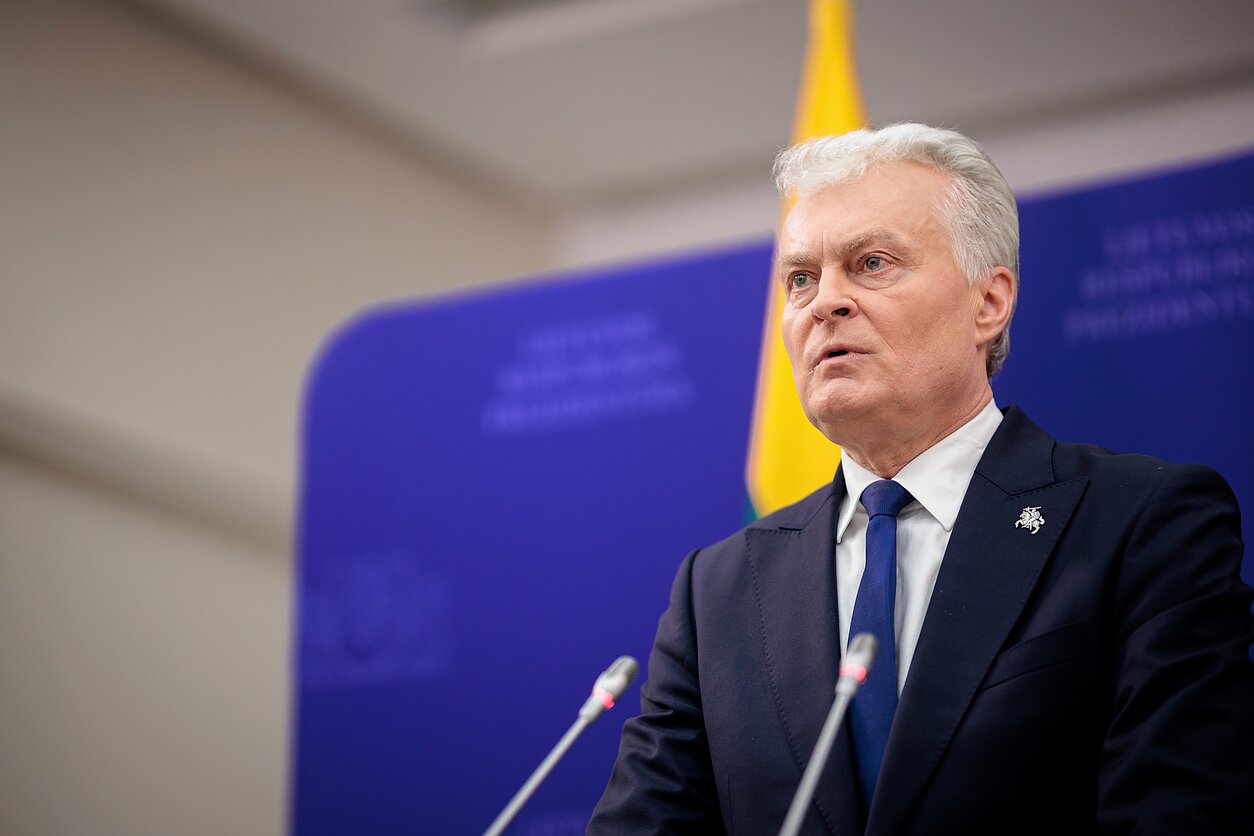
Lithuanian President Gitanas Nausėda said Thursday that while Lithuania wants to restore normal diplomatic relations with China, it also aims to better harness the economic potential of cooperation with Taiwan.
“We are interested in normal diplomatic relations with China, but at the same time we want to maintain relations with Taiwan, because they have great potential,” Nausėda told reporters after a meeting at the Presidential Palace to discuss foreign policy and security issues.
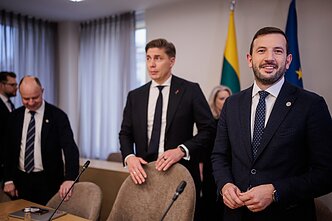
The talks were attended by the prime minister, the speaker of parliament, the foreign and defense ministers, and other officials responsible for foreign and national security policy.
Further reading
Nausėda acknowledged that in the years since the opening of the Taiwanese representative office in Vilnius, that potential has been used “only to a small extent”.
“We can certainly do more,” the president said
Nausėda pointed to the laser industry as one area where cooperation with Taipei has been particularly close. However, he said broader expectations had not been fully met.
“We cannot boast of much else, although there were many expectations and many promises. We agreed that we need to sit down again and discuss specifically how we intend to develop our economic cooperation in the future,” he said, calling for “fewer declarations and more concrete commitments from both sides”.

Lithuania’s ties with China deteriorated after Taiwan opened a representative office in Vilnius in 2021 under the name “Taiwanese”. Beijing views self-ruled Taiwan as part of its territory and objects to any move that appears to treat it as a separate state.
Speaking about relations with China, Nausėda said all Lithuanian decisions had been based on international law and that the name of the Taiwanese Representative Office does not mean Lithuania questions the “One China” policy.
“We were not heard, we have to admit that,” he said. “We are still not fully heard today when we say that we respect the ‘One China’ principle.”
He said Lithuania would like to see “more dialogue, less unilateralism, less attempts to impose one’s opinion”, and added that if there is goodwill from Beijing, Vilnius sees a possibility of gradually restoring diplomatic representation at the chargé d’affaires level, and eventually at the ambassadorial level.
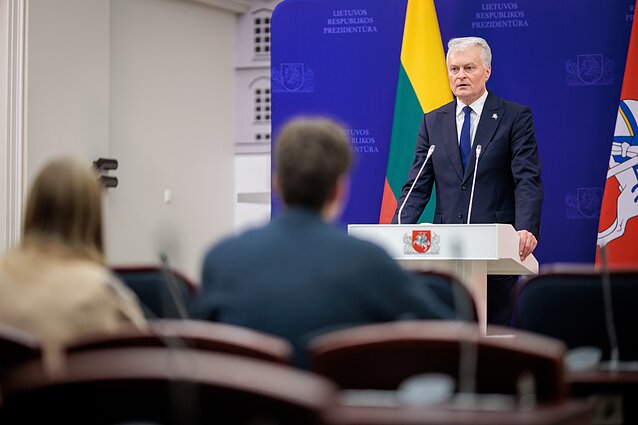
Last week, Prime Minister Inga Ruginienė said she thought it was possible to rename the Taiwanese Representative Office to use the name Taipei. Nausėda responded at the time that the office’s name is primarily Taiwan’s responsibility and that any change would not depend solely on Lithuania’s will. Taipei has said it is not discussing a name change with Vilnius.
The Foreign Ministry has said that normalising relations with China will require time and “mutual respect”.
After Thursday’s meeting, Nausėda said he believes Lithuania’s top leaders now share a unified position on China.
“We all want to preserve relations with Taiwan, better use their potential and move toward concrete forms of cooperation that bring tangible results,” he said. “But we are also very willing to renew dialogue with China – on an equal footing.”
“We are certainly not prepared to kneel and say that we made a mistake,” he added.
In recent years, Vilnius and Beijing have disagreed on how to restore diplomatic representation following the dispute over the office’s name. Since mid-May last year, no accredited Chinese diplomats have remained in Lithuania, and bilateral trade has dropped sharply since 2021.

Newsletter
Every Friday morning.