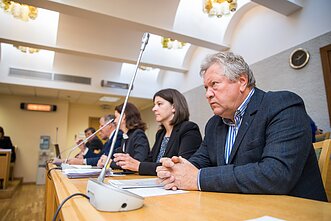
















The Seimas Committee on Culture postponed consideration of amendments to the law on public broadcaster LRT pending the Venice Commission’s conclusions.
Committee Chairman Kęstutis Vilkauskas said the commission's opinion, which has already been prepared, must be translated into Lithuanian and thoroughly examined before decisions are made, particularly regarding the implementation deadlines of the law.
The committee is currently reviewing proposals from citizens, organisations and institutions, while deferring issues related to the law's entry into force until the next meeting.
Committee member Rima Baskiene noted that the committee is setting a record for the duration of deliberations on a single set of amendments. She added that the initial draft was of poor quality and required extensive corrections based on proposals from members of parliament and experts.
Further reading
Around 150 proposals from members of parliament and various institutions have been submitted, alongside more than 40 observations from the Legal Department.
The committee has already approved several key changes: a reform of LRT management, the establishment of a new board, increasing the number of council members from 12 to 15, shortening terms from six to four years and introducing new selection criteria for candidates.
A proposal to allow the Tripartite Council to delegate a member was rejected; this right is instead proposed for the National Coalition of Non-Governmental Organisations.
The committee also backed the creation of an LRT council office but rejected proposals for stricter limits on other media outlets' participation in LRT content production.
Proposals to change the approval process for editorial policy and to mandate open voting for the dismissal of the LRT director general were also rejected, leaving these matters to the council's discretion.
The amendments to the Law on LRT are already on the Seimas agenda, but they can only return to the deliberation stage once the Committee on Culture completes its review of all proposals.
The proposed changes have sparked large-scale protests.

Newsletter
Every Friday morning.