



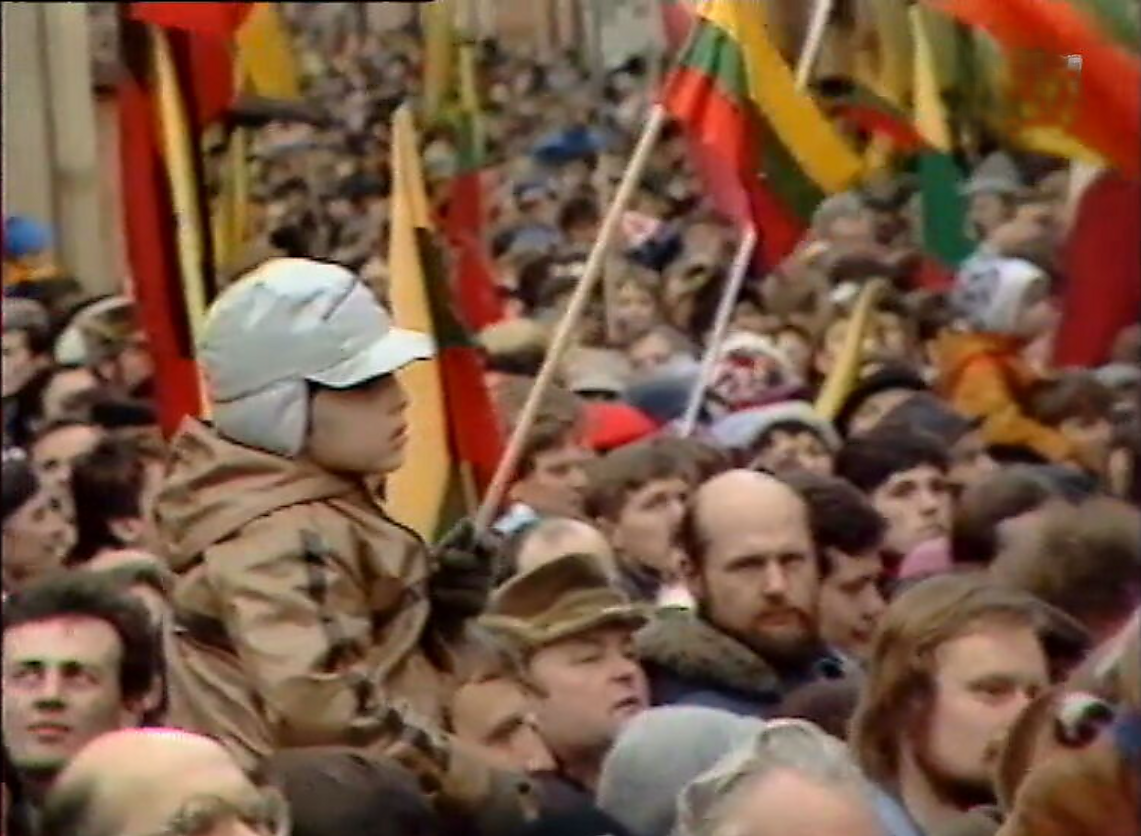
In early 1988, Lithuania was still stuck in Soviet-era stagnation and commemorating Lithuania’s restoration of independence was unthinkable. However, mobilisation by dissidents, as well as a statement from US President Ronald Reagan, helped bring about change.
Commemorations marking Lithuania’s Restoration of Independence, signed on February 16, 1918, were banned on September 26, 1940, following the Soviet occupation of Lithuania.
But the thaw that had begun in the Soviet Union had already opened up some previously uncomfortable topics – Stalin’s terror was being discussed publicly, while previously banned texts, like Aleksandr Solzhenitsyn’s The Gulag Archipelago, had appeared in bookshops.
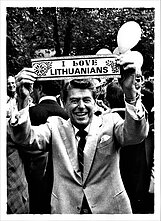
A few days earlier, on February 11, US President Ronald Reagan also declared February 16 as the Lithuanian Independence Day.

The statement attracted considerable attention in Lithuania. It was broadcast by foreign radio stations, and the news reached Lithuania, inspiring at least symbolic commemorations of the banned date.
Reagan’s statement also infuriated Soviet regime loyalists, provoking the communists into staging their own “commemoration” of February 16. Ironically, this meant that the Soviets marked the day for the very first time – with increased security in cities and a communist rally.
“It was foolishness and low-level Soviet madness,” recalled Andrius Tučkus, a Lithuanian dissident. “Throughout the city, there were constant Komsomol patrols, organised at night; they walked in pairs. Complete absurdity.”
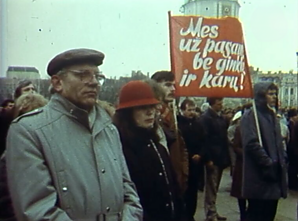
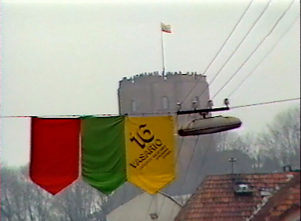
On February 15, 1988, mostly Russian-speaking workers were summoned from factories to gather in the Cathedral Square – then known as Gediminas Square. Local party representatives and some public figures took to the stage. It is estimated that around 15,000 people may have attended the rally.
The speeches were not, of course, about February 16. Instead, the Soviets condemned US imperialist policy, referencing Reagan’s statement as “incitement”.
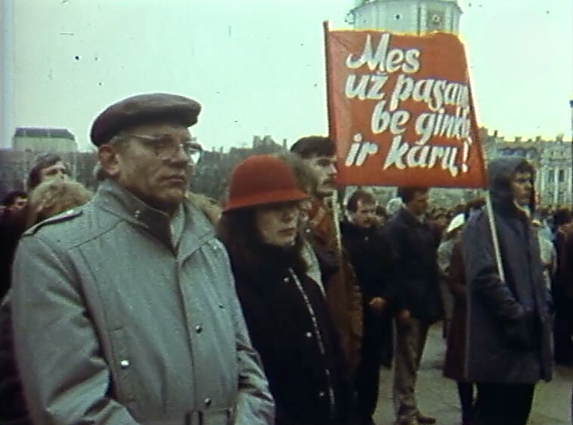
The rally was followed by articles in the press and lectures at universities on the “true meaning” of February 16, which was said to have nothing in common with Soviet reality and to be invoked only to stir negative sentiment. In other words, it was neither important nor a holiday nor a significant date.
This condemnation was widely covered in the Soviet press and was intended to emphasise the supposed loyalty of Soviet citizens and their distancing from the “bourgeois Lithuanian past”.
In reality, it meant that February 16 was still regarded as illegal and that commemorating it was equated with anti-state activity.
The last underground commemoration
Even before February 16, the Central Committee of the Lithuanian Communist Party had prepared plans and instructions for the press on how to combat a possible surge of nationalism. Militia officers were deployed on the streets to monitor the situation and prevent any provocations.
Such preparations were not accidental, as dissidents were planning to mark the holiday. In a 2008 broadcast of the programme Spaudos Klubas, one of the organisers, Vytautas Bogušis, said the commemoration was to take place in churches, where services would be held, followed by a planned procession.
“We prepared a statement and urged that these events be organised throughout Lithuania. We appealed to priests to hold Mass in every church for independence. We succeeded because that announcement reached abroad,” Bogušis said.
Both the Central Committee and KGB structures were aware of this information. In February, the organisers of the rally were placed under house arrest, dissidents were followed, and on the morning of February 16 the organisers Antanas Terleckas, Nijolė Sadūnaitė and Vytautas Bogušis were detained and taken to the KGB.
“The militia officers were very polite, and we went. The KGB officers did not know who we were and began telling us terrible things were happening in Vilnius – students overturning cars,” Terleckas recalled in 2008.
Although without the organisers, the planned commemorations went ahead, though the information passed to Terleckas had been exaggerated. No cars were overturned, but there were arrests.
Services were held in churches, and a small procession was organised, while the Soviets declared a quasi-military regime to ban large gatherings.
Nevertheless, unrest could not be avoided even after the organisers were detained. Participant Andrius Tučkus recalls that after Mass at St Nicholas Church, the crowd moved towards City Hall, where clashes began.
“In the evening after Mass at St Nicholas Church, we organised a procession. Soviet activists tried to block the road to Vokiečių Street, but we reached City Hall. There, they began dealing with us more seriously. They tried to drag away one woman; I started struggling with them.
Then they pulled me out of the crowd, twisted my arms and put me in a militia car. They had set up a post near St Nicholas Church, with about a hundred volunteer enforcers, all in civilian clothes. They checked my sobriety and later released me,” Tučkus said.
The Soviets officially stated that 21 people were detained during the commemorations, but the true figures remain unknown. Most were released the same day as the situation calmed, and the security measures had been introduced “for fear of possible riots”.
By the end of the day, Terleckas, Sadūnaitė and Bogušis were also released from detention. For them, February 16 became their final arrest and encounter with the KGB. However, Tučkus’s problems caught up with him less than a week later over another incident.
“There was great enthusiasm to organise marches and demonstrations in Estonia as well [Estonia marks its independence day on February 25]. I planned to go there, but on February 21, as I left church, militia officers attacked, seized me along with Jonas Pratusevičius and Algis Statkevičius and jailed us for 10 days for hooliganism,” Tučkus, a member of the Lithuanian Freedom League, recalled.
During his detention, there were attempts to recruit him. But temporary imprisonment was not the worst part.
“I was sentenced and then these mild repressions followed – they dismissed me from work and expelled me from university,” Tučkus said.
The first ‘legal’ celebration
In June 1988, Lithuanian activists formed the initiative group of the Sąjudis (Rebirth) movement. Its first rallies took place later that month.
Over the summer, events unfolded rapidly, and the Soviet authorities lost ground. State symbols – the flag and the national anthem – returned to public life.
Even tightly controlled television had to allow alternative views. The country began openly discussing Soviet injustices, deportations and everyday terror.
On February 16, 1989, Sąjūdis symbolically clarified its goal of seeking independence. That year, the main commemorations took place in Kaunas, where the movement declared its principal aim – the restoration of Lithuania’s independence.
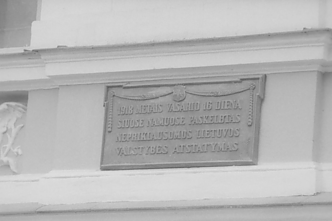
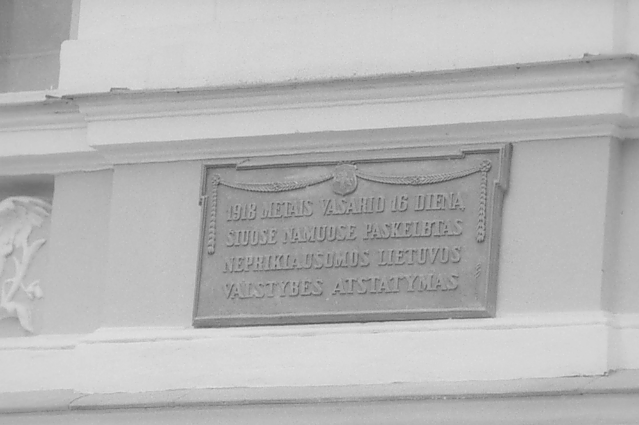
A memorial plaque was also unveiled at the site of the former Štralis restaurant on Pilies Street in Vilnius, marking the place where the Act of Independence had been signed.
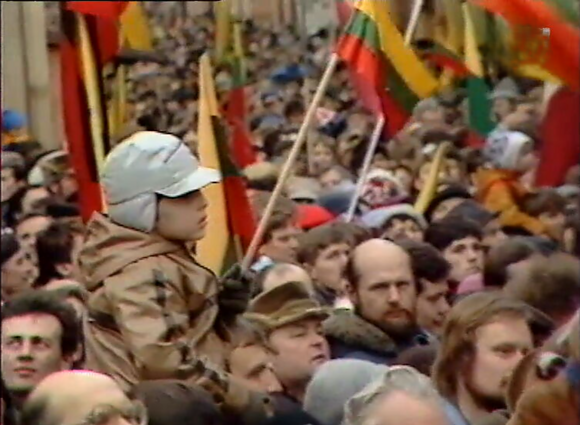
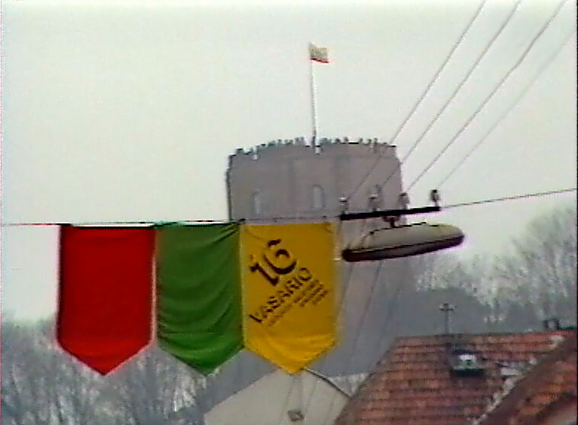
Cameramen who had previously produced propaganda films about Lenin anniversaries were now filming February 16 commemorations in Vilnius and Kaunas filled with tricolours that had been banned only a year earlier. It was the first time since 1940 that people in Lithuania could openly celebrate the February 16 anniversary.

Newsletter
Every Friday morning.