










Passenger traffic under Lithuania’s simplified Kaliningrad transit scheme is now subject to tighter control following improved coordination among security agencies, though further infrastructure upgrades are still needed, Interior Minister Vladislav Kondratovič said.
Kondratovič told reporters that only one escape from a transit train was recorded last year, when Danil Mukhametov, a Russian citizen born in 2004, jumped off the train while traveling through Lithuania. He said no similar attempts have been recorded since new operating procedures were introduced.
“We had just that one case. We have not seen any other attempts, and most likely the additional security measures that were introduced proved effective. I hope there will be no such incidents in the future either,” the minister said.
After the escape, authorities updated procedures to ensure integrated control of transit trains by police, border guards and the Public Security Service.
“In the past, each agency was responsible only for its own area, and we saw that grey areas emerged where it was possible to escape or commit an unlawful act,” Kondratovič said.
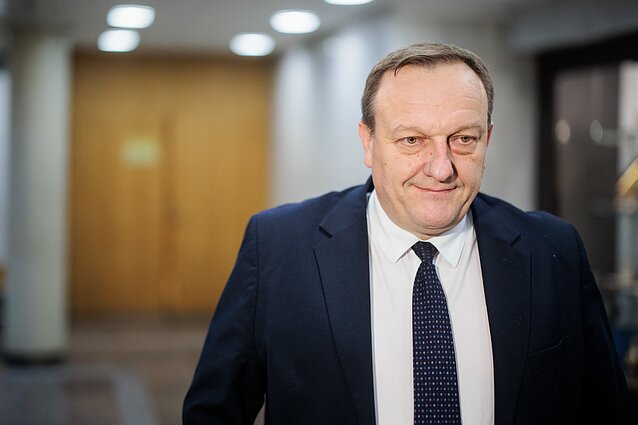
He said a number of infrastructure measures still need to be implemented, including additional surveillance cameras along the route and systems that would alert police to possible door openings or other unlawful actions.
“We plan to put the entire system in place within a year,” Kondratovič said, adding that Lithuania has asked the European Commission for funding.
“We hope that in the new funding period we will receive adequate resources to ensure the route is secure,” he said.
The Interior Ministry told BNS that it is conducting consultations with the European Commission on the planned budget for strengthening security along the Kaliningrad transit route. Additional funding is being sought from both national and European Union financial instruments, with a focus on upgrading surveillance equipment, modernisation and technical maintenance.
Gediminas Šečkus, head of business resilience at Lithuanian Railways, said the company has prepared proposals to expand video surveillance in transit sections where trains slow down due to traffic conditions.
“The Kaliningrad transit section has long been monitored by surveillance cameras and other technical means,” Šečkus said. “Last year’s incident showed there is still room to further strengthen protection, and we will do so.”
Simplified Kaliningrad transit is carried out under agreements between the European Union and Russia. Procedures were reviewed after the Russian citizen jumped off an Adler–Kaliningrad transit train on Lithuanian territory last June.
Following the incident, the inspection and escort mechanism for transit transport was strengthened, and the State Border Guard Service, Lithuanian police and the Public Security Service agreed to coordinate their oversight.
Lithuanian Railways said seven to eight transit services to and from Russia’s Kaliningrad region cross Lithuania daily, carrying up to 500,000 passengers annually.

Newsletter
Every Friday morning.