








LRT English Newsletter – January 2, 2026.
The year 2025 felt a bit like smashing headfirst into a brick wall – a year of protests, government crises (one or two, or three), and balloons.
Let’s start with the latter.
BELARUS BALLOON CRISIS
The seemingly innocent weather balloons carrying contraband cigarettes, which have been used by smugglers for at least several years, started causing havoc in Lithuania in October. Then the crisis really escalated with Lithuania closing its border with Belarus. Thousands of passengers and hundreds of flights were affected in Vilnius as the airport was forced to shut down on dozens of occasions.
Then there was a whole thing with stranded lorries, American negotiators in Minsk and “show-me-the-evidence” gargle from Lukashenko. There haven’t been any airport closures for a while, but it’s unclear whether that’s purely because of the weather, Lithuania’s crackdown on smuggling gangs, or the Minsk regime playing nice.
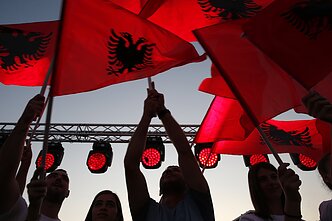
YEAR OF PROTESTS
The first protest kicked the year off to a good start on January 29 when dozens of people rallied against plans to make public transport tickets more expensive. The municipality ultimately pulled back somewhat, reinstating the 30-minute ticket, although at a higher price.
Then came the first of many (small and not so small) rallies in support of Palestine in March, followed by the biggest protest of the year thus far on April 27, when several thousand people rallied against the proposed property tax. The protests were successful – the government pulled back from the proposals.
The first major protest against the government in August was prompted by the disclosure of shady business dealings of the then Prime Minister Gintautas Paluckas. Following his resignation, several thousand rallied again to voice their fears of the new government coalition that now included the populist Nemunas Dawn with its controversial leader, Remigijus Žemaitaitis.
Finally, the protests reached the culture sector in September and, several months later, the media. Even if somewhat oversimplified, the core of the protest lay in the fear of Lithuania embarking on the paths of Hungary or Slovakia.
PM OUT, POPULISTS IN
Paluckas resigned in late July, prompting a coalition reshuffle following a short game of musical chairs over who would be the next prime minister. After two main candidates opted out over some more (alleged) shady dealings, a union leader, Inga Ruginienė, stepped in.
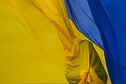
Almost as soon as the new government was sworn in, protests kicked off over the decision to hand over the culture ministry to the Nemunas Dawn populists. Its minister lasted a week. One of his first orders, as it later turned out, was to remove the Ukrainian flag from the press room (which was telling, to many).
The leader of the party, Remigijus Žemaitaitis, later met with the Hungarian foreign minister – prompting criticism for an alternative foreign policy – and was fined 5,000 euros for his earlier anti-semitic statements.
Meanwhile, the party’s supporters, some of whom describe themselves as anti-systemic, hailed the audits initiated by the party of the public broadcaster, LRT, and the Defence Ministry. And who’s the head of the audit? An MP with previously disclosed business ties to Belarus and Russia.
SAME-SEX UNIONS LEGAL(?)
With the parliamentary track stalling, the Constitutional Court ruled that it was unconstitutional to stop same-sex couples from registering a civil union. This was followed by a number of couples registering their partnership via the courts.
RUSSIAN DRONES
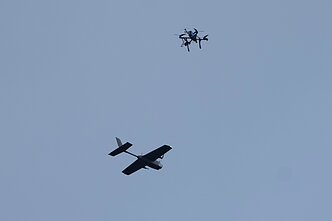
Two Gerbera-type drones entered Lithuania this summer, with one of them – loaded with several kilogrammes of explosives – flying over parts of Vilnius before crash-landing at a military training area. Since then, Lithuania’s air defence units have been deployed near the border with Belarus, with no more incidents reported since then.
DEATH OF US TROOPS
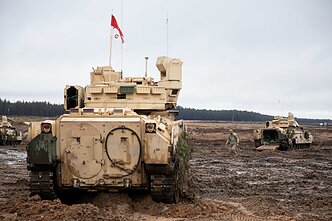
The country was shaken up by the horrific deaths of four US soldiers when their armoured vehicle sank in a swamp. They received a state-level send-off, with hundreds of people lining the streets in Vilnius for the farewell. This year, a Belgian soldier also died during a training incident.
BRELLING OUT
In February, the Baltic states severed the last obvious connection to Russia by switching away from the Moscow-controlled BRELL electricity network. The best part? The techno rave ceremony (seriously, take a look at these scenes if you haven’t already).
NAUSĖDA CALLS LENIN
He was obviously joking. Still, watching the puzzled face of President of the European Commission Ursula von der Leyen doesn’t get old.
GERMAN BRIGADE IN
The German brigade was officially inaugurated under torrential rainfall back in May, with numerous references to historical “events” by the top officials, as well as by members of the crowd during the day.
MINE BAN OUT
Along with the other Baltic states, Poland, and Finland, Lithuania is leaving the Ottawa Convention banning anti-personnel landmines. Along with fortifications already being done on the border with Belarus and Russia – the Baltic Defence Line – the countries bordering Russia will now be able to deploy mines if an armed conflict seems imminent.
EYES STILL ON UKRAINE
Lithuanian officials and society continued their overt support for Ukraine – from dedicating 0.25 percent of GDP to the country’s military needs, to individual volunteers running complex logistics chains of donated goods and gear. A Lithuanian volunteer fighting in Ukraine was killed in action, his body was pulled out of the battlefield after a complicated operation by the Ukrainian special forces.
BUT NOT ON GAZA
The war in Gaza saw little engagement from Lithuanian politicians, even as they welcomed a number of Israeli officials throughout the year, including Israeli President Isaac Herzog. An article by our colleagues explored the roots behind the support for Israel. There were, of course, some expressions of shock and disbelief, including by the Lithuanian president, when presented with the EU’s findings on the genocide in Gaza, but that’s about it.
Meanwhile, diplomats in the US told us that Lithuanian society exerts little pressure on its politicians over the Gaza issue. As a result, they said, Lithuania remains one of Israel’s few friends in Europe, placing the country in a unique position to do business with Tel Aviv.
EXPLODING SEX TOYS
In September, Lithuanian prosecutors revealed that the self-igniting packages that could have caused a catastrophe were sent from Lithuania, with some of the explosives packed inside sex toys. Comic details aside, the network of Russian recruits worked in Vilnius, some out of at least one Airbnb home. More on that here.
ČIURLIONIS AT 150
This year also marked the 150th birth anniversary of Lithuania’s fundamental artist, Mykolajus Konstantintas Čiurlionis. If you didn’t know much about him, this roundup might explain why you have his name hanging on the facade of the Vilnius Airport building.
And with that, we wish you a bland and uneventful 2026!
Thank you for staying with us at LRT English, and see you next year.
Written by Benas Gerdžiūnas
Edited by Justinas Šuliokas

Newsletter
Every Friday morning.