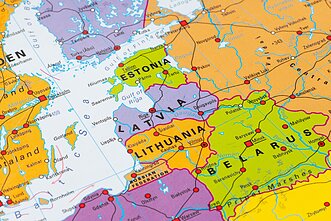

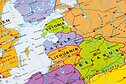













Lithuania, Latvia, Estonia, and Poland announced on Tuesday their intention to withdraw from the Ottawa Convention that bans anti-personnel mines.
The four countries’ defence ministers said in a joint statement that they “unanimously” recommend withdrawing from the convention.
“With this decision, we are sending a clear message: our countries are prepared and can use every necessary measure to defend our territory and freedom.”
The move has yet to be approved by the parliaments of the respective countries.
The ministers said in the joint statement that since the ratification of the Ottawa Convention, the security situation in the region “has fundamentally deteriorated” and military threats to NATO member states bordering Russia and Belarus “have significantly increased”.
“We believe that in the current security environment, it is of paramount importance to provide our defence forces with flexibility and freedom of choice of the potential use of new weapon systems and solutions to bolster the defence of the alliance’s vulnerable Eastern Flank,” the ministers said.
“In light of these considerations, we – the ministers of defence of Estonia, Latvia, Lithuania, and Poland – unanimously recommend withdrawing from the Ottawa Convention,” they said.

The ministers also insisted that, despite their withdrawal from the arms control treaty, their countries “will remain committed to international humanitarian law, including the protection of civilians during an armed conflict”.
All EU member countries are parties to the Ottawa Convention, while China, Russia, the US, India, and Pakistan have not joined it.
Lithuania ratified the Ottawa Convention in 2003.
The country recently also withdrew from an international convention banning cluster munitions.
Criticism from the Red Cross
Earlier, the International Committee of the Red Cross said it was “very concerned” about the European context of rearmament.
“The impact of these possible withdrawals from conventions by certain states would have very serious consequences for many civilians – in the very long term and even within these countries themselves,” said ICRC spokesman Christian Cardon last week.
“It is precisely now that these treaties are relevant... and not in times of peace and stability,” he added.

Opposition from coalition party
Remigijus Žemaitaitis, the leader of Nemunas Dawn party that is part of the ruling coalition, said on Tuesday that he does not support the decision by Lithuania and other countries in the region to withdraw from the Ottawa Convention.
“I’m against this. I definitely don’t support the withdrawal. What I see today is a hasty and very quick decision, and I doubt we’ll see any benefits from it,” Žemaitaitis told reporters.
“As far as I know, the Seimas makes this decision, so they shouldn’t be making it for me. Let the foreign minister and defence minister [...] not make decisions for Žemaitaitis and other Seimas members. They could read the constitution to understand the limits of their authority,” the Nemunas Dawn leader said.
“When someone wants to withdraw from the Ottawa Convention, they come to Seimas members, explain the options and consequences, and then we’ll make a decision once they present it to our political group,” he added.
The Nemunas Dawn holds 19 seats in the 141-member parliament, Seimas. It is the third biggest group.

‘Necessary step’
Meanwhile, Seimas Speaker Saulius Skvernelis, leader of another party in the ruling coalition, the Democrats “For Lithuania”, believes that withdrawing from the Ottawa Convention is a necessary step to safeguard the country’s border.
“This decision is needed, and it was discussed within the State Defence Council format. It’s necessary, given the length of our border with hostile nations and what is happening in Ukraine. The enemy, unfortunately, doesn’t follow any conventions,” Skvernelis told reporters.
“When it comes to defending our border, anti-personnel mines are important; they certainly enable us to defend ourselves effectively,” he added.
According to Skvernelis, “civilised countries” that use such equipment have mine maps and “don’t do it haphazardly”. Once these weapons are no longer needed, demining operations can be carried out without endangering civilians, he argued.
“I believe that after this first step, with the Baltic states and Poland on board, the Finns should take this position into account, and this step will help them make their own decision,” he said.
The Democrats “For Lithuania” hold 14 seats in the Seimas.
Endorsement from Human Rights Committee chair
MP Laurynas Šedvydis, chair of the parliamentary Committee on Human Rights, has expressed his backing to the decision to withdraw Lithuania from the Ottawa Convention.
“Since the potential adversary, the Russian Federation, has absolutely no scruples about using these weapons and, as the episodes of the Kherson de-occupation showed, about using all kinds of mines and bombs with the aim of essentially harming civilians, the withdrawal from the Ottawa Convention at this time of the year is justified by the existing circumstances,” the Social Democrat posted on Facebook on Tuesday.
“If military advice is that such a decision will add value, it is worthwhile and necessary to support it. In different circumstances or if the security situation improves, it is always possible to rejoin the convention,” Šedvydis added.

Newsletter
Every Friday morning.