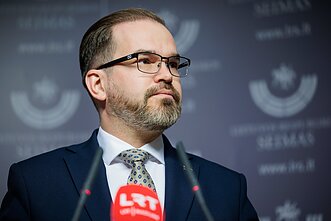




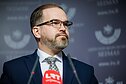








Prime Minister Gintautas Paluckas announced his resignation as head of government and leader of the Social Democratic Party on Thursday, capping off weeks of political upheaval fueled by a series of investigative reports.
What began as a seemingly innocuous fishing trip post on social media quickly unraveled into a cascade of revelations about questionable loans, conflicts of interest, and long–buried controversies.
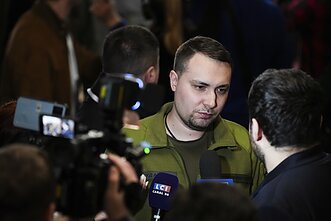
"Millionaire Tautvydas Barštys posted a story showing the Prime Minister happily displaying a caught carp. In his company were Barštys himself and the Mayor of Druskininkai, Ričardas Malinauskas. It was this very fishing trip that first drew [our] attention to Gintautas Paluckas," said Šarūnas Černiauskas, the lead journalist behind an investigation that brought the country’s attention to its Prime Minister’s past and business ties, eventually leading him to his resignation.

In the days that followed, the implications of the trip rippled outward. Journalists began digging into Paluckas’ past, business ties, and financial dealings.
Their findings triggered investigations by national oversight institutions, ignited protests, and prompted coalition partners to issue ultimatums demanding his resignation. Then President Gitanas Nausėda stepped in, giving Paluckas a two-week deadline to respond to the allegations or step down.
Paluckas downplayed the accusations, likening them to “OnlyFans content and telephone scammers” and dismissing the reporters who put him on the spotlight as unserious “internet explorers” exaggerating their findings.
But that strategy backfired as more media outlets launched their own inquiries, unearthing new details and multiplying the calls for official action.

Here’s how a prided carp catch led to the Prime Minister’s resignation:
Garnis and Emus: a preferential loan
After witnessing the Prime Minister’s curious fishing trip company, Siena in collaboration with Laisvės TV began looking into his businesses and on May 28 aired Prime Minister with Interest – their first blow. The report revealed that Garnis, a company co-owned by Paluckas, established last year, had received a €200,000 preferential loan from Lithuania’s national development bank ILTE, while Paluckas was already serving as the prime minister.

Crucially, the investigation alleged that Paluckas had not recused himself from cabinet-level decisions that directly affected ILTE and the scope of its loan programmes – a potential conflict of interest.
Further revelations from Laisvės TV founder Andrius Tapinas alleged that Garnis might have been a front: an entity created specifically to channel the ILTE loan to Emus, a more established battery systems firm also co-owned by Paluckas. Emus itself was ineligible for the loan due to age restrictions under ILTE’s program criteria.
Within two weeks, Lithuania’s Financial Crime Investigation Service (FNTT) opened a pre-trial investigation into suspected credit fraud, later joined by the Special Investigation Service (STT). The Chief Official Ethics Commission (VTEK) launched its own inquiry into possible ethics violations, and ILTE initiated an internal audit. While the bank found that the loan followed its existing rules, it also recommended those rules be reviewed moving forward.
Further reading
Adding to the controversy, a separate investigation by LRT’s Investigative Unit uncovered that Paluckas had also received a €200,000 personal loan from Emus itself. Experts consulted by LRT note that it is highly unusual for a shareholder to borrow such a substantial amount directly from their own company. They describe the practice as atypical and potentially problematic, raising concerns about corporate governance standards and possible tax implications.

Sagerta: an old friend and a failing company
A month later, Siena and Laisvės TV released a follow-up investigation Prime Minister and Partners, alleging that in the summer of 2018, while serving as deputy mayor of Vilnius, Paluckas supported municipality’s decision to spend €6 million buying out the burned-down Trade Union Palace from VIPC Vilnius, a company linked to businessman Darijus Vilčinskas.
The report claims Paluckas and Vilčinskas share a long-standing personal relationship, including a discounted property purchase and €180,000 in unpaid loans tied to the prime minister's failed business venture, Sagerta.
This scrutiny arose partly because Paluckas never clarified the origin of the loan or the nature of his relationship with Vilčinskas, who publicly asserted they were business partners – a claim Paluckas has denied.
Further reading
Rat case: past due
According to Siena and Laisvės TV, Paluckas turned to business in 2011, after the Social Democrats distanced themselves from the once-promising young politician, when he was found guilty in the so-called “rat case”. He was convicted of abuse of office while serving as director of the Vilnius City Municipality Administration, over the procurement of pest control services.
The Prime Minister faltered even here, as Siena and Laisvės TV revealed that he only settled the compensation linked to the “rat case” in July 2025 – a full decade after the payment deadline set for 2015.

The initial installment paid on time and in cash, accounted for the majority of the amount: 40,000 out of 57,000 litas (approximately 11,500 out of 16,500 euros).
Further reading
Laurų Street: A dubious land deal
Another blow came from investigative outlet Redakcija, which looked into a 2009 land acquisition on Laurų Street in Vilnius. That year, Paluckas was replaced as director of Vilnius City Administration by a fellow Social Democrat, Vytautas Milėnas.
Milėnas then authorized the formation of a land parcel on Laurų Street in Vilnius, intended for restitution to individuals who had lost property during the Soviet era. In December 2009, Paluckas and Genovaitė Arlauskienė purchased the plot for €17,000 each.
However, the land was later determined to be state-designated forest, which cannot be privatised and in 2014, a court annulled the sale and returned the land to the state, though Paluckas and Arlauskienė were reimbursed over €5,000 each.

The episode prompted the parliament’s Environmental Protection Committee to hold an extraordinary session and launch a broader inquiry into the transparency of the restitution process.
Dankora: the family business
But the controversy that ultimately proved fatal to Paluckas’ premiership surfaced just last week, when Tapinas reported that Dankora – a recently established company which had received €173,000 in EU funding for an electric vehicle and ship loading infrastructure project – issued a €145,000 contract to purchase battery systems from Garnis, the same firm co-owned by Paluckas and central to the earlier loan scandal.
Dankora had been acquired shortly beforehand by Paluckas’ sister-in-law, effectively ensuring “that the European money stays in the family business,” remarked Tapinas.
Earlier on Thuesday morning, FNTT agents carried out searches at Dankora’s offices, according to the 15min journalits. Within hours, Gintautas Paluckas phoned President Nausėda to announce his resignation.
Further reading

Newsletter
Every Friday morning.