










LRT English Newsletter – November 14, 2025.
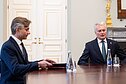
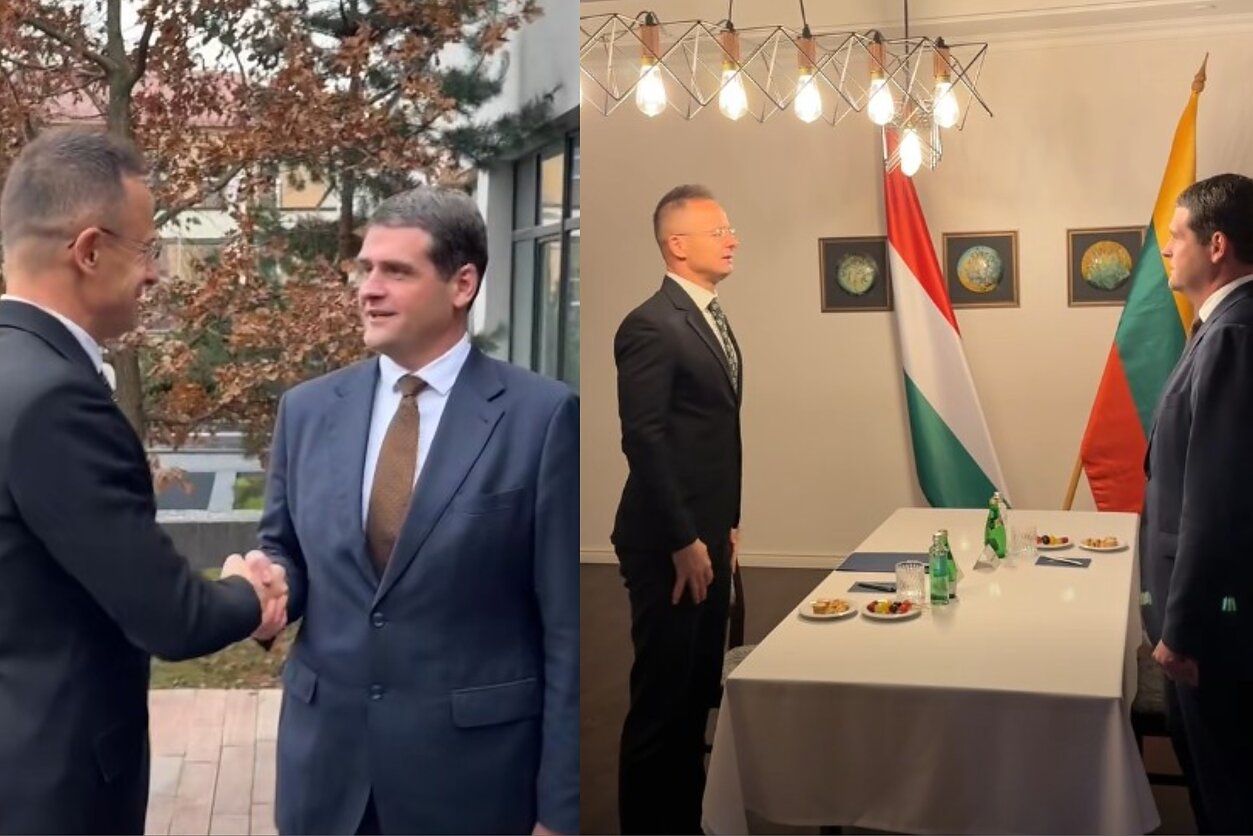
A conflict erupted between Lithuania’s Foreign Minister Kęstutis Budrys and the leader of the Nemunas Dawn populists in the coalition government, Remigijus Žemaitaitis, who met with Hungary’s top diplomat.
“A great day for Lithuania, [...] foreign policy begins with small steps,” Žemaitaitis wrote on social media after he held a meeting with Hungary’s Foreign Minister Péter Szijjártó in a local restaurant on Monday.
The government was not informed about the meeting, during which they also signed some documents. We don’t know what they were, because Žemaitaitis told reporters to mind their own business when asked to comment.
“Why should I have to notify anyone? This is a democratic country, not the Kremlin,” Žemaitis also said, adding that politicians often maintain informal contacts with foreign officials.
The Lithuanian president’s spokesperson accused Žemaitaitis of attempting to create “an alternative foreign policy”, adding that he “lived in an alternative reality”.
At the time, Budrys was in the United States, while the official reception of Szijjártó – who was visiting Hungarian troops deployed in Šiauliai as part of the NATO air policing mission – was undertaken by a deputy foreign minister, Sigitas Mitkus..
The Hungarian side praised the meeting. Szijjártó said on social media that “we share many similar views” with the Nemunas Dawn party.
“Lithuanian politicians rarely speak positively about Hungary, as we have a completely different view of the war in Ukraine than the Lithuanian government,” he added.
Meanwhile, Žemaitaitis also launched more broadsides at Budrys, saying his actions are not coordinated with the coalition, a claim dismissed by social democrat leaders, and that closing the border with Belarus was a mistake.
This was not the first shot in the feud between the two politicians. Last week, Budrys complained that he was forced to constantly "clean up" after Žemaitaitis' explosive statements.
PHASE 0
A better way to look at the plethora of security incidents happening across Europe, including in Lithuania, would be to see it as Phase 0 of Russia’s preparations of war, according to George Barros, an analyst at the Institute for the Study of War (ISW), interviewed by LRT. Here are some key takeaways, though we recommend reading the full thing:
– “It is not a mistake and it is not a coincidence that all of these patterns have begun starting in September of this year, and have only since escalated.”
– “Somebody in the Kremlin or in the Russian General Staff gave an order that they are to begin conducting a series of events, a reconnaissance, provocations, experimenting with how to do airport closures across multiple different countries, reconnoitring military sites.”
– “You must be treating every one of these events as a NATO Article 4 event [that calls for urgent consultations], because if you don't treat it as an Article 4 event, we will boil the frog, we will become denatured and insensitive to these Russian acts.”
– “This is the political, psychological, and informational condition-setting that we must deny the Russians.”
NO TALKS
The border with Belarus remains closed. Minsk previously claimed it was ready to talk about reopening the border, but the Lithuanian prime minister said Vilnius would only do so after the balloons stopped (we had more on the balloon “hybrid attack” in the previous newsletter, here).
Prime Minister Inga Ruginienė said contacts with the Belarusian side were taking place “at various levels”. Meanwhile, the Minsk regime threatened to confiscate Lithuanian lorries that are stranded on the other side unless they pay the 120 euro per day extortion (sorry, fee).
In related news, an LRT Investigation profiled everything that is known about the smuggling balloons – including that they use Lithuanian SIM cards for GPS navigation.
NEW MINISTERS
The wait is over – Robertas Kaunas was appointed defence minister this week, despite criticism of his lacklustre work experience in the field. His day took off to a strange start after some were outraged by what they saw as a poorly timed and not very funny Facebook post by the official Defence Ministry account.
Vaida Aleknavičienė was appointed minister for culture after the Nemunas Dawn candidates sparked ongoing protests by those in the culture sector and those backing them. Despite initially saying she preferred to “stay neutral”, Aleknavičienė later said that Nemunas Dawn being part of the governing coalition was a problem.
EDITOR’S PICKS:
– A group of lawmakers is pointing at the growing immigration from Central Asian countries, saying that risks are growing, although falling short of providing any evidence.
– Nordic and Baltic countries will jointly finance a 430-million-euro package of military equipment and munitions for Ukraine.
– What’s behind the stories of angels and devils in Lithuanian tales?
– Lithuania has barred Russian rapper Alisher Morgenshtern from entering the country.
– What can Lithuania learn from Slovakia? It's important not to treat populists as marginals and not to fall asleep at the wheel, according to Robert Špoták, former chair of the Slovak Arts Council, interviewed by a Vilnius University lecturer, Audronė Rimkutė.
– Here’s the story of a same-sex couple who took the legal route to have their partnership registered via the courts.
– A secret vault potentially dating back to the war with Sweden has been uncovered in Kretinga, western Lithuania.
– Archives from a notorious Soviet-era prison in Russia have been handed over by US scholars to Lithuanian researchers.
– And what did Lithuanian headlines look like 30 years ago?
Written by Benas Gerdžiūnas
Edited by Justinas Šuliokas

Newsletter
Every Friday morning.