















The Arctic remains a key strategic area for Russia, said Lithuanian Foreign Minister Kęstutis Budrys, adding that Moscow’s activities there pose a direct threat to NATO infrastructure and the security of its allies.
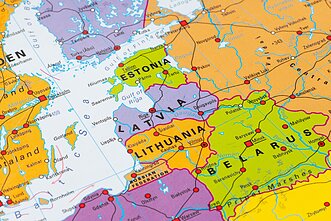
“Finland and Sweden’s NATO membership creates a strategic link between the Baltic Sea and the North. Any conflict in the Arctic will have a direct impact on the Baltic region, from changes in naval deployment to hybrid threats such as GPS jamming or cyberattacks,” Budrys was quoted in the Foreign Ministry's statement on Tuesday.
Speaking at the Berlin Security Conference, the minister highlighted that the Arctic is central not only to Russia’s military strategy but also its economic security, accounting for 11% of the country’s GDP. He added that, under sanctions, Moscow is increasingly relying on the Northern Sea Route as an alternative export corridor, exporting 84% of its oil via this route last year using a so-called shadow fleet.
Budrys also warned that China’s growing presence in the Arctic is a factor in regional security.
“China presents its engagement in the Arctic as economic and scientific cooperation, but its partnership with Russia is deepening in terms of infrastructure, minerals, and research. This is a significant factor for regional security,” he said.
According to the top diplomat, NATO must remain active in the region and is already strengthening air defences, intelligence capabilities, and maritime surveillance in the North.
“The Baltic states have shown that a coordinated response to hybrid threats is effective. We can transfer these models to the Arctic, where Russia and China are increasingly active. This is our shared security challenge,” Budrys underlined.

Newsletter
Every Friday morning.