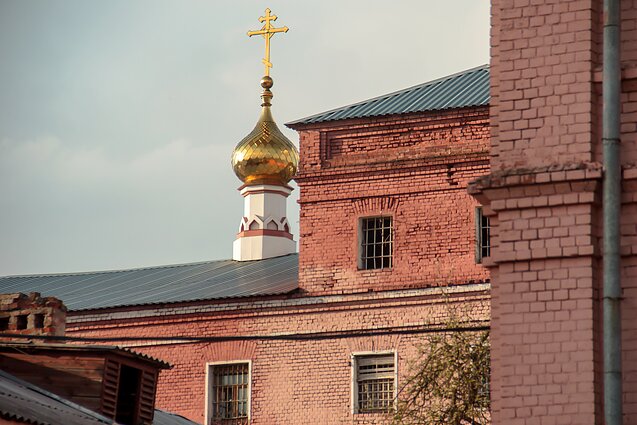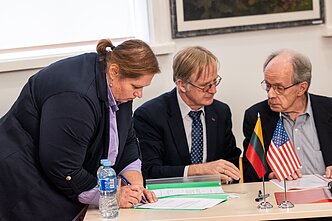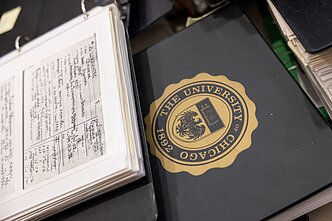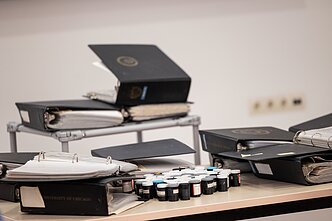












Two US scholars on Wednesday handed over to the Genocide and Resistance Research Centre of Lithuania copies of inmate registry cards and a digital database from Russia’s Vladimir Prison, a notorious Soviet facility that held many prominent Lithuanian political prisoners.
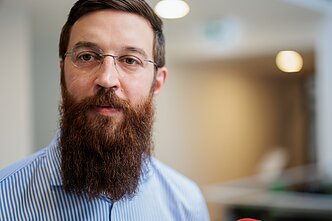
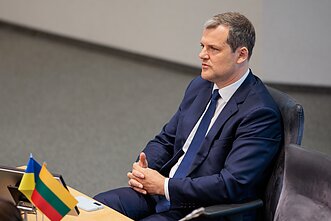
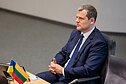
At a ceremony at the Tuskulėnai Memorial in Vilnius, the agreement to transfer the archival data was signed by Arūnas Bubnys, director of the centre, and Professor Marvin William Makinen of the University of Chicago, a former political prisoner at Vladimir Prison, together with Ari David Kaplan, a data and artificial intelligence expert.
The collection was compiled in 1990 and between 1998 and 2000 during research into the fate of Raoul Wallenberg, the Swedish diplomat who rescued thousands of Jews during World War Two and later disappeared in Soviet captivity.
Makinen said the researchers began their work seeking information about Wallenberg but soon realised the data had broader historical significance.
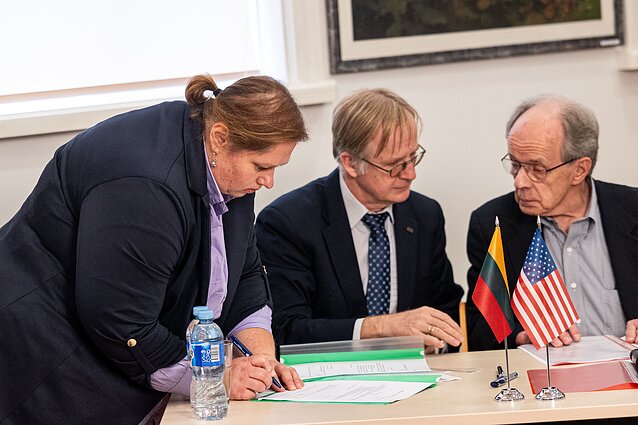
“We hope this information and data can help both Lithuania and other countries,” Makinen told reporters.
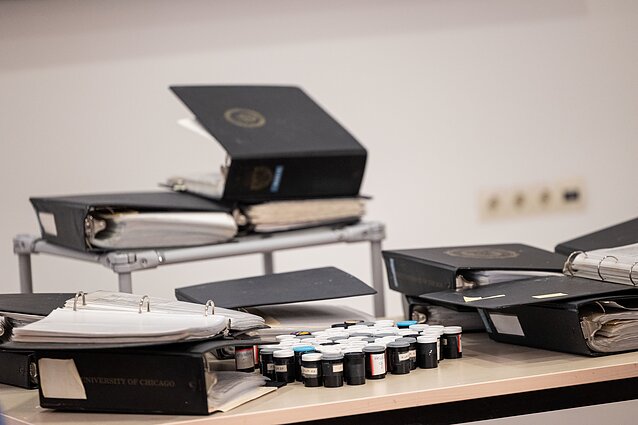
The archive covers inmates held in the second building of Vladimir Prison between 1947 and 1972. It includes 900 card file copies and more than 8,000 digitised records, including data on Lithuanian citizens.
Bubnys said the materials will deepen understanding of Lithuania’s history under Soviet rule and shed light on prominent Lithuanians imprisoned in Vladimir, such as interwar Foreign Minister Juozas Urbšys and Archbishop Mečislovas Reinys.
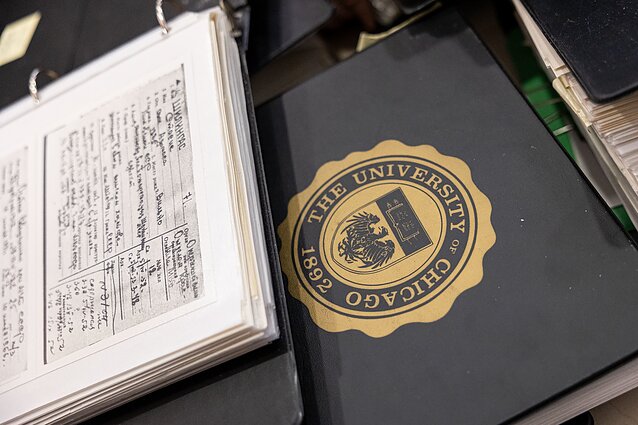
“About 80 prominent Lithuanian citizens were held in Vladimir Prison. This is highly valuable information for our research,” Bubnys said. “The card copies add to the existing material on our well-known politicians who were imprisoned there.”
Other notable inmates included Balys Gajauskas, Juozas Laukaitis, Teofilius Matulionis, Antanas Merkys, Vladas Mironas, Aleksandras Stulginskis, and Marija Urbšienė.
Bubnys noted that Lithuanian historians still lack access to much of the archival material from the Soviet occupation period, as most of it was transferred to Russia.
“Perhaps there will be a thaw, a process of democratisation, and if a democratic system emerges in Russia, we will once again be able to visit and work in its archives,” he said.
Kaplan said the electronic database was designed for academic use and includes detailed prisoner information.
“The database contains names, personal information, dates of birth, arrival and release, and, if applicable, death in prison,” he said. “There are also cell maps, allowing researchers to determine who was held where and when.”
Vladimir Prison housed state and military figures, clergy, and anti-Bolshevik resistance members from across the Soviet Union and other countries. It was used for political prisoners transferred from Gulag camps for offenses such as disobedience, organising uprisings, or attempting to escape, and was considered one of the harshest prisons in the Soviet Union.
“It was a place for keeping prisoners secret and secluded for long periods of time,” said Makinen, who served a two-year sentence at Vladimir. “The prison was constructed in such a way that for years, the prisoners did not know about the others.”

Newsletter
Every Friday morning.