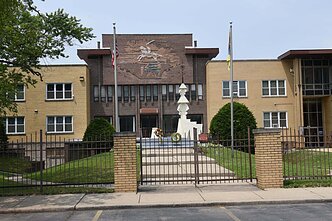
















The office of Belarusian opposition leader Sviatlana Tsikhanouskaya in Vilnius has temporarily suspended its operations after Lithuania reduced her level of physical protection.
Tsikhanouskaya’s diplomatic adviser, Dzianis Kuchynski, confirmed the decision to LRT.lt.
“On October 1, we were informed about planned changes to Sviatlana Tsikhanouskaya’s security arrangements in Lithuania,” Kuchynski told LRT.lt. “We would have preferred to be notified a bit earlier. Since the warning came at very short notice, we did not have enough time to adjust the office’s work accordingly. Therefore, we had to temporarily suspend operations.”
According to Kuchynski, during a subsequent meeting with Foreign Minister Kęstutis Budrys, Lithuanian officials explained the changes and assured the team that “Lithuania’s position toward [Belarusian authoritarian leader] Alexander Lukashenko’s regime remains unchanged” and that “Tsikhanouskaya remains an official guest of the Lithuanian government, with no change in her status.”
He emphasised that the security of Tsikhanouskaya and her team “is not only vital for her personal safety but also for the continued and effective functioning of the Belarusian democratic representation abroad”.
Kuchynski said the office remains deeply concerned about ongoing and emerging threats amid the Lukashenko regime’s campaign of intimidation, repression, and efforts to undermine Belarusian democratic forces and communities abroad.
LRT.lt reported on Tuesday that responsibility for Tsikhanouskaya’s protection has been transferred from the Dignitary Protection Service, responsible for protecting Lithuania’s top leaders and visiting foreign dignitaries, to the Criminal Police Bureau, which provides protection for individuals facing potential threats.
Tsikhanouskaya, who fled to Lithuania after the disputed 2020 Belarusian presidential election, had been under 24-hour protection by the Dignitary Protection Service since her arrival.
Parliamentary Foreign Affairs Committee Chairman Remigijus Motuzas said the reduction in protection level was made based on a reassessment of current security threats.

Newsletter
Every Friday morning.