














Lithuania has closed part of its airspace along the border with Belarus ahead of the upcoming Zapad military exercises planned by Russia and its ally Belarus in September.
The restrictions were introduced following two incidents in July, when Russian Gerbera drones entered Lithuanian airspace.
According to the Defence Ministry, the decision was taken by the Ministry of Transport at the request of the Chief of Defence.
“This measure has been introduced in light of the security situation and the risks posed to the public, including the dangers to civil aviation from incursions by unmanned aerial vehicles, as well as the need to create the necessary conditions for the Lithuanian Armed Forces to carry out their legal duties in peacetime,” the ministry said in a statement.
Part of the border airspace has been closed since last Wednesday, August 14.
The Transport Competence Agency has said that flights in restricted zones will only be permitted in exceptional circumstances and with the approval of the Chief of Defence.
The ban on flights over the affected border areas will remain in force until October 1, with the option of extension if the threat from drones persists.
Lithuania’s border with Belarus stretches 679 kilometres. Officials have not disclosed the precise section where the airspace has been closed.
Earlier this summer, one of the drones that entered from Belarus was carrying two kilogrammes of explosives. Military officials believe both drones strayed into Lithuania after being diverted by electronic warfare measures while en route from Russia to Ukraine.
The incidents have prompted Lithuanian officials to step up air defence efforts and request additional anti-drone capabilities from NATO.
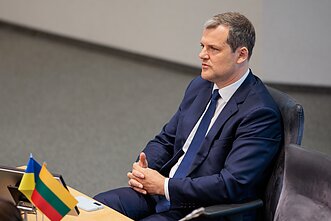
According to Defence Minister Dovilė Šakalienė, the Alliance has pledged to assist in protecting Lithuania’s airspace. NATO experts are currently in the country assessing the situation.
This week, the minister said institutions were finalising regulations that would authorise the shooting down of aerial targets. The new legal framework, she explained, would allow authorities to “close air corridors swiftly and effectively” and neutralise threats without endangering civilian infrastructure.
Officials have already warned that the likelihood of similar incidents will rise during the Zapad drills, scheduled for mid-September.
The Defence Ministry estimates that this year’s joint Russian-Belarusian exercise will involve up to 30,000 troops – far fewer than in 2021, when around 200,000 soldiers took part just months before Moscow’s full-scale invasion of Ukraine.
Military commander Raimundas Vaikšnoras has said the Lithuanian army will raise its readiness levels throughout August and September in response.
The Zapad exercises have been held every two years since 2009, with the exception of 2023. British intelligence assessed that year’s cancellation as likely due to manpower and equipment shortages in the Russian military, as well as Moscow’s reluctance to face criticism for staging large-scale manoeuvres during its war in Ukraine.

Newsletter
Every Friday morning.