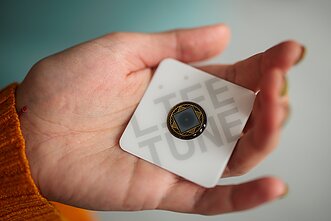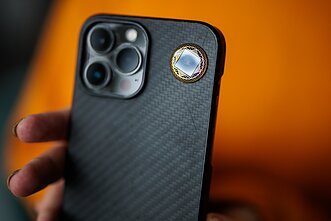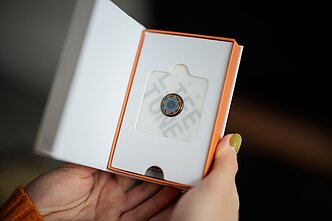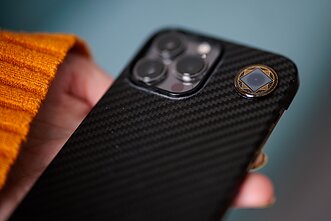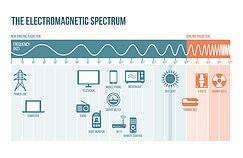
















A growing market for electromagnetic field (EMF) radiation protection accessories has sparked widespread concern over the potential health risks posed by devices like mobile phones, laptops, and Wi-Fi routers. These accessories, including stickers, keychains, and pendants, promise to block harmful radiation, with some products priced as high as 600 euros. However, experts say these products are based on pseudoscience, offering no real protection.
One such company, Lithuania-based Technano, manufactures these accessories, claiming that they reduce the impact of electromagnetic radiation from various devices. On their website, the company outlines that their products are designed to shield users from radiation emitted by mobile phones, laptops, baby monitors, and even household appliances like microwaves and routers.
However, when contacted, a representative from Technano explained that the company does not sell its products directly in Lithuania and instead collaborates with the Canadian company Airestech, which distributes the products internationally.
Airestech’s products range from small stickers applied to electronic devices to larger plates that users place next to their gadgets. The prices for these items vary from approximately 80 euros to more than 600 euros.

Despite the growing number of consumers who swear by these EMF-blocking accessories, scientists have questioned the validity of the claims surrounding the dangers of electromagnetic radiation and the effectiveness of the products designed to mitigate those risks.
According to Dr. Benas Gabrielis Urbonavičius, a faculty member at the Kaunas University of Technology’s Faculty of Mathematics and Natural Sciences, the assertions made by companies selling these products are rooted in conspiracy theories, not scientific evidence.
Science behind electromagnetic radiation
Electromagnetic radiation is the energy transmitted through space in the form of electromagnetic waves. It is divided into two primary categories: ionizing and non-ionizing radiation.

Ionizing radiation, which includes X-rays and gamma rays, carries enough energy to break chemical bonds and damage vital molecules like DNA, making it dangerous to living organisms. Non-ionizing radiation includes radiation emitted by mobile phones, Wi-Fi routers, and other everyday electronics and does not have enough energy to ionize atoms or molecules, meaning it cannot directly cause DNA damage.
Dr. Sergejus Orlovas, a researcher at the Institute of Optoelectronics at the Centre for Physical Sciences and Technology, explains that while electromagnetic radiation from devices like mobile phones and Wi-Fi routers may cause a slight increase in tissue temperature, it is not harmful in the same way as ionizing radiation.
According to the World Health Organization (WHO), the current evidence does not support claims that low-level electromagnetic fields, like those emitted by mobile phones, pose a significant health risk.
No scientific basis for claims of harmful effects
Airestech’s website suggests that electromagnetic radiation can cause various health issues, such as poor sleep quality, fatigue, brain fog, hormonal imbalances, and even heart disease. The company claims that its products help shield users from these harmful effects.
However, Dr. Urbonavičius and Dr. Orlovas emphasize that there is no scientific evidence to support these claims.

The WHO has conducted extensive reviews of the available research on electromagnetic fields and concluded that there is no consistent evidence linking exposure to low-level electromagnetic fields with any adverse health effects. Specifically, studies on the radiofrequency radiation emitted by mobile phones have found no significant impact on human health.
Dr. Orlovas points out that the claims made by companies like Airestech are part of a minority view that contradicts the scientific consensus.
He explains that these products misinterpret findings from the International Agency for Research on Cancer (IARC), which classifies radiofrequency radiation as “possibly carcinogenic” (Group 2B), a classification that also includes everyday items like coffee. This classification does not imply that exposure to mobile phone radiation directly causes cancer.
Marketing of EMF protection products
Despite the lack of scientific backing, products like those sold by Airestech continue to gain popularity, largely through social media and influencer endorsements. The company’s Instagram account boasts over 150,000 followers, with testimonials from athletes, scientists, and everyday users who claim to have experienced improvements in their well-being after using the products.
One of the key selling points for these products is their supposed ability to “harmonise” or “neutralise” chaotic electromagnetic radiation.
However, scientists argue that terms like “harmonising” or “modulating” electromagnetic fields are marketing buzzwords with no basis in physics. As Dr. Orlovas notes, electromagnetic fields are not “chaotic” but are structured according to physical laws, and there is no scientific justification for the claims that these products can alter their characteristics.

Moreover, some of the claims made by companies selling EMF-blocking accessories are simply not physically possible. For example, Airestech markets its products as being able to convert “chaotic” electromagnetic radiation into a form that is more “biologically compatible” with humans.
However, experts argue that this is scientifically unfounded. Dr. Urbonavičius points out that the supposed “microprocessor” in Airestech’s products could not possibly interact with electromagnetic radiation in the way the company claims, as passive devices like stickers cannot modify the energy emitted by electronic devices.
Questionable ‘scientific’ claims
Airestech’s website also includes videos and articles that appear to show improved brain activity after using their products. These videos depict brain activity scans that allegedly show a decrease in brain activity when using a mobile phone, with a “green” image representing improved brain function after using the EMF-blocking product.
However, Dr. Kastytis Dapšys, a neurophysiologist at Vilnius Psychiatric Hospital, questions the credibility of these experiments. He argues that the videos are more likely designed to promote anxiety and encourage consumers to buy the products rather than present legitimate scientific findings.
Dr. Dapšys notes that the studies published on Airestech’s website, which claim to show improvements in brain activity after using the products, are not scientifically rigorous. The small sample size, lack of peer review, and absence of statistical analysis raise serious concerns about the reliability of these studies.
Lack of regulation
The lack of regulation in the EMF protection accessory market means that companies can make bold claims without providing solid evidence.
As Dr. Orlovas explains, while some scientists and advocacy groups continue to call for stricter limits on electromagnetic radiation exposure, the vast majority of the scientific community and regulatory bodies like the WHO and the International Commission on Non-Ionizing Radiation Protection (ICNIRP) agree that there is no need for such protective measures based on current scientific understanding.

Newsletter
Every Friday morning.