











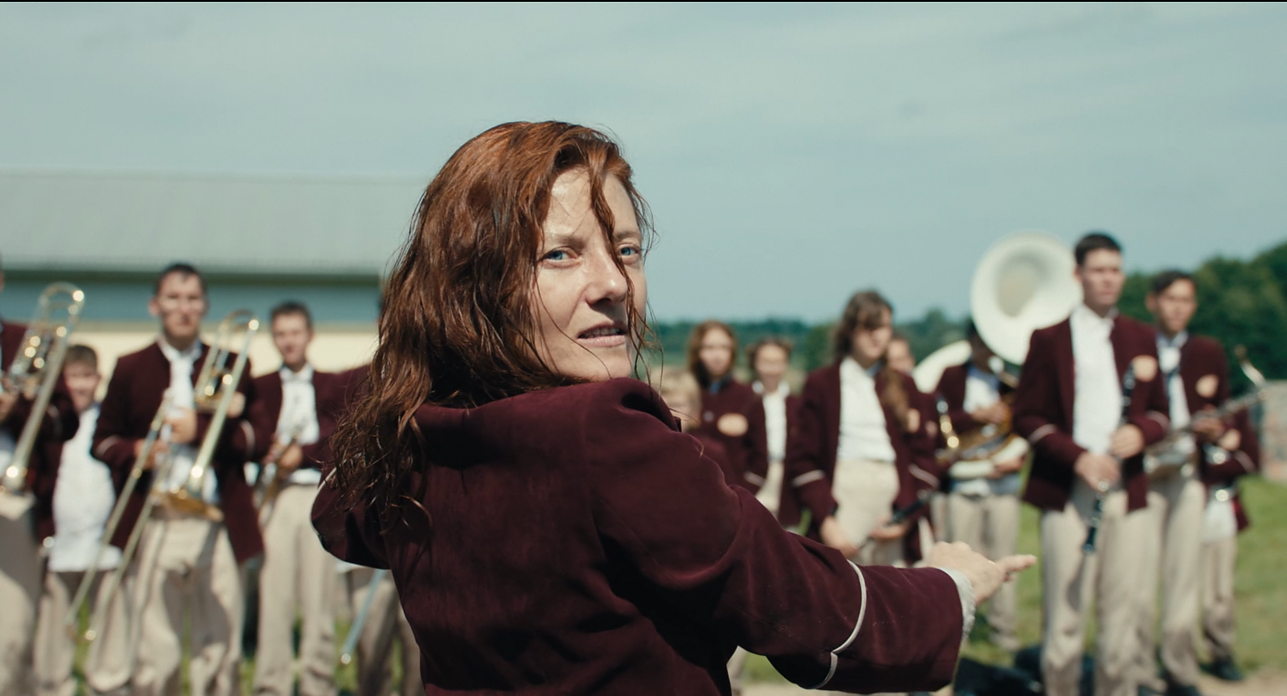
Parade, directed by Titas Laucius (2022)
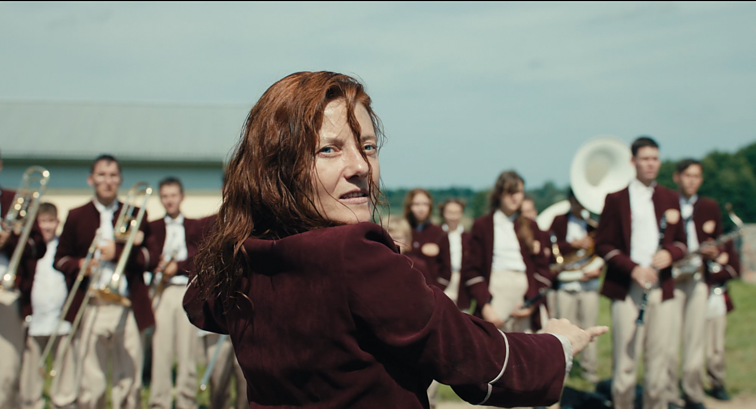
Parade (Paradas, 2022), the debut feature of director Titas Laucius, is a drama/comedy about an ex-couple trapped in a peculiarly anachronistic bureaucratic trap between contemporary notions of blended families and conservative religious mores. Miglė (Rasa Samuolytė) and Eimantas (Giedrius Savickas), now middle-aged, were briefly married and soon divorced as students some two and a half decades ago. They have a daughter together and remain friends, but each has moved on: Miglė, now a bandleader at a youth orchestra, is long into her second marriage, with a second, teenage, daughter.
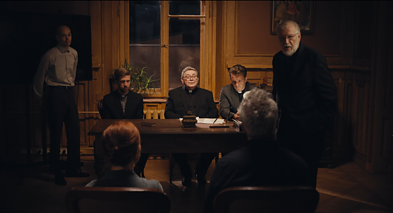
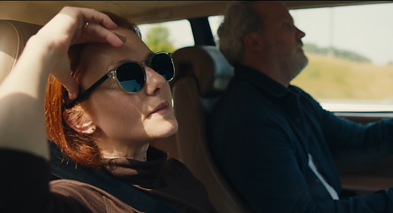
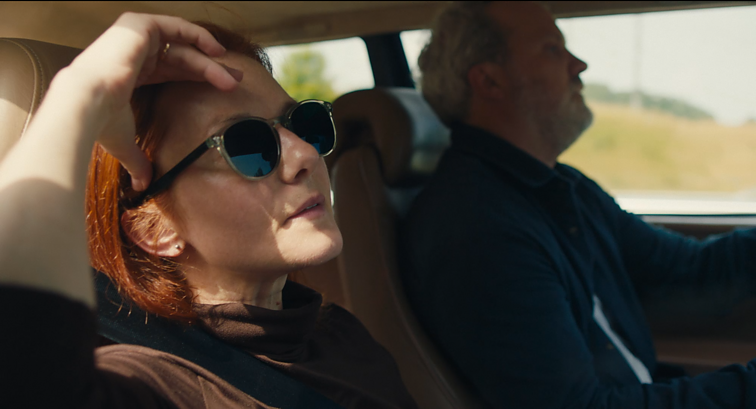
Eimantas, for his part, is also looking to remarry, but there is a complication: the couple wants to marry in church, but in order to do so they first need to get his first marriage annulled, not just by the civil authorities but by the far more conservative and reluctant functionaries of the Catholic church. To achieve this, Eimantas needs Miglė’s cooperation, and the two join forces to rewrite their mutual past into a storyline that would convince the priests of the illegitimacy of their marriage. This innocent confabulation, inevitably, gets out of hand, leading to a series of mishaps and unexpected intimacies that threaten to throw Miglė’s seemingly tranquil life off balance.
Parade has its moments of seriousness but overall, it is the comedic elements that hold sway and Laucius makes no pretense at loftier aims: the film moves with a jaunty pace set by the rhythm of its amusingly deadpan dialogue and its major moments are all designed to draw laughs. Some of these set pieces go for an outlandish effect, providing a surrealist counterpoint to the more or less grounded family drama: one memorable sequence shows Miglė’s rain-soaked band lost in a muddy forest, shot in the melodramatic style of a war film like Oliver Stone’s Platoon.
The best of the comedy, however, is mined from the variously complicated relationships between the characters, which are pitched at a delicious note of awkwardness. The tensions are especially raw in the film’s standout scene, a family dinner at a restaurant where all members of this extended and open-ended family unit come together to welcome home Miglė and Eimantas’s daughter, freshly returned from her studies abroad with her new Czech boyfriend, who – understandably – has some trouble catching up with the family situation. Miscommunication across languages, not to mention alcohol, adds to the confusion as Laucius deftly shows how the arrival of this outsider mixes up established relationship dynamics, bringing longstanding insecurities bubbling up in all present.
The fragility of outwardly stable appearances, and the sometimes self-defeating effort that goes into maintaining them, emerge as the film’s central theme. The veneer of respectability is not merely the main concern of the church’s finicky examiners; it is also repeatedly alluded to through intermittent scenes of Miglė’s band, decked out in neat but impractical uniforms and forever rehearsing for the titular ‘parade’, a prospect for which no one shows any great enthusiasm and the purpose of which no one seems to quite know. In the band is also Miglė’s second daughter (Barbora Bareikytė), the first of the family to outwardly express her desire to break free and chase her own dreams: in her case, capoeira lessons with her dad rather than music rehearsals with her mom.
For Miglė, that stifled internal yearning comes out in the form of a potential reignition of her feelings for Eimantas. Laucius treats the matter gently, never approaching anything like scandal or sentimentality; instead, Miglė’s little crisis plays out as a wholly relatable series of minor doubts, not so much vocalised as expressed through fleeting gestures, about how her life has turned out. There are tender moments of her immersed in rewatching old wedding videos, or drunkenly apologising for past misdemeanours, that anyone can relate to without judgment. And given the light-hearted nature of the film as whole, there is of course a happy ending, broadly speaking, for everyone involved.
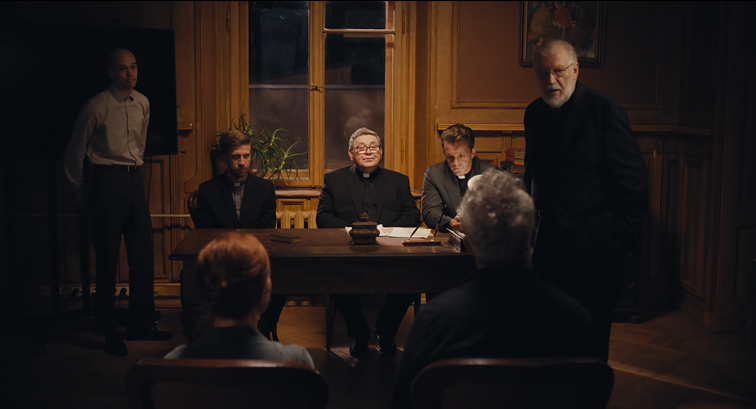
The two facets of the plot – the church investigations and the ‘real-life’ family interactions – don’t always mesh quite as strongly as they might. The former acts as the initial trigger that initiates a series of reevaluations in the characters’ relationships with each other, but plot-wise the two remain mostly separate strands played out in isolation. The series of interviews the ex-couple have to undergo with various priests are reliably entertaining but here, too, there is a sense that Laucius pulls back a little from embracing the full absurdity inherent in the process, sticking instead to a kind of baffling but believable realism. Consequently, it is the family subplot that comes out stronger.
The acting is strong across the board, yet there is no doubt that the film is carried by Rasa Samuolytė’s radiant performance as the impulsive, confident yet increasingly harried Miglė. The script, written by Laucius himself, is firmly centred on her journey, which the other characters in her orbit merely reflect. (For example, we never really see Eimantas interact with anyone outside her presence.) And Samuolytė certainly makes the most of the spotlight she’s given: her irrepressible facial gestures are a constant joy, and her wide-open eyes alone express as much bewilderment as all the dialogue put together. It’s not quite a one-woman show, but not far from it either at times.
Stylistically, Laucius keeps things fairly simple, allowing the viewer to focus on the ample pleasures of the actors’ interactions. Snappy, smart editing gives Parade an enjoyably tight runtime while underscoring the sharpness of the dialogue and reactions. Altogether the director manages to craft a cozy atmosphere with a likeably flawed cast of characters that feel real to life and are simply a great deal of fun to spend time with.
Mikko Toivanen (@aruinedmap) is a cultural historian with a lively interest in the literatures of the world and the craft of translation. He is also the co-author of a blog on fragmentary fiction.
Further reading

Newsletter
Every Friday morning.