
















Organisers of this year’s Vilnius Pride aim to win not just the hearts, but also legal changes.
On Saturday, the Lithuanian capital is hosting the LGBTQ+ march Vilnius Pride, organised by the Trans Autonomy association and the civil society initiative Demonstruokimės.
“LGBTQ+ people have to survive not only global and local crises, rising costs of food, rent and living, but also discrimination, legal insecurity, and questioning of our identities,” the organisers said in a statement.
“Year after year, the situation in Lithuania remains almost unchanged and our voices are not heard when it comes to our own lives. But we continue to speak out, to march and to protest,” they added.
The march will start on Saturday at 13:00 and head from the National Library along Gedimino Avenue towards Cathedral Square.
March for community
The march has been authorised for up to 5,000 people and the organisers expect between 2,000 and 3,000 marchers.
“We are inviting the entire LGBTQ+ community to the march, but not only them. We are also inviting people who support the community, family members, friends, people who work in the field of human rights and several human rights organisations will be participating in the march,” Ajus Jurgaitis, chair of Trans Autonomy, told LRT.lt.

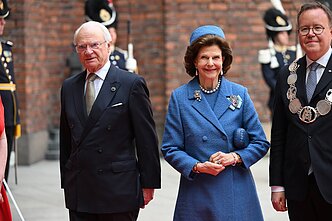
The supporters will include the ambassadors of the US and Sweden, diplomats of Canada, Finland, France, and other countries.
“It is important to them that LGBTQ+ rights are human rights,” noted Jurgaitis. “Members of the community and activists from Latvia and Estonia are also coming.”
Four demands
The organisers of the march are making four main demands: access to legal and medical transition for trans people; the right to marriage, partnership and adoption for same-sex couples; the abolition of the law that censors public information about the LGBTQ+ community; and full protection against discrimination.
“Back in 2020, we organised a small march, and then we made three basic demands, mostly related to legal changes. Basically, nothing has changed since 2020 – this year, we added one more demand and joked that we would add one more every year because there are a lot of things that need to be changed,” said Jurgaitis.

The organisers of the march are focusing on those aspects where some legal change can be achieved, Jurgutis added.
“We understand that laws will not ensure full justice, equality and security and that this requires broader systemic changes to which the entire society can contribute, but legislative changes can significantly facilitate the lives of many LGBTQ+ people in Lithuania, make it safer, and ensure protection for more people.”
Scoring political points
How realistic that the demands will be met in the near future? Jurgaitis points out that marriage equality has recently been legalised in Estonia – and similar changes are realistic in Lithuania.
The situation in Lithuania is worse partly because some politicians are using the LGBTQ+ community to mobilise political support for themselves, according to Jurgaitis.

“They antagonise society to score political points. But guaranteeing rights for LGBTQ+ people would not make the situation of heterosexual families any worse.”
“One would hope that the situation will change. We can see that society is changing, but unfortunately, the laws are not changing,” Jurgaitis said.
Censorship at schools
According to Jurgaitis, the notorious Law on the Protection of Minors from the Negative Effects of Public Information, passed in 2009, prevents children from being educated about LGBTQ+ people at school.
“The provisions of this law impose self-censorship, and in schools, teachers might be afraid to talk about it, which puts a barrier to education. In schools, students don’t learn enough about themselves.”
This carries into their adult lives, Jurgaitis says, and LGBTQ+ people in Lithuania are the least likely to come out of all EU countries. “It is difficult when people are afraid to be open, when it is not safe to be open.”

Newsletter
Every Friday morning.