











Germany’s defence minister, standing next to Lithuanian politicians in Vilnius on Monday, announced that 4,000 troops were coming to the Baltics – permanently. Although sounding like a culmination of months of work, the statement allegedly caught the Bundeswehr and Berlin off-guard.
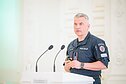
“Germany is prepared to permanently station a robust brigade in Lithuania,” Boris Pistorius told reporters in Lithuania, seemingly ending the year-long debate of whether the German troops would be based physically in the Baltic country.
The German-language media went abuzz, with one outlet – the influential Swiss daily, Neue Zürcher Zeitung (NZZ) – quoting unnamed sources in the military and Berlin who said the announcement was met with “irritation and astonishment”.
“Even in the highest military offices, no one seems to have been informed in advance,” Marco Seliger wrote for NZZ. “Senior military officers had previously advised against such a commitment because it would overburden the Bundeswehr in its current state.“
“Now the question is why the German defence minister nevertheless went ahead,” he added.

It all began with a communique issued last June after a visit by German Chancellor Olaf Scholz in Vilnius where he met Lithuanian President Gitanas Nauseda. In it, they “agreed that, in addition to the current and reinforced enhanced Forward Presence Battle Group already in place, Germany is ready to lead a robust and combat-ready brigade in Lithuania”.
Despite appearing shoulder to shoulder during the press conference, the public messages were different. The main difference in interpretation was the word “in” Lithuania.
In the subsequent months, Vilnius would repeat that German troops were either coming to Lithuania or allege that Berlin was walking back the pledge. Berlin, meanwhile, would answer that the communique indicated that only a forward command element would be physically in the country.
Several reports came out in leading international media, including the Financial Times, alleging that Germany had indeed made the policy u-turn, causing an uproar. At the time, Berlin was already taking heavy flak for its perceived sluggish support for Ukraine.

The issue became a captive of Lithuania’s domestic politics, setting the stage for another tussle between the government, specifically Foreign Minister Gabrielius Landsbergis, and President Gitanas Nausėda. The latter would appeal to continued dialogue, while the minister would publicly bash Berlin.
“Landsbergis, at least that is how it was analysed in the [German] Defence Ministry and the Chancellery, only wanted to score domestic political points with his demands,” Spiegel wrote earlier this week, citing its sources.
Reacting to the hawkish rhetoric, the German embassy in Vilnius became more involved in the public discourse, even commenting under an LRT English article on Facebook that “it was clear from the start that this [deployment] cannot be an instantaneous, one-off event”.
“Might it perhaps appear that many, including journalists, lacked the intellectual energy to read it [the communiqué] with the care it deserves?” the embassy’s official Facebook account said.
Later, the German ambassador to Lithuania, Matthias Sonn, also said the discussions in Lithuania surrounding the brigade became “corrosive and harmful”.
And despite playing down the disagreements in public, the difference in interpretation caused serious tensions between the two countries over the past year, NATO diplomats told EurActiv, a Brussels-based news website.

U-turn or not?
Pistorius said the decision to permanently deploy a brigade to Lithuania was not a turnaround: “It is not really a change of our position,” he told reporters in Lithuania on Tuesday.
However, unnamed sources speaking to German-language media claimed otherwise.
“The narrative now goes that on Monday, while flying from Berlin to Vilnius, the German defence minister concocted a move with his political director, Jasper Wieck, and Inspector General Carsten Breuer to keep the Lithuanians quiet for the time being,” NZZ claimed, basing its information on conversations with sources close to the German ministry and the military.
“It was spontaneous, there was no plan,” one source said. The abrupt nature of the decision was also confirmed to Spiegel reporters. It’s unclear, however, whether it was said by the same unnamed official speaking off-record.
According to sources of the German public broadcaster Bayerischer Rundfunk, “it can also be heard from Bundeswehr circles that hardly anyone expected such a development”, while Die Zeit, another influential German publication, wrote that “not everyone in the Bundeswehr is convinced that Pistorius will be able to keep his promise”.

The same was confirmed in an interview with LRT.lt earlier this week by Michael Roth, chairman of the German Bundestag’s foreign affairs committee. “It’s a positive surprise,” he said.
The main scepticism rests on the infrastructure available in Lithuania which, at present, could not host either the troops themselves or their families, provide schools, kindergartens, and jobs.
On Thursday, MP Florian Hahn, defence policy spokesperson for the CDU/CSU opposition in the Bundestag, said “Pistorius has written a bad check to the Lithuanians”.
Speaking with the Augsburger Allgemeine newspaper, he said “Lithuania will not be able to [prepare the necessary infrastructure] on its own”. Hahn also claimed that the “uncoordinated advances” took even the defence ministry by surprise.
Meanwhile, “a high-ranking soldier” told Die Zeit that it will be “extremely difficult” to find enough volunteers who will agree to be stationed in the Baltics. “And if you change the rules and order the deployment? Then many will quit,” the soldier said.
Another source in the military told NZZ that the Bundeswehr has “to be careful that the personnel exodus of the land forces is not accelerated by the Pistorius decision”.
In the coming months, there will likely be pushback from inside Berlin, mirroring the fault lines in Germany’s national politics.
“Pistorius is consistent with the opinions of politicians in other parties, including parties in the coalition,” said Benjamin Tallis, senior researcher at German Council on Foreign Relations. He formerly worked in an official capacity for the European Union and the German government.
“Some of the parties, like the Greens, are stronger in rhetoric than the chancellor, but they don’t have the tools to deliver it, but Pistorius does,” he said. “It is an alignment of those who are in a more forward-leaning position in German politics.”

“There might be pushback from the left wing of the [Social Democratic Party of Germany] SPD, who see this as they see practically everything, as some sort of a provocation to Russia, or an escalation,” Tallis added.
German officers deployed in Lithuania also make no secret about not being willing to breach the 1997 treaty with Russia, which Moscow sees as a pledge not to station permanent NATO forces close to its borders.
But the vaguely-worded 1997 treaty, which said that there would be no “additional permanent stationing of substantial combat forces”, is now irrelevant, a German Defence Ministry spokesperson told the public broadcaster Bayerischer Rundfunk.
Russia’s war in Ukraine showed “profound disregard for the values and principles of the NATO-Russia Founding Act, which include, among other things, renouncing the threat and use of force and respecting the sovereignty, independence, and territorial integrity of all states”.
The coming months will be crucial, according to Tallis.
“We have to wait until the facilities are in place. But then, the question comes, what will Lithuania be going to do to get those facilities ready to capitalise on this political moment,” he said.

Newsletter
Every Friday morning.