









The European Commission has issued new guidelines, saying sanctions do not apply to rail transit via Lithuania to Russia's Kaliningrad. In the document published on Wednesday, the Commission said rail transit can only be used to satisfy the needs of essential goods in Kaliningrad.
“The transit of sanctioned goods by road with Russian operators is not allowed under the EU measures. No such similar prohibition exists for rail transport,” the Commission said in a statement on Wednesday.
“Member States shall check whether transit volumes remain within the historical averages of the last 3 years, in particular reflecting the real demand for essential goods at the destination,” it said.
Brussels provided the additional guidelines after Lithuania began banning the transit of sanctioned goods by rail to Kaliningrad, a Russian exclave wedged between Lithuania and Poland on the Baltic Sea. Moscow called it a “blockade”, threatening a “non-diplomatic” retaliation.
Sanctions on steel and other metals came into effect on June 17, followed by alcohol, cement, and wood on July 10. Restrictions on coal and oil products are due to come into force on August 10 and December 5, respectively.
In a statement on Wednesday evening, Lithuania’s Foreign Ministry welcomed the Commission’s guidelines, saying the country would not ignore “the positions and assessments” of its partners.
“Clearly aware that one of the Kremlin regime's objectives is to divide transatlantic unity, [...], Lithuania will continue to remain faithful to the transatlantic partnership and to adhere to the EU's unified and coordinated sanctions policy,” the ministry said.
It conceded, however, that “the publication of the new [...] guidelines may give the unjustified impression that the transatlantic community is softening its position and sanctions policy toward Russia”.

The ministry said Lithuania would continue checking goods transiting its territory to ensure the sanctions are not circumvented, adding that it “reserves the right to unilaterally prevent such attempts”. However, the ministry did not say when the transit of banned goods would resume.
Lithuania's state-owned railways, Lietuvos Geležinkeliai (LTG), said it would wait for instructions from the country's authorities.
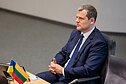
According to Lithuania's former prime minister and member of the European Parliament, Andrius Kubilius, the Kremlin is likely to increase its pressure on Brussels and the Baltics.
“We have said from the very beginning that the biggest danger [...] is that the Kremlin will be happy that it has scared the European Commission,” he told LRT RADIO.
“Even greater dangers await us because the Kremlin, when it feels that it can achieve something with its pressure, tends to [escalate],” he added.
Kubilius also said Moscow may ask to revise the existing Kaliningrad transit agreements and call for “a completely free transit corridor”.
Earlier on Wednesday, the Russian state news agency RIA Novosti reported that the European Union and Russia had reached an agreement. However, the Commission said no negotiations with Moscow had taken place.
“No, this is not at all true. It is a lie that we agreed or negotiated anything with Russia,” EC spokesperson Daniel Sheridan Ferrie said in a written response to LRT.lt.
Earlier in July, Spiegel reported that Brussels and Berlin was worried Russia might resort to military action, drawing the German soldiers currently stationed in Lithuania into a conflict. Chancellor Olaf Scholz also said the transit of sanctioned goods should be resumed.
Previously, Vilnius officials said the sanctions were implemented in coordination with the EU and a u-turn would lead to more coercive behaviour by the Kremlin.
The Democratic Union, one of the largest opposition groups in the parliament, has called on Foreign Minister Gabrielius Landsbergis to take responsibility for the “poor performance of the Foreign Ministry and the complete lack of strategic communication by the government”.
Read more: Lithuania and Kaliningrad – updates

Newsletter
Every Friday morning.