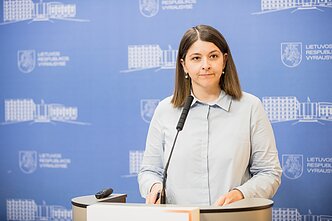














Vilnius expects support from its foreign partners amid growing pressure from China, Finance Minister Gintarė Skaistė says, adding that the government is planning relief for affected businesses.
Although direct exports to China account for only 1 percent of Lithuania's GDP, the country could be hit by secondary effects of “China's disproportionate action”, she says.
Read more: China threatens to sweep Lithuania into 'garbage bin of history', mulls sanctions
“We are looking into ways to minimise potential secondary impact during conversations with foreign partners, with the European Commission and the United States. Naturally, trade wars are not good for anyone and each of the sides has leverage. It seems to me that solidarity is very important in this case, not to leave Lithuania alone as it is, but to look into leverage our foreign partners have and act together,” the minister told reporters on Wednesday.
The Finance Ministry is cooperating with the Economy Ministry on measures that could directly help businesses affected by China's pressure, Skaistė said.
China has been incensed by Lithuania's moves to deepen ties with Taiwan, including the recent opening of a Taiwanese representative office in Vilnius.

Last autumn, China halted freight trains to Lithuania, suspended the issuance of food export licenses, cut credit limits and raised prices for Lithuanian companies, and also at one time removed Lithuania from its customs declaration systems.
According to media reports, companies of other countries have been pressured to cut their ties with Lithuania.
Read more: China pressures Germany’s car parts giant Continental to give up Lithuanian components – media
The Global Times, a newspaper controlled by the Chinese Communist Party, recently said that Beijing might impose official economic sanctions on Lithuania.
‘Unity’ of the EU
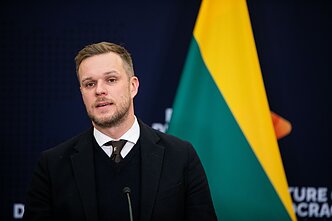
Meanwhile, Foreign Minister Gabrielius Landsbergis said that there should be a European response to Beijing's alleged pressuring of foreign investors in Lithuania.
The German-Baltic Chamber of Commerce has sent a letter to the Lithuanian government, warning that German investors might be forced to close their production facilities in Lithuania in response to Beijing's action, unless there is “a constructive solution to restore Lithuanian-Chinese economic relations”.
“It's a important letter in which we read about both strong support and, truth be told, the need for Europe to have deterrence instruments against such action that Lithuania is being subjected to,” Landsbergis told reporters after his meeting with President Gitanas Nausėda on Wednesday.
Read more: ‘Grey area’ between diplomacy and intimidation. Why Lithuanian embassy was forced to leave Beijing

“Diplomatic solutions have to be found and we are looking for them [...] but the EU has to say it has a response,” he added.
The German-Baltic Chamber of Commerce said in the letter that companies involved in peat, lasers, car parts and other high technology sectors were facing difficulties.
“We cannot continue investment projects (product expansion), as we no longer receive necessary components from China. We are no longer able to import parts needed for production from China. We cannot export finished products (with Lithuania as a country of origin) to China,” – the letter reads.
Lithuania's Kaunas Free Economic Zone is home to production facilities of German car industry giants Hella and Continental.
Germany is the fourth largest investor in Lithuania, with direct investments now valued at 1.45 billion euros, according to the Ministry of Economy.
Landsbergis rejected concerns that there was no unity within the EU, saying that “unity is now being forged, that's a new precedent as measures of this natures have not been used against the EU before”.

Newsletter
Every Friday morning.