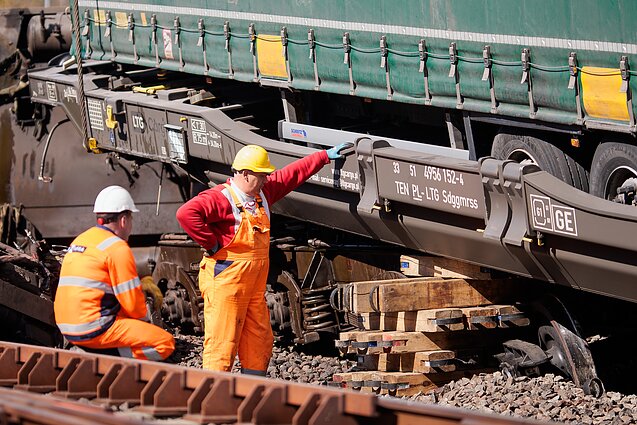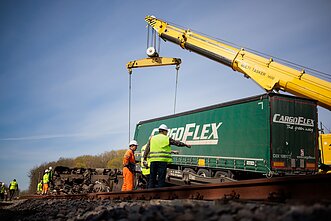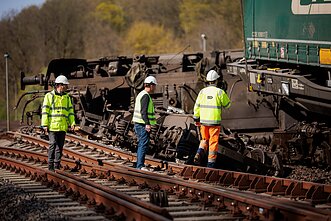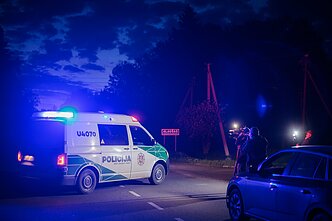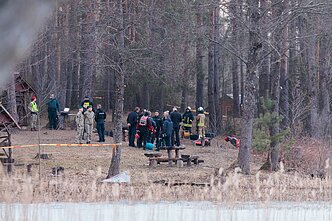











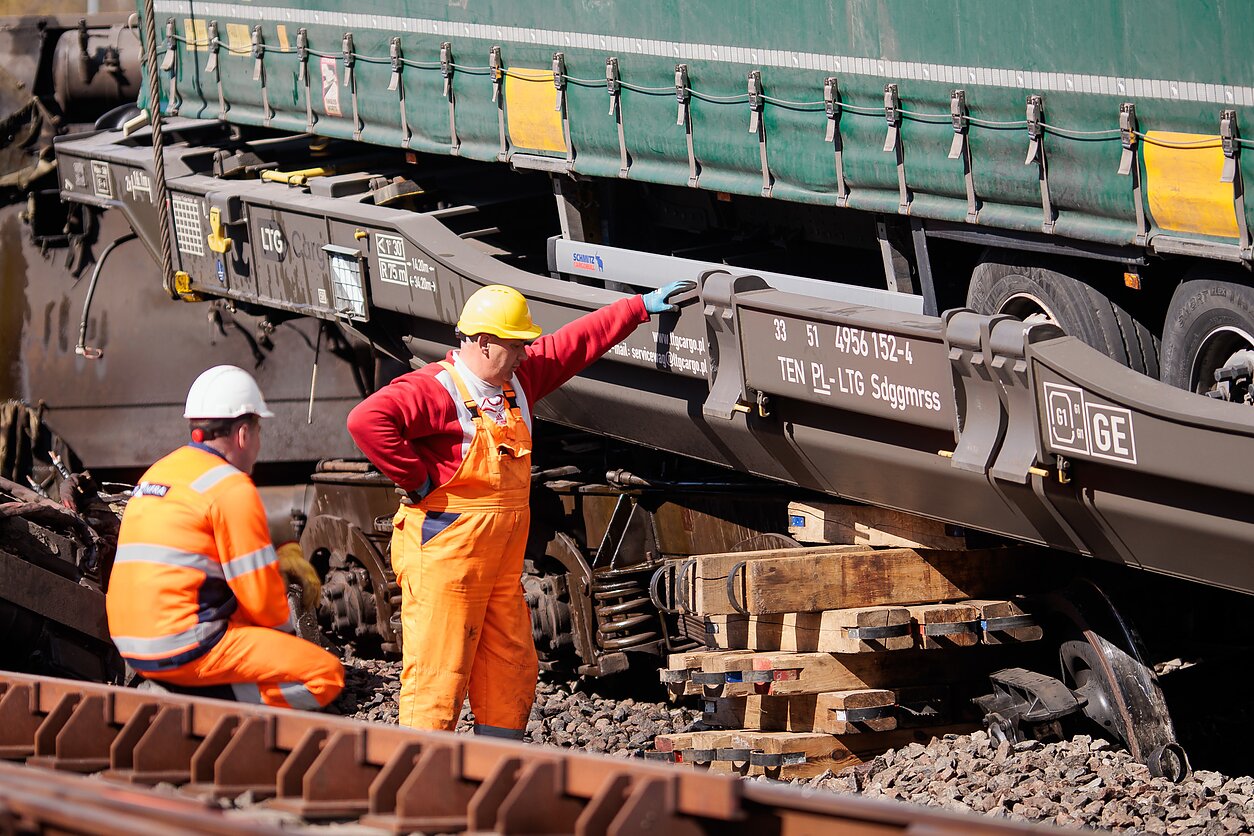
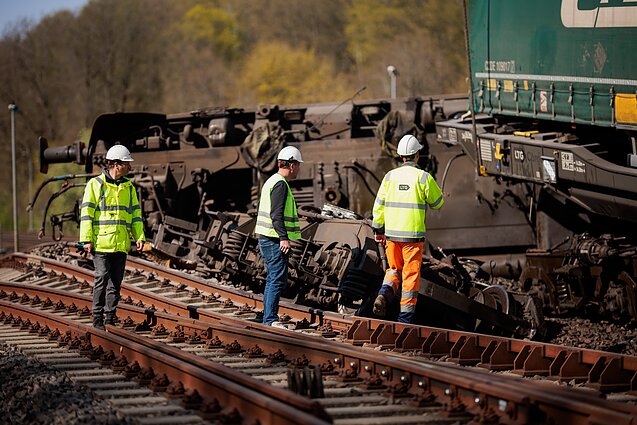
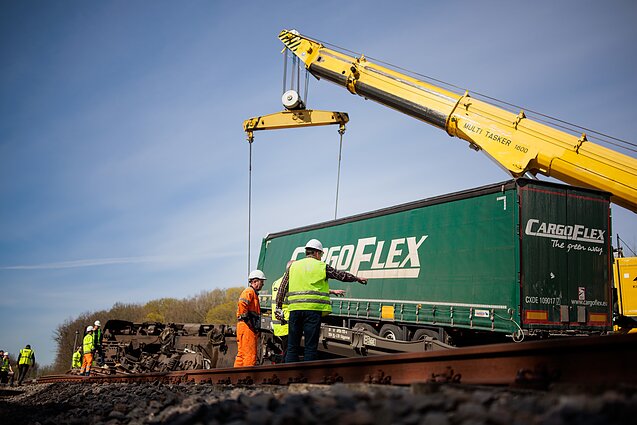
Following two recent train accidents in Lithuania this month, investigators have ruled out sabotage, concluding that the incidents were caused by human error and a technical fault. In response, the prime minister has given Lithuania’s Railways and the Transport Ministry two weeks to come up with a plan on how to ensure rail safety.
“I went to take a look and was stunned. There was a fault with the wagon. It jammed, the bearing started disintegrating and fell off. Accidents like this are rare, but they do happen. Usually, when the monitoring systems are switched on, they detect both the initial and secondary danger signals,” said train driver Vidmantas Simonavičius.
However, on that Friday evening, no danger was detected because the system monitoring rolling stock overheating had been switched off on that section of track.
The train driver maintains that if the system had been operating, he would have learned about the wagon defect sooner. According to the preliminary findings, the rolling stock was to blame. The wagon still had six months remaining before its next technical inspection.
“The infrastructure was not at fault. That section is one of the best-maintained and receives the highest level of investment because it is our main artery,” said Vytis Žalimas, head of LTG Infra, the infrastructure branch of the state-owned Lithuanian Railways (LTG).
At the same time, officials acknowledge that infrastructure – specifically the lack of automatic safety systems – contributed to the accident.
“We are convinced that the presence of railway signalling equipment would have helped prevent such an incident,” said Gediminas Šečkus, head of the LTG Emergency Operations Centre.
The accident was therefore caused by human error. The section has a complicated system because of the coexistence of the old-gauge railway and the adjacent European-gauge line, and the locomotive was directed onto the wrong track.
“The backup system is switched manually, and there is supposed to be monitoring to ensure this has happened. That double-checking mechanism failed,” said Tomas Daukantas, chancellor of the Transport Ministry.
Was there no funding?
The European-gauge line has lacked a signalling system since it opened more than a decade ago. As a result, train speeds on the line have been restricted.
“We certainly knew those systems were missing, and it was only a matter of time before either human or technical error occurred,” said Edvinas Kerza, former director of business resilience at LTG and a defence and security expert.
When construction of the line began, Algirdas Butkevičius was the transport minister, and when it was completed, he was prime minister. He says no funding had been allocated for the signalling system at the time, and that it was intended to be installed only after completion of the Rail Baltica project.
“That line is not heavily used. Signalling is important and necessary when railway traffic is intensive,” Butkevičius said.
Experts disagree, however, pointing out that railway projects can take decades.
“That means every single day could be final,” Kerza said.
A shortage of expertise
Two train accidents in less than 48 hours have drawn attention to the condition of Lithuania’s railway infrastructure.
“Almost 40% of our ecosystem is maintained, monitored and regulated using Soviet-era relay systems. We are practically the only ones who still understand them,” explained LTG Infra chief Žalimas.
He said the systems could continue functioning for up to another decade, but acknowledged there is already a shortage of specialists capable of working with them.
“There are also no equivalent replacement components available,” Mr Kerza added.
But modernising the systems will cost hundreds of millions of euros.
Nearly €1bn has been invested in railway infrastructure over the past three years. However, most of that money has gone towards the Rail Baltica project and electrification. Around €150m would be needed for railway repairs alone.
“In infrastructure terms, that is not a huge amount of money. We repair about 30km a year, but we estimate that 60km annually would be healthy and necessary,” Žalimas said.
Investment has been most heavily affected by declining freight volumes due to sanctions on Belarus, as well as a 20% increase in the cost of the Rail Baltica project.
“There are fewer trains, so inspections may have been carried out less frequently depending on traffic levels. But the reduction in freight traffic itself does not determine the scale of safety investment,” said Artūras Černiauskas, chairman of the Railway Workers’ Trade Union Association.
Kerza, who himself worked in the railway sector three years ago, said the company was struggling to cope simultaneously with Rail Baltica, the modernisation of the ageing system and declining revenues.
“The problem is that there are three elephants. Not just one elephant you can eat piece by piece, but three enormous ones,” said Šečkus, head of LTG’s Emergency Operations Centre.
Reputation damaged
Some of the money has also gone towards improving the company’s public image – but that image has now been shaken.
“In reforming the railways, a lot of attention has been devoted to future visions, management improvements and LTG’s image. That is good and necessary, but the technical side has been treated as something self-evident,” Kerza said.
The prime minister has therefore instructed the railways and the Transport Ministry to prepare a safety plan within two weeks. The ministry’s chancellor hinted that priorities may now have to change.
“It would also be unfair to say that the railways have not devoted time or funding to safety measures, but after this weekend, it is obvious that those measures are insufficient,” Daukantas said.
“Railways are so large-scale and expensive that such a plan could take up to 15 years. We are talking about billions of euros,” Kerza noted.
“We will probably need more money. Whether it will come from the state, we do not know. Perhaps the government will find something, or perhaps we will borrow ourselves,” said acting LTG chief executive Arūnas Rumskas.
Experts acknowledge that the accidents have damaged the railways’ reputation. Railway representatives insist, however, that travelling by train remains safe.
“Regardless of its age, and despite the scale of the capital investment going into it, the infrastructure is safe,” Žalimas said.
Lithuanian Railways says that wagons derail two or three times a year. However, there has not been an accident on such a scale for 15 years.

Newsletter
Every Friday morning.