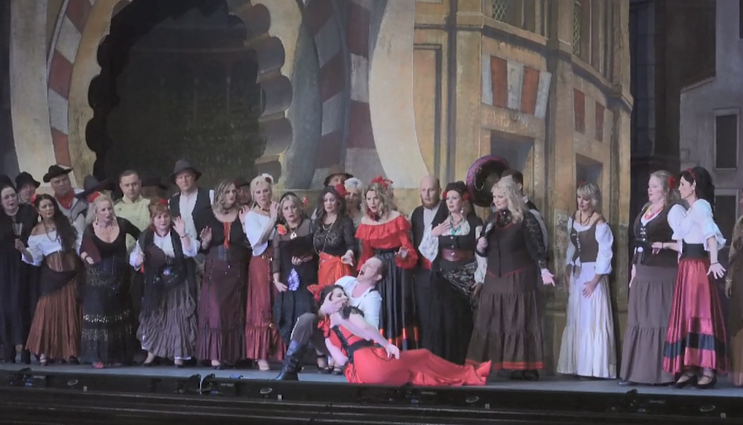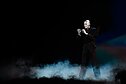

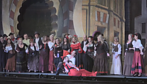









On Sunday, a theatre near Chicago hosted a jubilee performance marking the 70th anniversary of the legendary Chicago Lithuanian Opera, which was founded by the post-war diaspora in 1956.
“Not everyone has heard of the Chicago Lithuanian Opera, although for those of us who sing in Kaunas, Vilnius or Klaipėda, it was already a myth, a legend, from our very first years of study when we first heard about it,” said opera soloist Liudas Mikalauskas.
The Chicago Lithuanian Opera has also become a cultural focal point, staging performances and opera productions every two years.
“Getting the chance to perform there was the greatest dream,” he added.
After the Soviet occupation of Lithuania, masters of the interwar Kaunas Opera first moved their performances to post-war refugee camps in Germany and soon afterwards across the Atlantic.
“And then came emigration to America, and we worked very hard in factories here,” Chicago Lithuanian Opera soloist Stasys Baras recalled in a previous interview.
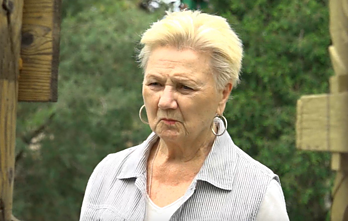
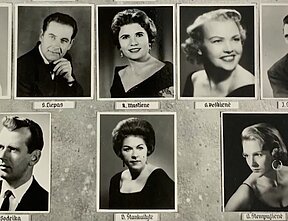
Those hardships are remembered by Dalia Stankaitis, who sang with the Chicago Lithuanian Opera for 50 years. She arrived in America by ship with her parents from refugee camps in Germany.
“Most arrived in 1949, while we came in 1950,” Stankaitis recalled.
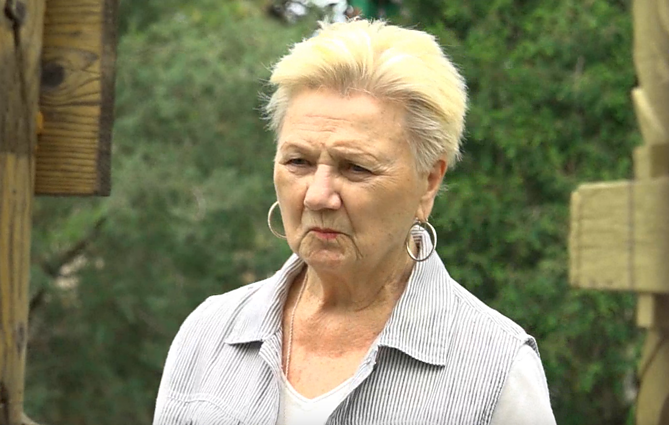
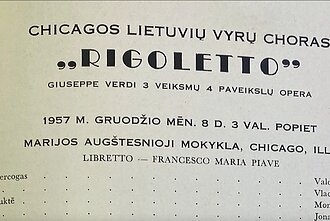
In Chicago, the cultural elite of the occupied country recreated what the Soviets had taken away. Stankaitis attended a performance of Rigoletto, the first opera staged by Chicago Lithuanians. From 1956 onwards, the Chicago Lithuanian Opera became an institution, and she joined as a singer.
“I went to the first rehearsal thinking I would say I did not like it and never come back. But I loved it immensely,” said Stankaitis. “We staged productions over two weekends – Saturday and Sunday, and then the following Saturday and Sunday – and nearly 5,000 people would come. Just imagine that.”
For the diaspora, it was a mission to preserve their language, identity and culture – things they deeply missed, the choir director of the Chicago Lithuanian Opera, Nida Grigalavičiūtė, told LRT.
“It is the only organisation in America that has been singing in its own language for 70 years,” said Mindaugas Razumas, president of the Chicago Lithuanian Opera board.
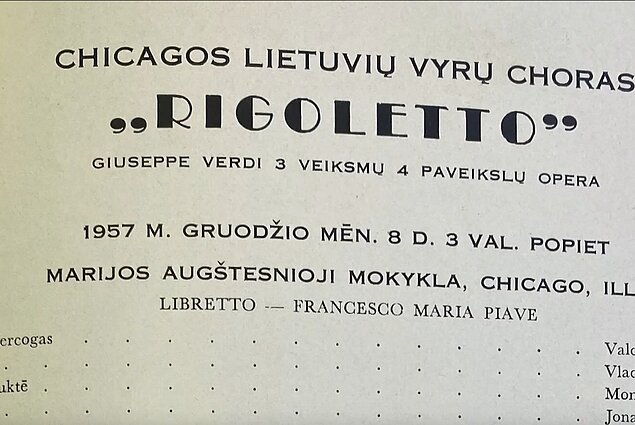
However, they did not make a living from opera, but from immigrant jobs.
“You put on a tailcoat, it’s the weekend, there’s a concert, everything is beautiful and enjoyable – you are treated like a human being. Then you go back to the factory,” Chicago Lithuanian Opera soloist Jonas Vaznelis recalled in an earlier interview.
Today, performers no longer have to rush from the stage back to the factory floor, but one difference between the Chicago Lithuanian Opera and opera in Lithuania remains. Nowadays, operas in Lithuania are often performed in their original language.
“Here, however, the old interwar tradition has survived – that opera should resonate in Lithuanian,” opera soloist Mikalauskas said.
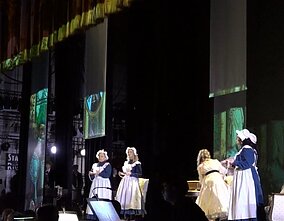
For the opera company’s 70th anniversary, the organisers chose the libretto of the opera Martha, as it has a happy ending. Throughout its existence, the Chicago Lithuanian Opera has staged over 40 operas.

Newsletter
Every Friday morning.