












LRT English Newsletter – November 12, 2021
For the first time in Lithuania’s history, a state of emergency was declared in parts of the country this week. Footage from the Polish border, where huge crowds of migrants have been herded by Belarusian authorities, had Lithuania worried that a similar situation may develop at its border – and escalate out of control.
The state of emergency, declared for one month, will see access for non-residents restricted to the 5-kilometre-wide strip along the Belarusian border. Journalists will also be prevented from going within one kilometre of the border.
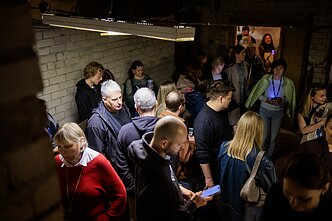
Exceptional restrictions will also apply to migrant camps accommodating the 4,000-odd asylum seekers who have already entered Lithuania. Some of them staged protest actions last Monday, opposing the policy of keeping them locked up. The border guard chief has alleged that the actions were coordinated to coincide with the events on the Polish border – and so now asylum seekers will not be allowed to use communication devices for anything other than to contact authorities. Nor will they be allowed to meet reporters.
Meanwhile, the government is seeking international involvement. What can the EU do – and is this a situation for NATO to resolve? Or perhaps the UN Security Council could pressure Minsk into opening a humanitarian corridor to return migrants home? In any case, Lithuania and Poland are also not the first to see the weaponisation of migrants – "It starts with Erdogan" (check this morning's coverage for the full story).
In other developments:
– Moscow has joined the stand-off on Minsk’s side, suggesting that the EU is to blame for the crisis and even sending two strategic bomber planes to patrol Belarusian airspace in a further signal of support.
– A former Minsk regime insider has suggested that Belarus is purposefully seeking provocations by sending trained Afghan and Iraqi war veterans to the border.
STEP BACK ON PUSHBACKS?
Since last August, Lithuanian guards have been turning migrants back from the border, presumably with a tacit consent of the EU, even though the policy could be construed as pushbacks, illegal under international law.
This week, though, the European home affairs commissioner has hinted that the EU may change course and demand that Lithuania – along with Poland and Latvia – change course. Lithuania’s interior minister retorted, however, that no such request was made yet, while the PM quoted an ECHR ruling which allowed Spain to use similar measures.
SECURITY THREAT?
Not everyone is happy with Lithuania’s response to the migration crisis. Around a hundred people staged a protest last weekend, saying that seeking asylum is not a crime and that the country should focus on helping migrants instead of treating them as weapons in a "hybrid war”.
One conservative MP was quick to label the protesters a threat to national security.
BRAVE COUNTRY?
In the continuing discord between Vilnius and Beijing, China’s embassy issued a statement this week, laying the blame for the soured relations squarely on Lithuania. According to Beijing, it is violating the One China principle by opening a ‘Taiwan’ representation in Vilnius.
Meanwhile, Taiwan’s president called Lithuania a “brave country”, saying she would like to come for a visit, once the pandemic is over. This could speed up the opening of the office, which had been promised for the end of the summer but has not materialised yet.
ANOTHER LOCKDOWN?
Lithuania’s government has so far been reluctant to talk about another lockdown, even though infections have been spiking. This week, however, the Health Ministry drafted a plan for when another lockdown could be introduced.
The good news is that the ICU bed occupancy – a key indicator in the plan – has stabilised in recent weeks, meaning the healthcare system is still coping. However, with students returning to classrooms after an extended autumn break, there are fears the trend may be reversed.
EDITORS’ PICKS
– Lithuania has picked a second title to vie for an Oscar nomination, a historical drama about the Holocaust. Its previous selection, a documentary about a Soviet-era defector, has been put down for a best documentary nomination.
– Vilnius has been home to authors like Adam Mickiewicz, Czesław Miłosz, Romain Gary. So now UNESCO has designated it as a Creative City of Literature.
– Lithuanian spruce growers are already preparing for the season – but Brexit and labour shortages have dampened plans of shipping Christmas trees across Europe.
– This year, Lithuania celebrates the 30th anniversary of official relations with Russia. From friendship to mutual suspicions – how did the ties develop during negotiations of troop withdrawal and Lithuania's NATO accession?
– Violence, forced labour, coercion into crime, and even murder – Lithuanian human trafficking victims have faced it all.
– Care for a serving of cepelinai? There’s now a map of where to taste different interpretations of Lithuania’s staple dish.
– Silvia Foti is the granddaughter of Jonas Noreika, aka General Vėtra, a Lithuanian anti-Soviet partisan who was accused of collaboration with Nazis. For most of her life, Foti believed that her grandfather was a hero. She described her journey in a book, soon to be published in Lithuanian.
– What would you expect an establishment named ‘Doctor Dessert’ to be selling, medicines or candy? A regulator thinks it might be too confusing.
Would you like to contribute to LRT English? Please send your suggestions, submissions, and pitches to english@lrt.lt
Written by Justinas Šuliokas
Edited by Benas Gerdžiūnas

Newsletter
Every Friday morning.