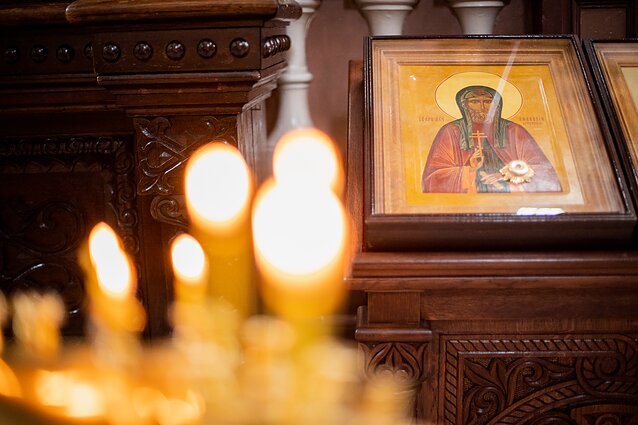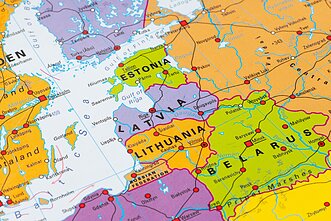













Lithuania’s foreign minister said Monday that authorities should curb the activities and influence of Russia’s intelligence services within Lithuania’s Orthodox Church structures.
Kęstutis Budrys made the remarks after a national threat assessment by Lithuania’s intelligence agencies said the Orthodox Archdiocese of Vilnius and Lithuania remains dependent on the Moscow Patriarchate despite publicly declaring a desire for greater autonomy.
“We should prevent the activities of Russian intelligence services within this organisation,” Budrys said on the LRT Forum program. “If this were a company seeking to invest in a strategic sector, we would check whether it meets national security interests. Because of its links to Russian services and direct influence, it would not be allowed to hold assets near our strategic facilities.”
He added that authorities should “carefully remove” individuals attempting to exert influence within the organisation.

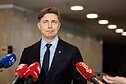
However, Deividas Matulionis, national security adviser to President Gitanas Nausėda, cautioned against labelling the entire Orthodox Church in Lithuania a national security threat.
“If we are talking about sabotage or destabilisation, it is not the Orthodox Church itself but those actors who may be involved in recruitment or other activities who should be the target of our intelligence services,” Matulionis said.
“If there are individuals within the church contributing to such activities, they should be stopped and investigated. But to say a priori that the entire church is a national security threat would be too bold,” he added.
The threat assessment prepared by the State Security Department and the Second Investigation Department under the Ministry of National Defence states that the Orthodox Church plays a significant role in shaping and maintaining “ideological narratives” promoted by the Russian regime.
According to the report, the hierarchical structure of the Moscow Patriarchate gives it considerable influence over dioceses abroad.
Support for Russia’s war in Ukraine expressed by Patriarch Kirill of Moscow prompted some clergy within the Vilnius and Lithuania archdiocese to publicly oppose the invasion.
Responding to pressure from believers and the public, the archdiocese leadership condemned the war and repeatedly said it seeks greater independence from Moscow. However, intelligence agencies say no significant changes have occurred.
Although the archdiocese asked the Moscow Patriarchate to grant it partial self-governance, no decision has been made.
Lithuanian intelligence believes the push for partial autonomy is aimed primarily at easing public criticism of the church’s ties to Moscow while maintaining its overall dependence.
In response to the threat assessment, the Orthodox Archdiocese of Vilnius and Lithuania said it is not a branch of any foreign religious organisation and that its ties to the Moscow Patriarchate are purely canonical.
Meanwhile, the Exarchate of the Ecumenical Patriarchate of Constantinople in Lithuania was reestablished in 2023 after nearly 300 years, following a dispute between several priests and the leadership of the Vilnius and Lithuania archdiocese.

Newsletter
Every Friday morning.