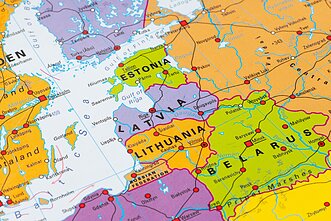















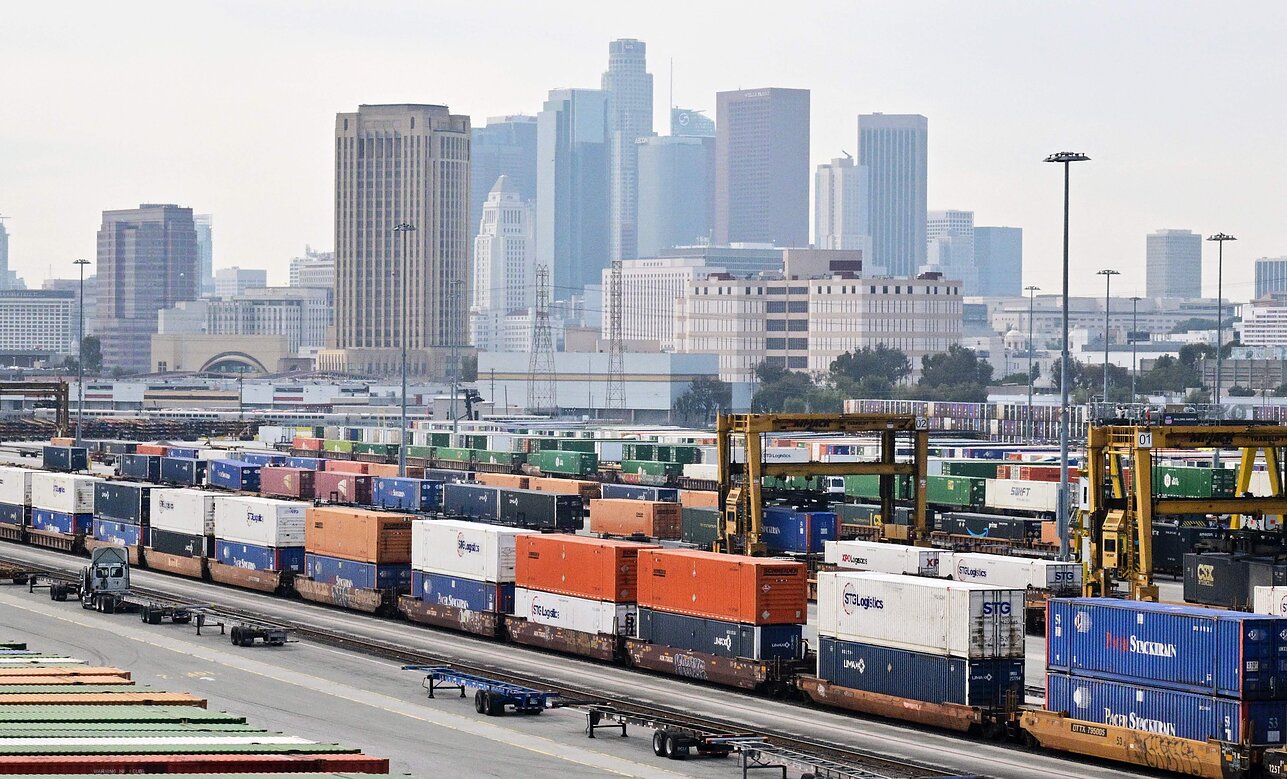
Lithuanian exports to the United States declined last year even as overall European Union exports to the American market grew slightly, according to the latest trade data, with some Lithuanian industries – including chemical reagents, enzymes and metal fasteners – seeing the sharpest drops.
Data from Eurostat show that Lithuania exported goods worth 1.751 billion euros to the United States in 2025, about 5.2% less than in 2024. Meanwhile, imports from the United States to Lithuania rose nearly 12% to 1.797 billion euros.
The figures come amid trade tensions triggered by tariffs introduced by US President Donald Trump, though economists say the impact on Lithuanian exports is not straightforward.
According to the State Data Agency, Lithuania’s largest exports to the United States last year included various oils, chemical reagents, furniture, fertilisers, construction materials, nails, enzymes, human and animal blood products, chemical binders and lasers.
The most significant declines were recorded in exports of reagents, which fell by 39%, as well as nails, down 20%, and enzymes, which dropped 14%. By contrast, fertiliser exports increased by 48% and shipments of construction materials rose 32%.
Beyond tariffs
Economists say the broader trade picture is influenced by several factors beyond tariffs.
Aleksandras Izgorodinas, an economist at Citadele Banka, said the dynamics of EU-US trade last year may partly reflect technical factors linked to the timing of tariff measures.
“Decisions on tariffs were announced in April, but the new tariffs only took effect on August 1,” he said. “During that period, European companies massively increased exports to the US in advance.”
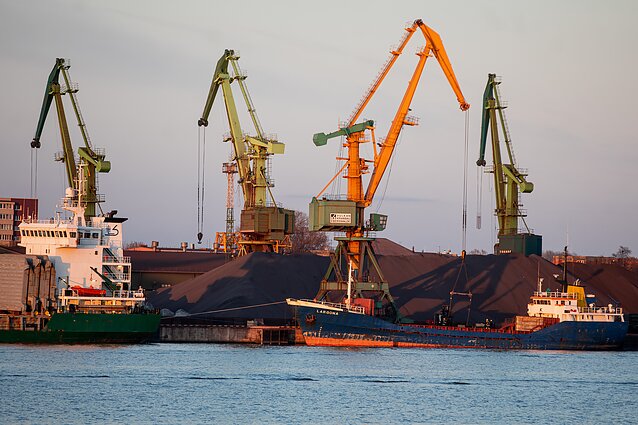
Greta Ilekytė, a senior economist at Swedbank, said measuring the direct impact of tariffs is complicated because Lithuanian exports to the US often involve intermediate goods.
“Lithuania exports many intermediate products and components that later become part of a final product exported to the United States from another country, such as Germany,” she said.
Market factors such as exchange rates and commodity prices also affect trade flows, she added. For example, if fertiliser producers operate at reduced capacity and produce less output, export volumes will decline regardless of tariffs.
Looking at Lithuania’s main export categories to the United States, mineral fuels account for about 26% of exports of Lithuanian-origin goods, followed by chemical products at 13%, furniture at 12%, fertilisers at 8.4% and optical instruments at 7.5%.

“Looking at the overall export dynamics, we do not see very strong direct evidence of tariffs significantly affecting Lithuania’s exports to the US,” Ilekytė said.
US tariffs affect Lithuania’s exports to Germany
Economists also note that indirect exports play an important role in Lithuania’s trade relationship with the United States.
For example, Lithuanian manufacturers may produce components used in vehicles or other goods that are exported to countries such as Germany or Nordic states, where the final products are assembled and later shipped to the United States.
After tariffs were announced, the overall growth rate of Lithuanian-origin exports slowed and some categories even entered negative territory, Ilekytė said.
Izgorodinas said Lithuania likely feels the impact of US tariffs more strongly through trade with Germany and Scandinavia than through direct exports to the American market.

“Direct trade figures include many one-off orders and random fluctuations,” he said. “Not everything can be linked to tariffs.”
Still, he acknowledged that the sharp declines in exports of reagents, enzymes and nails may be partly related to the tariff measures.
“I think it is linked to tariffs, because pharmaceutical-related products are sensitive to them,” he said.
However, Izgorodinas added that such steep declines – sometimes measured in tens of percentage points – likely reflect the relatively small scale of these trade flows rather than a dramatic collapse in demand.
“A drop of nearly 40% suggests the volumes were relatively small to begin with,” he said. “It is not a tragedy. A large share of that decline is offset by supplies to other EU countries.”
Impact on the EU
At the broader European level, tariffs introduced by Trump did not reduce the US trade deficit with the EU, according to Eurostat.
EU exports to the United States increased by 3.4% last year to 553.985 billion euros, while imports from the United States into the EU rose 4.8% to 354.354 billion euros.
Sector-specific tariffs have had clearer effects in some industries, economists say.
For example, EU iron exports to the United States dropped by roughly one-third after Washington imposed tariffs of about 50% on the metal, Ilekytė said.
However, overall EU exports remained resilient partly because tariffs imposed on goods from China and other countries were even higher, making European products relatively more competitive.
Trade relations between the EU and the United States have also been shaped by legal and political developments.
Last summer, the EU and the United States reached a trade agreement under which most goods exported to America would face tariffs of no more than 15% starting August 1.
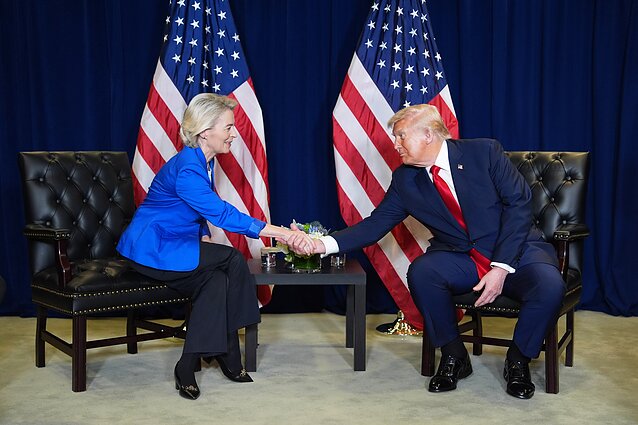
But in February, the Supreme Court of the United States ruled that Trump’s “Liberation Day” tariffs, introduced on national security grounds, exceeded the president’s authority and were unlawful.
Trump responded by announcing new tariffs of 10% on most imported goods. The tariffs are currently set at 10%, though the president had previously suggested they could reach 15%.
The new tariffs are scheduled to remain in effect for 150 days, leaving significant uncertainty about future US trade policy.
According to Ilekytė, the new blanket tariff means some EU sectors will face higher duties than under the earlier agreement, while others will face lower ones.
For example, pharmaceuticals and aircraft parts had been expected to avoid additional tariffs under the original deal but are now subject to the new 10% duty.
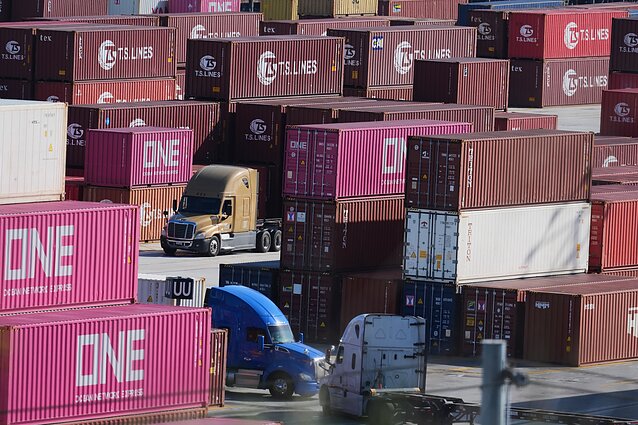
Estimates by Bloomberg suggest that about 4 billion euros worth of EU exports could face higher tariffs than those envisaged under the earlier agreement.
“This change is unfavourable for Europe and Lithuania,” Ilekytė said, noting that the European Parliament has so far refused to ratify the earlier trade agreement because of the uncertainty.
Izgorodinas, however, said the difference between tariffs of 10% and 15% is unlikely to significantly alter trade dynamics.
“Both are relatively manageable,” he said. “Of course, the lower the tariff, the better. But a 10% tariff is quite bearable.”
He added that tariffs are often effectively shared between exporters and US importers, meaning each side absorbs part of the cost.
“About half is covered by the US side and half by European exporters, so roughly 5% comes out of profit margins,” he said.
According to the economist, the strengthening economic cycle in Lithuania and across Europe, along with growing domestic consumption, is helping offset the impact of tariffs on trade.

Newsletter
Every Friday morning.