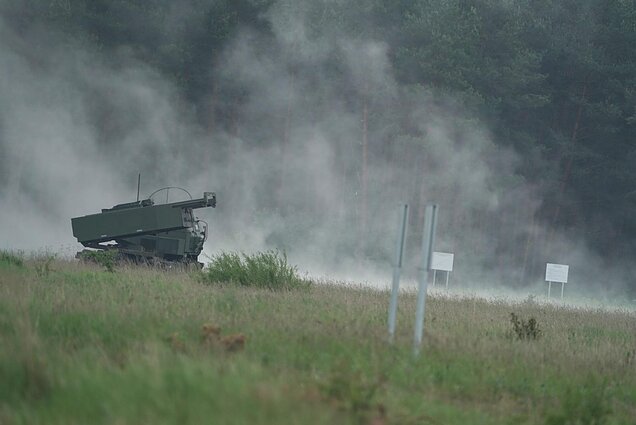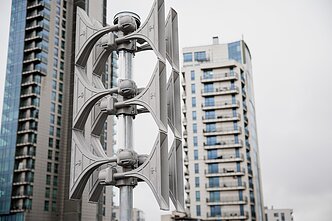
















Lithuania is likely to receive its first HIMARS rocket artillery battery, a new NASAMS air defence battery, short-range Giraffe radars and its first TwinVis passive radars this year, the defence minister said Tuesday.
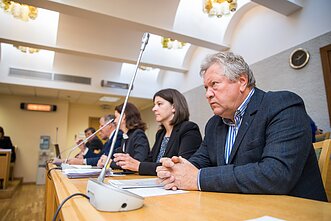
Defence Minister Robertas Kaunas presented progress on the development of Lithuania’s national division and the Baltic defence line to the State Defence Council.
“Since the decision to develop the division, the Ministry of National Defence has been accelerating key projects aimed at increasing combat power. Leopard tanks, Caesar howitzers, Spike and Javelin anti-tank systems are being purchased, and significant attention is also being paid to air defence, which is an important part of the division’s capabilities,” Kaunas said.
He said the first HIMARS battery and another NASAMS medium-range air defence battery will arrive this year. Funds have also been allocated for mobile short-range MSHORAD air defence systems.
“We will also intensively develop unmanned aerial vehicle, counter-unmanned aerial vehicle systems and artillery radar capabilities,” Kaunas added.

More than 200 million euros are planned to be invested in counter-drone systems in 2026. The first Giraffe short-range radars are expected in the spring, and the first TwinVis passive radars will arrive later this year.
According to the Defence Ministry, 2 billion euros are earmarked in the 2026 military budget for arms and military equipment acquisitions.
The State Defence Council was also updated on the Baltic defence line project. Lithuania has allocated 5.38% of its GDP to the military this year.
The Baltic defence line will include the systematic deployment of obstacles in three echelons, strengthening natural, engineering and technical barriers and integrating them into national and NATO defence plans.
By 2030, plans call for expanding engineering parks, preparing road- and bridge-blocking infrastructure, restoring swamps, rebuilding drainage ditches, installing firing positions and establishing easements in the border area.
Mine stockpiles are being strengthened, with anti-personnel and naval mines, seaport-blocking measures for Klaipėda and counter-drone capabilities planned to bolster border defence.

Newsletter
Every Friday morning.