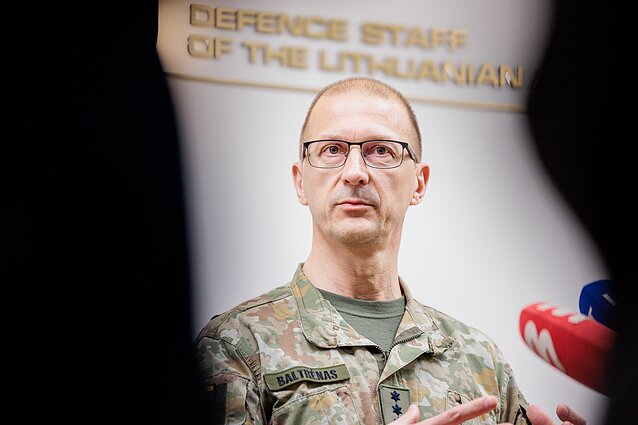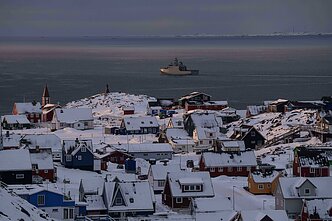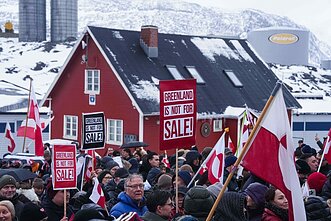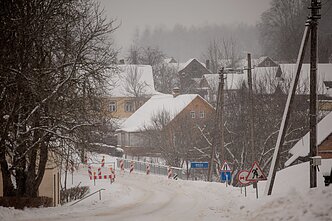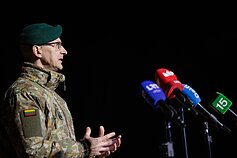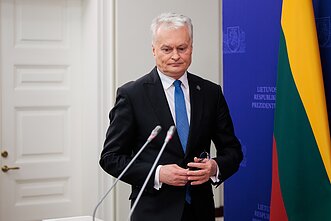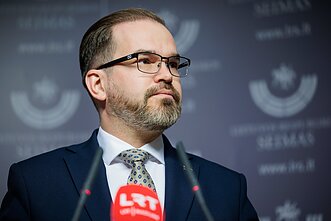







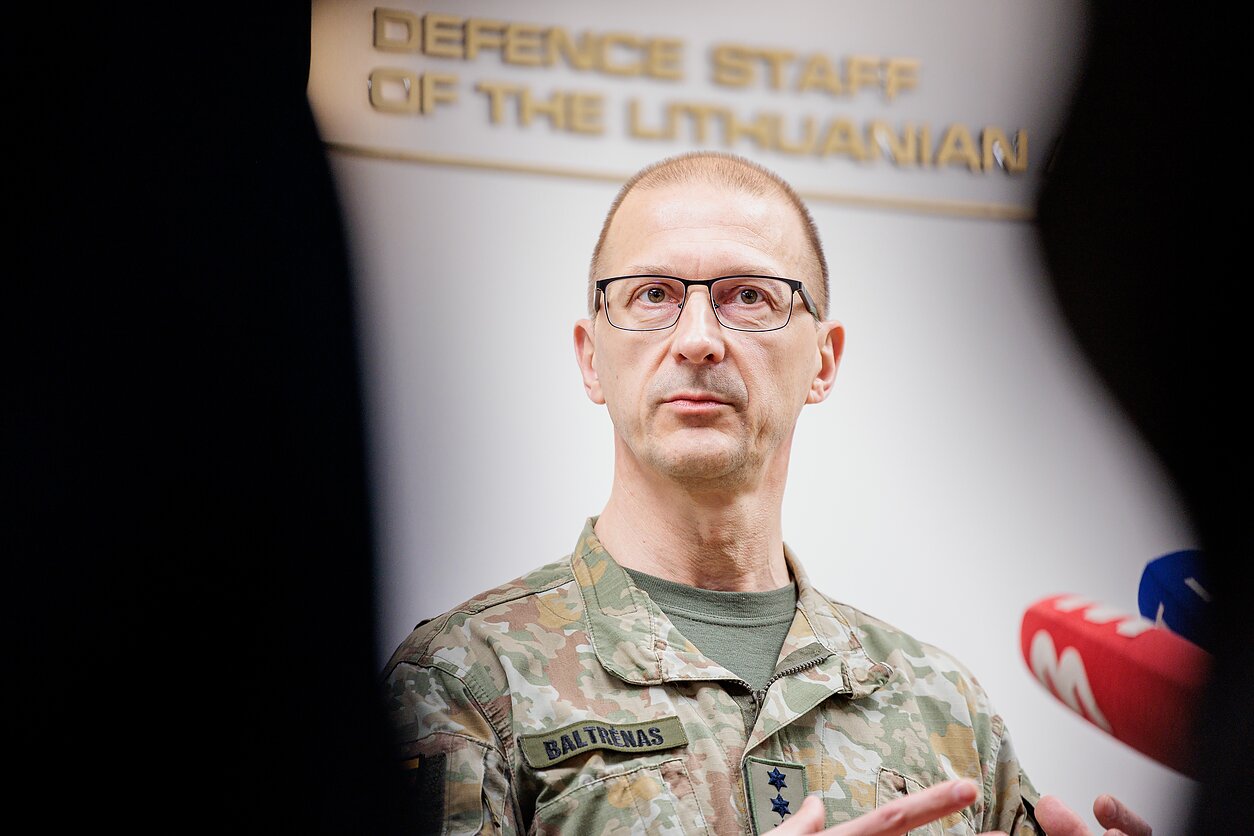
Lieutenant General Remigijus Baltrėnas, Director General of NATO’s International Military Staff, has told LRT that the Alliance is preparing to respond to a changing security and geopolitical landscape. He says disagreements among allies over Greenland – like debates over the proposed military training area in Kapčiamiestis, Lithuania – are likely to be resolved, but that time is needed.
General, let me start with current affairs – the Arctic, and Greenland in particular. How do you see the situation around Greenland? The United States has its position, Europe has its own – but what is NATO’s position?
I would start by saying that this is, first and foremost, a matter of bilateral relations between two states. Each side has its own position and its own views.
Consultations are under way within NATO. Of course, these discussions take place behind closed doors, between ambassadors and military representatives, but they are happening, and I believe they are fostering greater understanding and pragmatism.
I am confident that we will arrive at a straightforward compromise that will be beneficial for the Alliance as a whole, for Europe, and for the United States itself.
It is not an easy matter, and the issue is a sensitive one. However, from what I hear in this building – with the NATO Secretary General and ambassadors actively seeking solutions – we appear to be moving in a positive direction.
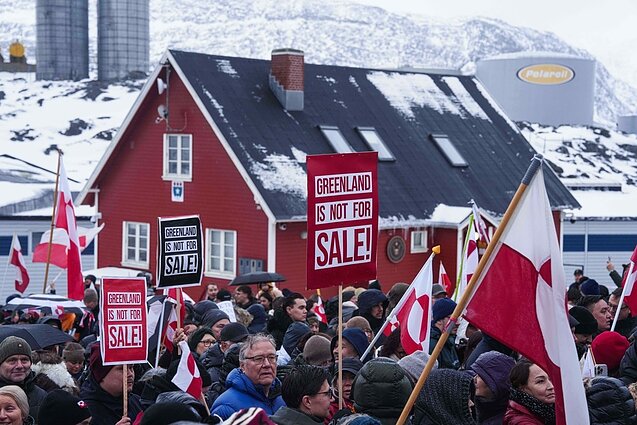
We have heard European Commission President Ursula von der Leyen speak about a specific security programme for the Arctic. Some NATO officials, informally, mention an Arctic Sentry, similar to Eastern Sentry or Baltic Sentry. Denmark has also asked for a NATO mission in Greenland. Is that a possible solution?
You are right to note that Denmark’s defence minister met NATO Secretary General Mark Rutte this week and raised this need in the NATO context.
But it is important to stress that there is already significant activity in the Arctic. There are many exercises in the north, as you may have seen reported. The most recent involved US and Canadian forces, under the NORAD framework, deploying to Greenland for pre-planned exercises. The current political tensions had no impact on those drills, nor on other routine exercises that take place two or three times a year.
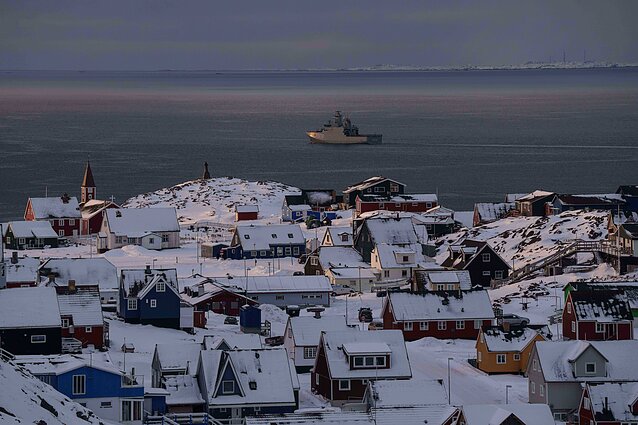
The Arctic – not just Greenland – is a strategically important direction for NATO. Perhaps we do not always communicate this publicly, but activity is ongoing. There are discussions about how to consolidate these efforts, how to send a deterrence signal to potential adversaries, and how to find long-term solutions for the region.
What makes the Arctic such a special region from a security perspective? Is it easy to attack, easy to defend? Why is it strategically important?
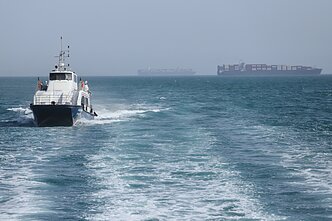
We all heard about the so-called Northern Sea Route, which is of interest to many countries – including Russia, which is hostile to us, and China, which is increasingly assertive.
The newest NATO members, Sweden and Finland, have recently been fully integrated into these plans. In essence, this is part of the same defence planning framework as in central or southern Europe – with defined strategic directions and assigned forces.
There is, of course, the question of operating in cold conditions. But look at Lithuania today – minus 20 degrees. Our forces must be able to operate in such conditions, and they can. That capability translates to the Arctic as well.
NATO’s approach to defending the Arctic is embedded in its regional defence plans.
In discussions about Lithuania’s defence, the Suwałki Corridor is often described as an Achilles’ heel. Is the Arctic similar? If Russia or China wanted to attack, would it be easy – or do the harsh conditions actually help defence?
An attack would be more difficult than in many other regions, simply because of geography. Cold, ice and oceans all complicate military operations.
But the key point is that NATO’s defence plans, including those for the Arctic, are in place. I am confident that NATO intelligence is strong enough to avoid surprises.
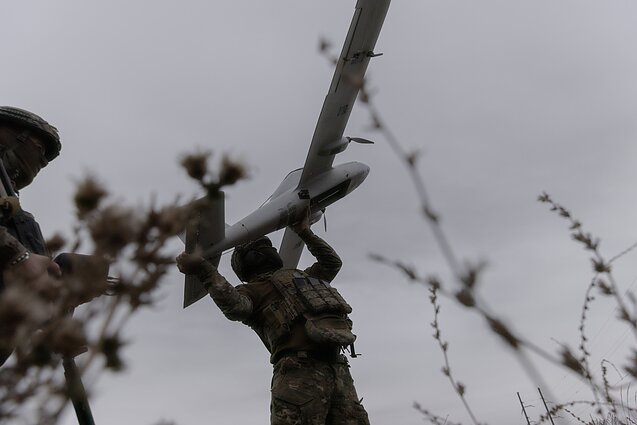
Turning to Ukraine: after the so-called “coalition of the willing” meeting, we heard talk of possible security guarantees once the war ends. How might these work? Would they involve international forces or a US role in monitoring a ceasefire?
There is no final agreement yet on security guarantees, so I would be cautious about going into detail.
What is clear is that Ukraine’s armed forces themselves are the primary guarantor of security. They are the first line of defence. The stronger they are, the stronger the deterrence.
Within the so-called “coalition of the willing”, each country decides independently how much it can contribute and what its overall contribution will look like. At this stage, it is difficult to say what NATO’s role would be, as assessments still differ.
That said, we can see that the NATO Secretary General and the majority of NATO member states are involved in the discussions, while at the same time there is an effort to frame this as an initiative outside NATO structures, driven by individual member states.
From NATO’s perspective, the priority is to understand what is happening and how much capability NATO members are committing. This is essential so that the Supreme Allied Commander Europe can balance and coordinate the implementation of defence plans.
Given global developments and US rhetoric, there is growing talk in Europe about the need for Europeans to defend themselves. We have heard ideas about a European Security Council or a 100,000-strong European force. Do you see a need for Europe to build an alternative to NATO?
I see these two organisations in terms of their strengths. NATO’s strength is defence – it is the most successful defensive alliance since the Second World War. Its role is to ensure the defence and deterrence of Europe and the transatlantic area.
The European Union’s strength lies in its economic and political tools.
Working closely together, these two organisations can achieve extraordinary results for security and deterrence. The key question is not who should replace whom, but how we cooperate effectively.
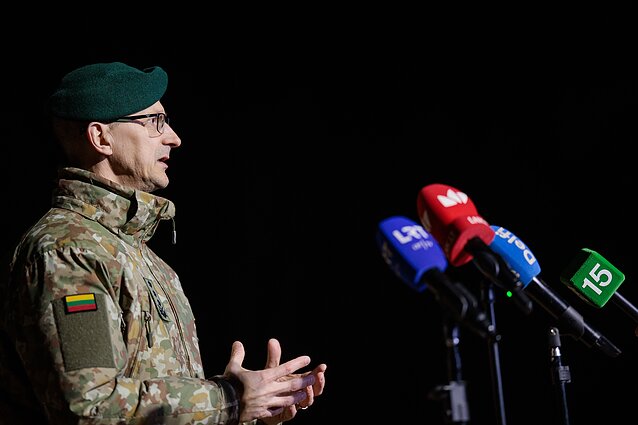
So, in other words, defence should be left to the organisation that already does it?
My role, as Director General of NATO’s International Military Staff, is to ensure that the Alliance has the most effective military-strategic defence plans. NATO remains the strongest defensive alliance in the world, and our focus should be on that mission.
How has the security architecture in our region and globally changed? Is it still predictable at all?
Predictability has clearly decreased. That is why preparedness matters. NATO and its member states have significantly increased defence spending. At the Hague summit, a clear decision was taken to aim for defence spending of up to 5% of GDP. All members have now surpassed the 2% minimum, with many moving beyond 3%. Lithuania and the other Baltic states are already above 5%.
The geopolitical security environment, in Europe and worldwide, has undoubtedly shifted, and it has become less predictable. The key question, however, is how we respond. Adapting and integrating innovation are crucial, as they allow NATO to assess developments and try to anticipate what lies ahead.
These are concrete steps to develop capabilities and prepare for potential challenges. We cannot control everything, but we can ensure we are ready.
Finally, the Kapčiamiestis training area in Lithuania has sparked strong opposition. Some locals say that it is not necessary. Could this controversy have been avoided?
From the perspective of my current role, I unequivocally support the view that the training area is necessary for Lithuania. In my previous posts, including at the Lithuanian Defence Staff, we were already discussing the need for a larger training range.
Secondly, the geopolitical security situation along Lithuania’s borders is not improving. The location of the proposed training area is strategically important and would allow for the full integration of defence planning and cooperation across the entire eastern flank, particularly with Poland, given its proximity to the Suwałki Corridor.
The site would also strengthen the defensive posture of the whole eastern flank.
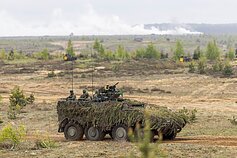
Finally, there is the issue of readiness. If we want to maintain a high-readiness force, one of the key requirements is training areas where troops can test and prepare themselves. Preparing for war in peacetime is extremely difficult without adequate training facilities.
Larger training ranges also allow more allied forces to be invited, ensuring that defence plans are realistic, effective and executable.
However, significant opposition to the training area remains. Is everything being done as it should be?
I believe the process is proceeding properly. As with NATO, reaching consensus and agreement takes time. I think that, on this issue, both state institutions and citizens are moving towards an understanding, but, as within the Alliance, it genuinely takes time to fully understand one another and the roots of the disagreement.

What are the key items on NATO chiefs' agenda?
As always, the primary issue is support for Ukraine and the transfer and implementation within NATO of lessons learned from the war. Innovation and adaptation are also central themes. We have a transformation headquarters, whose commander will outline what is being done – and there is indeed a significant amount of experimentation under way.

Newsletter
Every Friday morning.