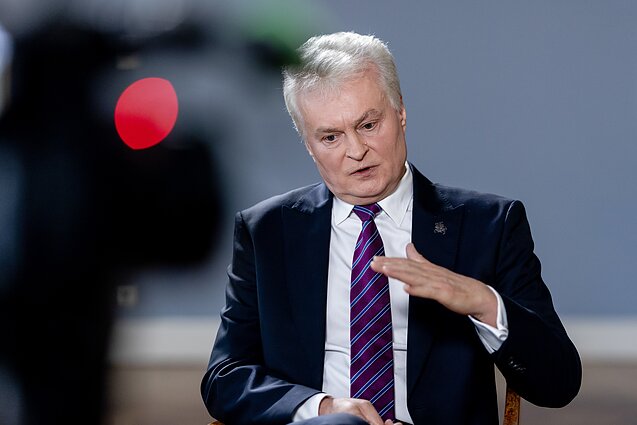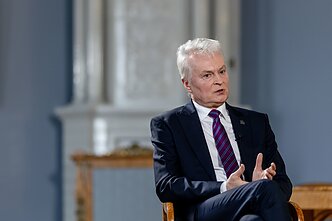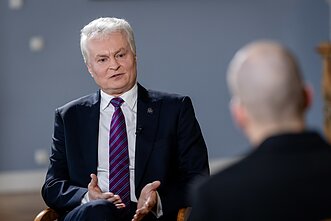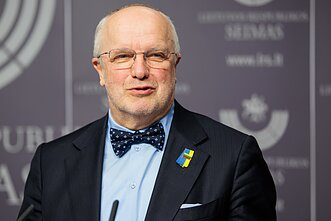






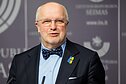





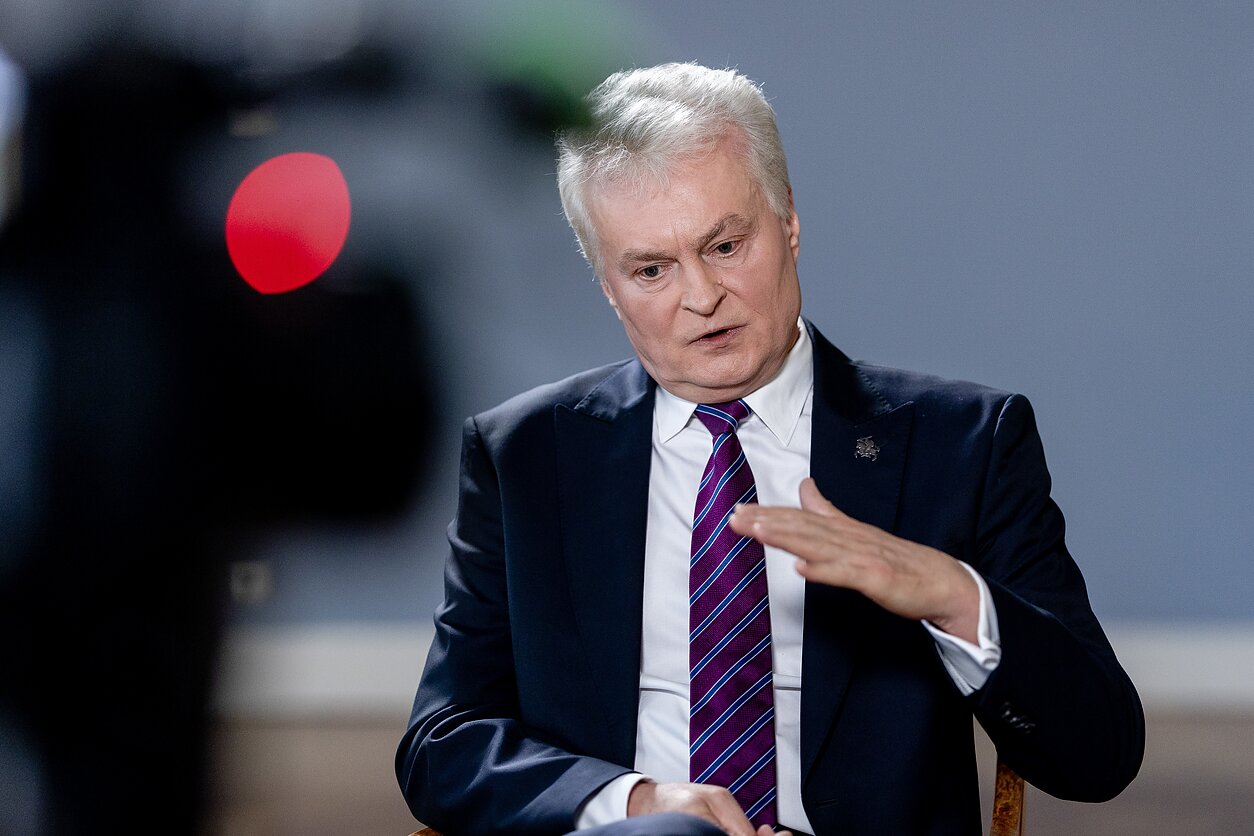
Lithuanian President Gitanas Nausėda said he believes his declining approval rating is the result of his active involvement in domestic politics, but pledged to draw lessons from the situation and change some of his approach.
“I think this is the price I have to pay for wanting to be active in domestic politics,” Nausėda said in an interview with BNS on Friday. “While we really have fewer disagreements and more or less agree on the direction of foreign policy, there has been a lot of controversy in domestic politics recently.”
His comments came after a Vilmorus poll commissioned by the Lietuvos Rytas daily and published Friday showed that the president’s popularity continues to fall.
According to the survey, Nausėda’s approval rating dropped to its lowest level since he took office in 2019. In December, 38.2% of respondents viewed the president favourably, while 42.6% had a negative opinion.
Nausėda said he deliberately chose to take an active role in last year’s formation of the government and acknowledged that the process, which led to the appointment of Prime Minister Inga Ruginienė’s cabinet, was difficult and sparked protests.
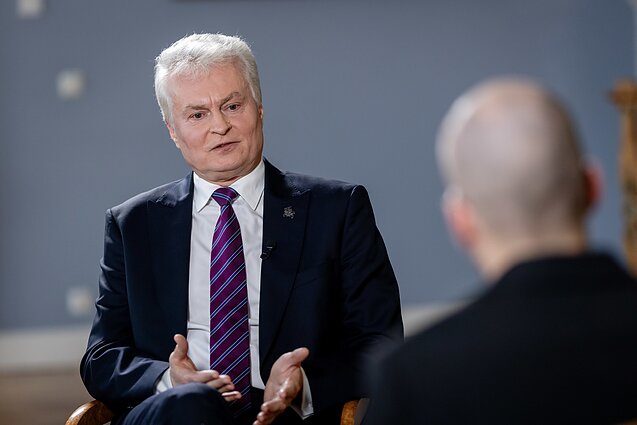
“I believe that people are always right,” he said. “And if that is the assessment, it means we have to raise our standards. I have to think about what I could do differently.”
One conclusion, Nausėda said, is the need to express presidential positions “very quickly and very clearly” on all public issues, even controversial ones.
“Whether you like the opinion or not, it has to be said, and said without delay,” he said.
During the formation of the Ruginienė government late last year, Nausėda initiated talks that led the ruling bloc to abandon plans to give the energy minister’s post to the controversial Nemunas Dawn party. After a reshuffle of portfolios, the party was instead given the Culture Ministry, triggering protests from the cultural community. The Social Democrats later took over the Culture Ministry.
Nausėda said the effects of the episode remain to be felt.
The president rejected suggestions that he had shown favouritism toward the Social Democrats, adding that he sometimes refrained from criticizing the ruling party because of Lithuania’s geopolitical situation.
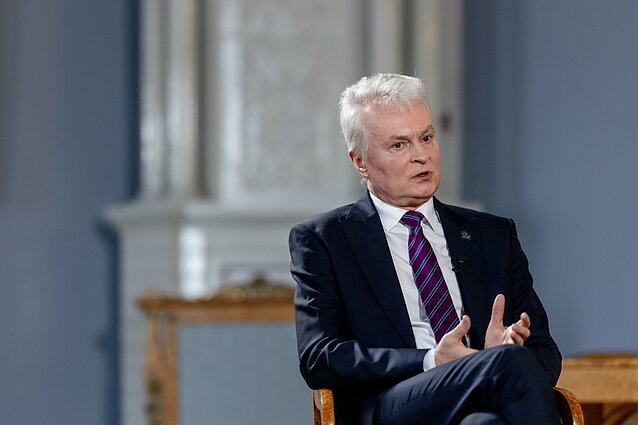
“I see my mission as ensuring that, during the remaining years of my term, Lithuania is strong and has so many friends and allies in terms of security that no one is tempted to attack it,” Nausėda said. “If I can achieve this, I will consider that I have fulfilled my main mission.”
He also vowed to draw conclusions from his falling ratings but stressed that public opinion polls should not dictate his actions.
“I will definitely do some things differently,” Nausėda said. “But the president should not think about ratings day and night. The president must first and foremost think about what he must do.”
Political scientists interviewed by BNS said it would be difficult for Nausėda to regain popularity, noting that his ratings may have suffered from efforts to address issues that deeply divide society.
Vladas Gaidys, head of the polling company Vilmorus, compared the drop in Nausėda’s approval to declines seen during the presidency of Rolandas Paksas.
The latest polling showed that Nausėda, previously the most popular politician in the country, fell from first to fourth place in the ranking. The list is now led by Saulius Skvernelis, head of the opposition Democrats “For Lithuania” party, followed by European Parliament member Aurelijus Veryga, leader of the Lithuanian Farmers and Greens Union, and Viktorija Čmilytė-Nielsen, leader of the opposition Liberal Movement.
Remigijus Žemaitaitis, leader of the Nemunas Dawn party, which is part of the ruling coalition, remains Lithuania’s least popular politician, according to the poll.

Newsletter
Every Friday morning.